The Boy from Riverside Drive
New York, 1904 — a mind wired for wonder.
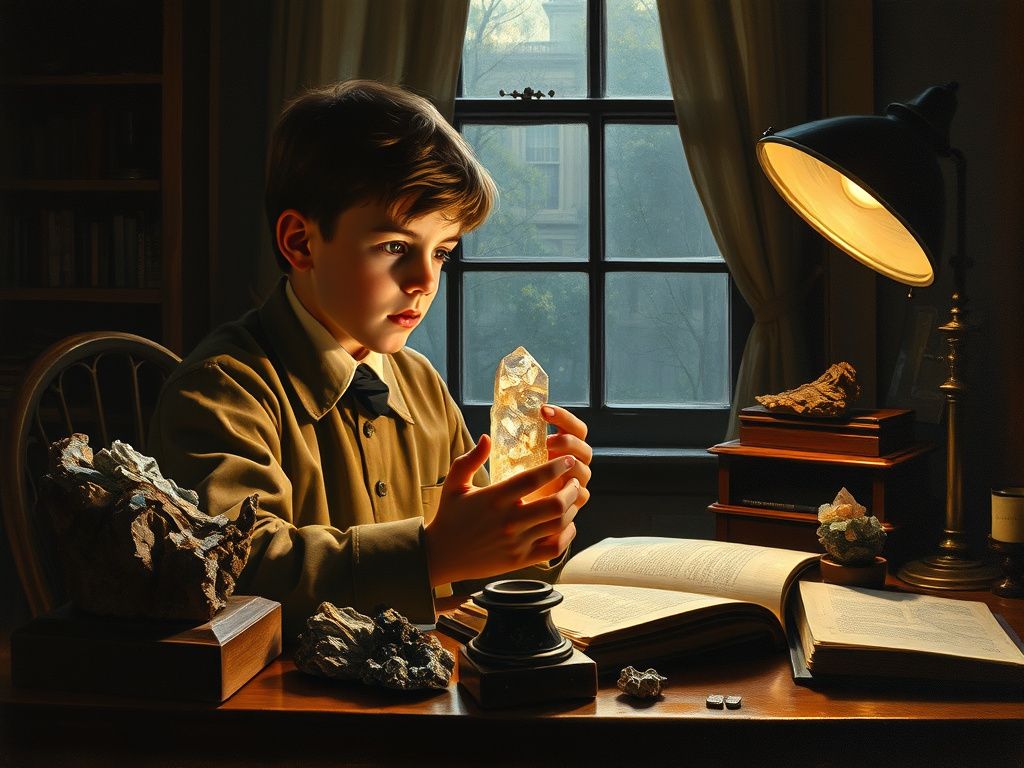
Julius Oppenheimer had made his money importing textiles from Germany, and by the time Robert was born on April 22, 1904, the family lived in an eleven-room apartment on Riverside Drive, Manhattan, with paintings by Van Gogh on the wall and an atmosphere of secular, cultivated Jewish life. Robert collected rocks before he collected friends. By ten he was exchanging letters with the New York Mineralogical Club — letters so sophisticated that the Club invited him to lecture. He showed up. He was twelve. He delivered the talk. He studied French literature, wrote poetry, took up Greek and Latin. When he arrived at Harvard in 1922 he finished a four-year chemistry degree in three, auditing every philosophy and literature seminar he could. ‘I had a real chance,’ he later said, ‘to do physics and a real chance to do something else.’ He chose physics — and the world is still reckoning with that choice.
The Poisoned Apple
Cambridge, 1925 — the darkness behind the brilliance.
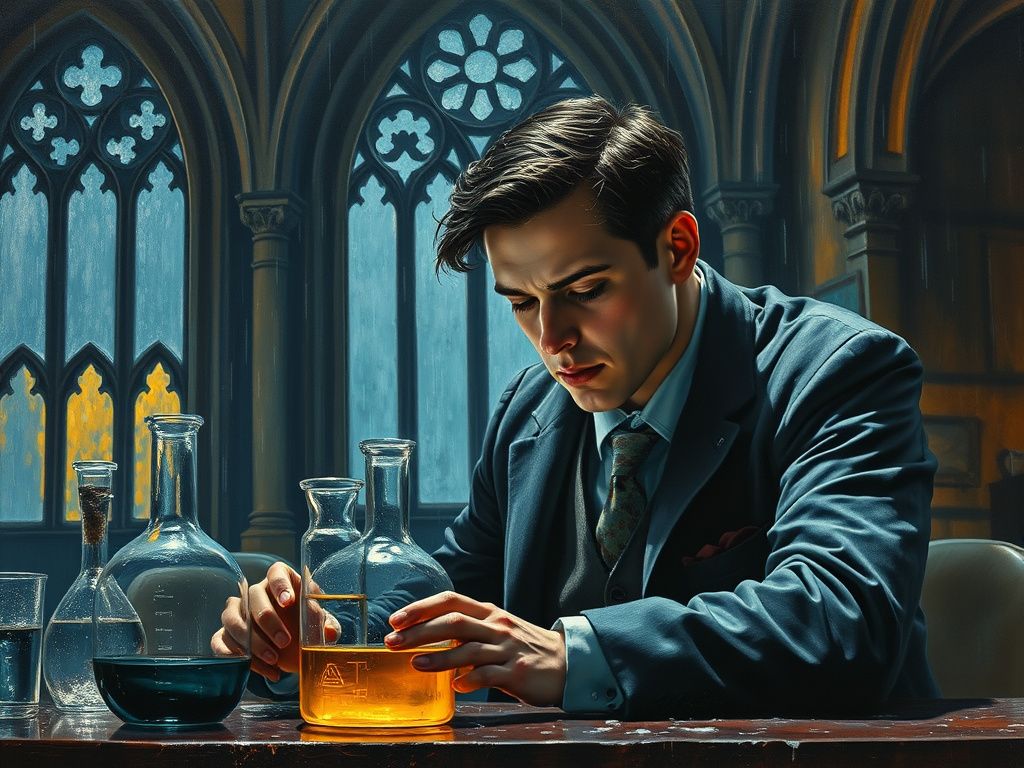
At Cambridge in 1925, Robert Oppenheimer was miserable. He had been assigned to experimental work under Patrick Blackett — a skilled, athletic physicist who was everything Oppenheimer, at his most scrawny and theoretical, was not. He hated the laboratory. He was, by his own account, ‘very unhappy and certainly inadequate.’ Then, in what historians still call one of the strangest episodes in the history of physics, he left a chemical-laced apple on Blackett’s desk. Blackett didn’t eat it. The university threatened expulsion; his parents intervened; he was placed on academic probation and ordered into regular psychiatric evaluation. The details remain murky — what poison, exactly what happened — but the episode is consistent with a pattern: Oppenheimer was a man whose brilliance and instability were woven together from the start. He moved to Göttingen, studied under Max Born, and earned his PhD in quantum mechanics at twenty-three. His genius survived the crisis. The instability never fully left.
American Physics
Berkeley, 1929–1942 — he built a school from scratch.
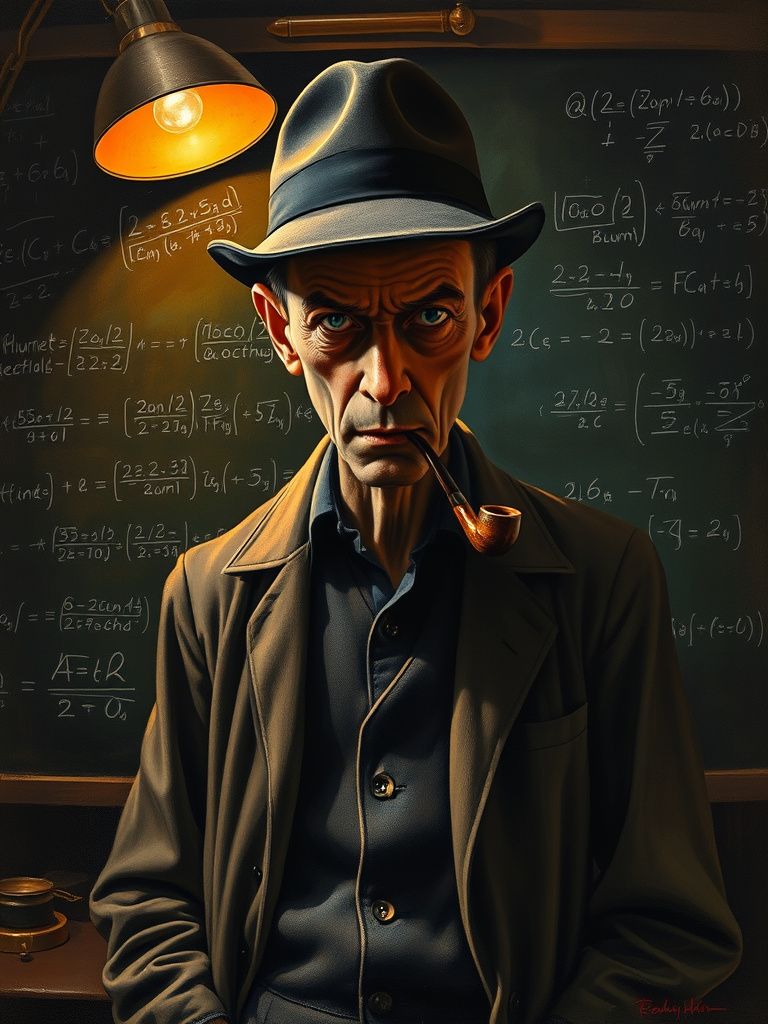
When Oppenheimer joined the Berkeley faculty in 1929, there was no great school of theoretical physics in America. There was one by the time he left. Over thirteen years he recruited talent, built a culture, and produced a generation of physicists who would go on to reshape the field. He held simultaneous appointments at Berkeley and Caltech, driving back and forth through California with students in tow, inspiring a devotion that bordered on the cultish. He was notoriously impatient with slow thinking, could be cutting to the point of cruelty in seminars, and once told a student, in front of the class, that his derivation was ‘made of wood.’ Yet the same students followed him across the country when he called them to Los Alamos. Outside the classroom, the Depression and the rise of fascism pulled him leftward: he attended communist philosophical discussion groups, contributed to Spanish Republican causes, and later half-jokingly wrote on a security form that he ‘probably belonged to every Communist-front organization on the West Coast.’ That sentence would cost him everything, fifteen years later.
The Project
1942–1943 — he recruited the century into a desert.
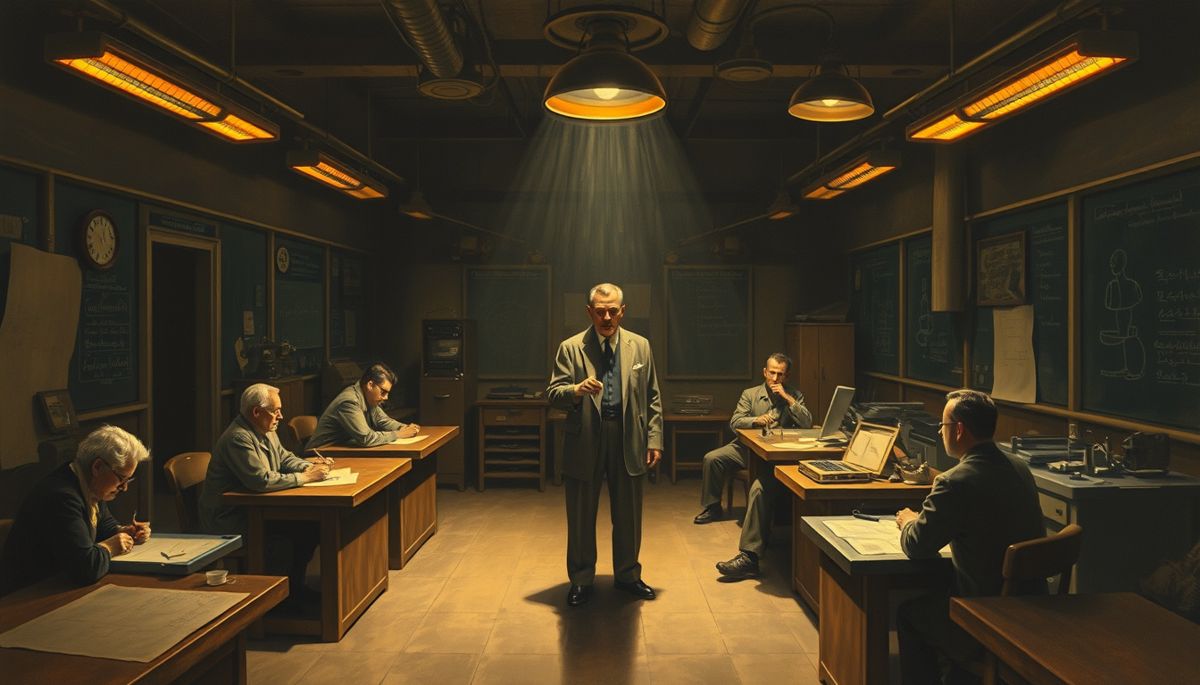
General Leslie Groves chose Oppenheimer to run Los Alamos in 1942. It was a baffling choice on paper: a theoretical physicist with no administrative experience and a file full of communist associations. Groves overrode the security objections. He had seen Oppenheimer hold a room of Nobel laureates and make them work. That was what the project needed. Within months, Oppenheimer had persuaded Niels Bohr (‘Nicholas Baker,’ traveling under a false name), Enrico Fermi, Hans Bethe, Richard Feynman, Isidor Rabi, and dozens of others to abandon their universities and move to a remote plateau in New Mexico, behind a post-office box, working on something they could not name. The social order he created — communal living, seminars, a shared library, evening talks, the Oppenheimer martini — was designed to sustain brilliant people under impossible pressure. He also spotted talent. Of a twenty-five-year-old named Richard Feynman, he wrote to Berkeley’s physics chairman: ‘By all odds the most brilliant young physicist here, and everyone knows this.’ He was not wrong.
5:29 AM
Alamogordo, New Mexico — July 16, 1945.
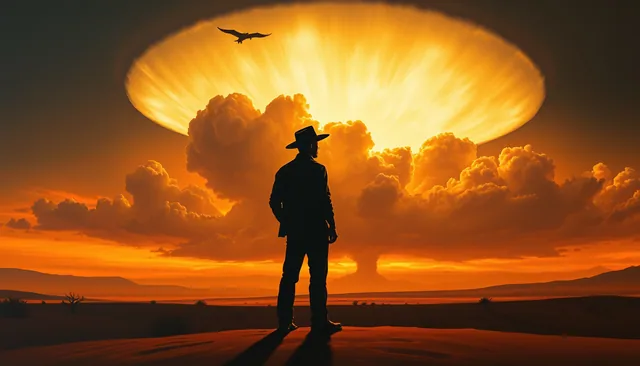
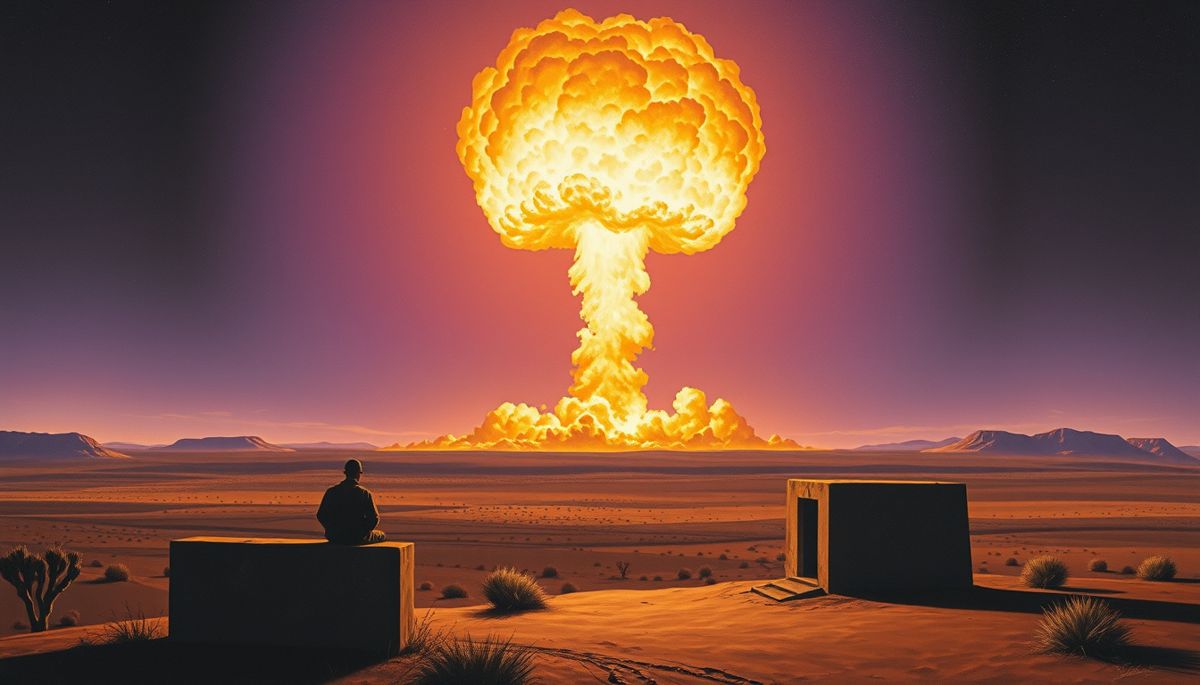
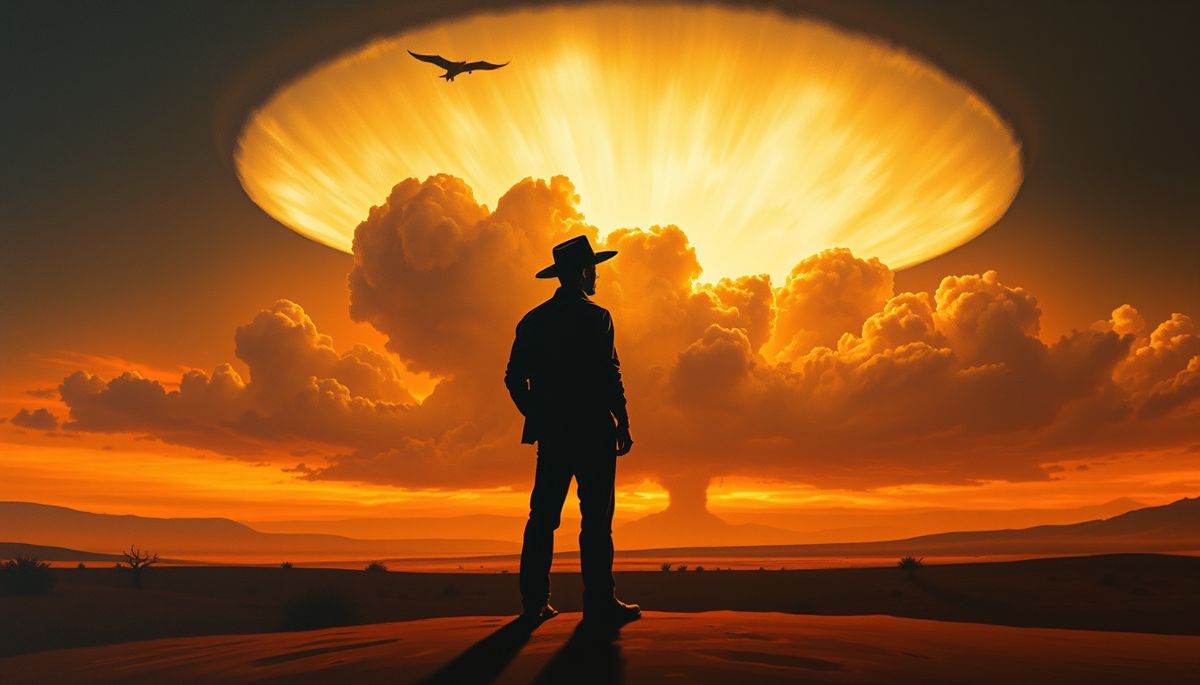
He had named the test site ‘Trinity’ — he later said it came from a John Donne sonnet, ‘Batter my heart, three-person’d God.’ The device was called Gadget: a plutonium implosion bomb set on a tower in the New Mexico desert. At 5:29:45 AM on July 16, 1945, it detonated. The yield was approximately 21 kilotons. The light was visible 160 miles away. The heat was felt 10 miles away. The sound arrived at the observation bunker thirty seconds later and rolled across the desert like the end of something. General Groves’s deputy Brigadier General Farrell later wrote: ‘The whole country was lighted by a searing light with the intensity many times that of the midday sun.’ In the bunker, Oppenheimer’s brother Frank remembered Robert saying something quiet, something like ‘I guess it worked.’ Three weeks later, Hiroshima. Then Nagasaki. Then Oppenheimer told Secretary of War Stimson: ‘We have made a thing, a thing that by all the standards of the world we grew up in is an evil thing.’ And he resigned from Los Alamos.
Now I Am Become Death
The quote, its source, and what it actually cost him.
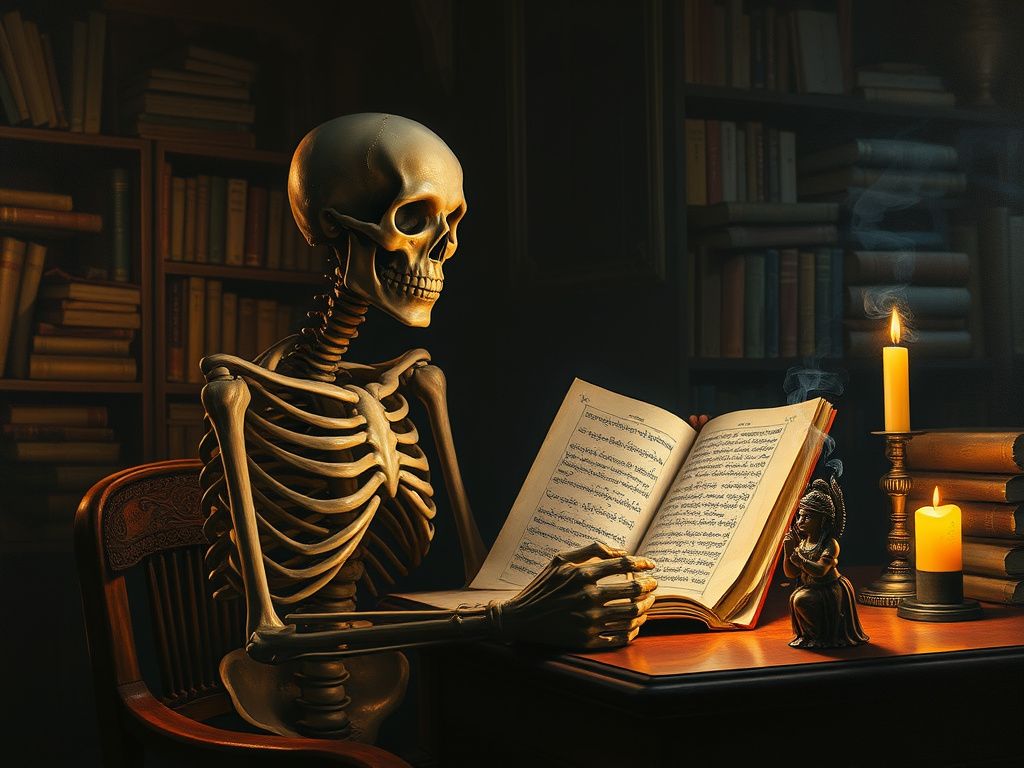
In a 1965 NBC documentary, twenty years after Trinity, a gaunt and aged Oppenheimer sat before a camera and spoke: ‘Now I am become Death, the destroyer of worlds. I suppose we all thought that, one way or another.’ The line is from the Bhagavad Gita, Chapter 11, verse 32, where the god Vishnu reveals his cosmic form to the warrior Arjuna. Oppenheimer had taught himself Sanskrit in his twenties specifically to read the Gita in the original. He kept it on his shelf. He gave copies to friends. He named his car ‘Garuda’ — after the divine eagle that carries Vishnu. The quote did not circulate immediately after Trinity. Nuclear historian Alex Wellerstein has traced it to the late 1940s and 1950s, becoming Los Alamos lore before the documentary made it famous. What Oppenheimer’s brother Frank actually remembered him saying in the moment was something far more mundane. But the Gita line, whenever exactly he first said it aloud, is not a fabrication: it is the only document we have of a man trying to contain, in someone else’s ancient words, something for which his own language had no precedent.
In the Matter of J. Robert Oppenheimer
April 1954 — the most consequential political trial in American science.
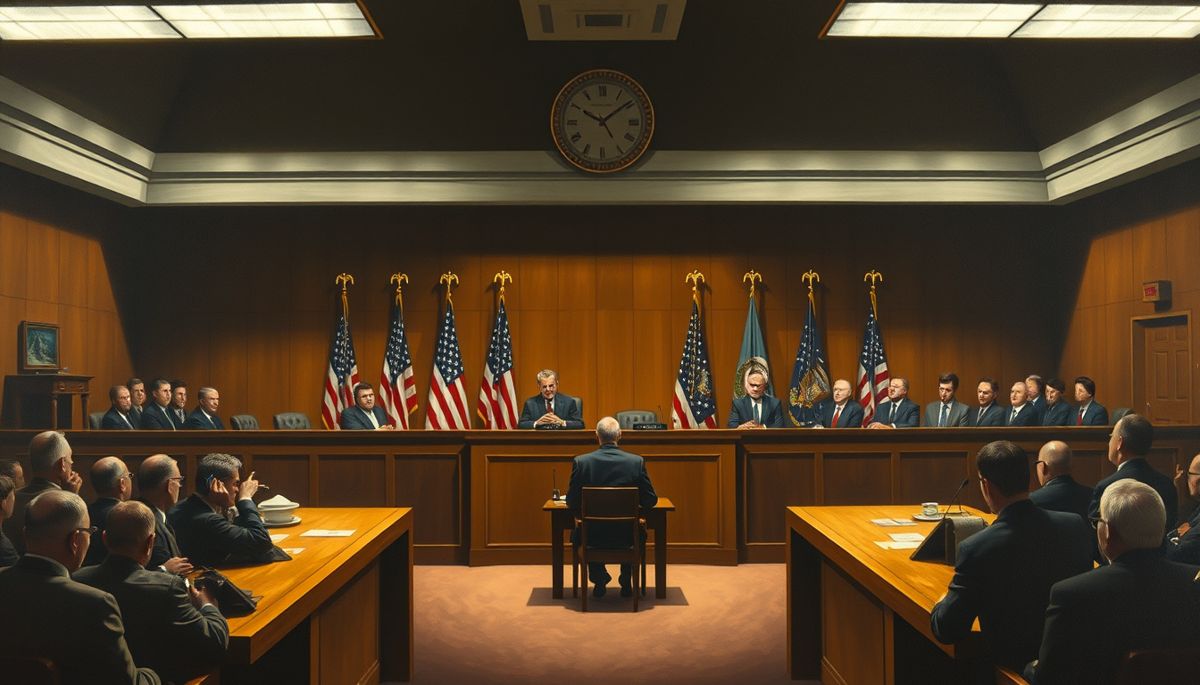
Lewis Strauss had not forgotten being humiliated. In 1949, Oppenheimer had publicly mocked him before Congress over whether to ban radioisotope exports — gently, surgically, and in front of reporters. Strauss, now chairman of the Atomic Energy Commission, had a long memory and access to the levers of government. In November 1953 a letter arrived on J. Edgar Hoover’s desk listing 21 reasons that Oppenheimer was ‘more probably than not a Soviet agent.’ The AEC suspended his clearance. The hearing began April 12, 1954, in a makeshift courtroom in a temporary building near the White House. The prosecution had access to at least 273 wiretapped conversations between Oppenheimer and his own defense attorneys. Edward Teller — who wanted a hydrogen bomb and had been stymied by Oppenheimer — testified against him: the only prominent physicist to do so. He was shunned for it for decades. The panel found Oppenheimer a ‘loyal citizen’ but revoked his clearance 2–1, twenty-four hours before it would have lapsed anyway. Einstein, learning the outcome, quipped that ‘AEC’ should stand for ‘Atomic Extermination Conspiracy.’ Wernher von Braun told Congress: ‘In England, Oppenheimer would have been knighted.’
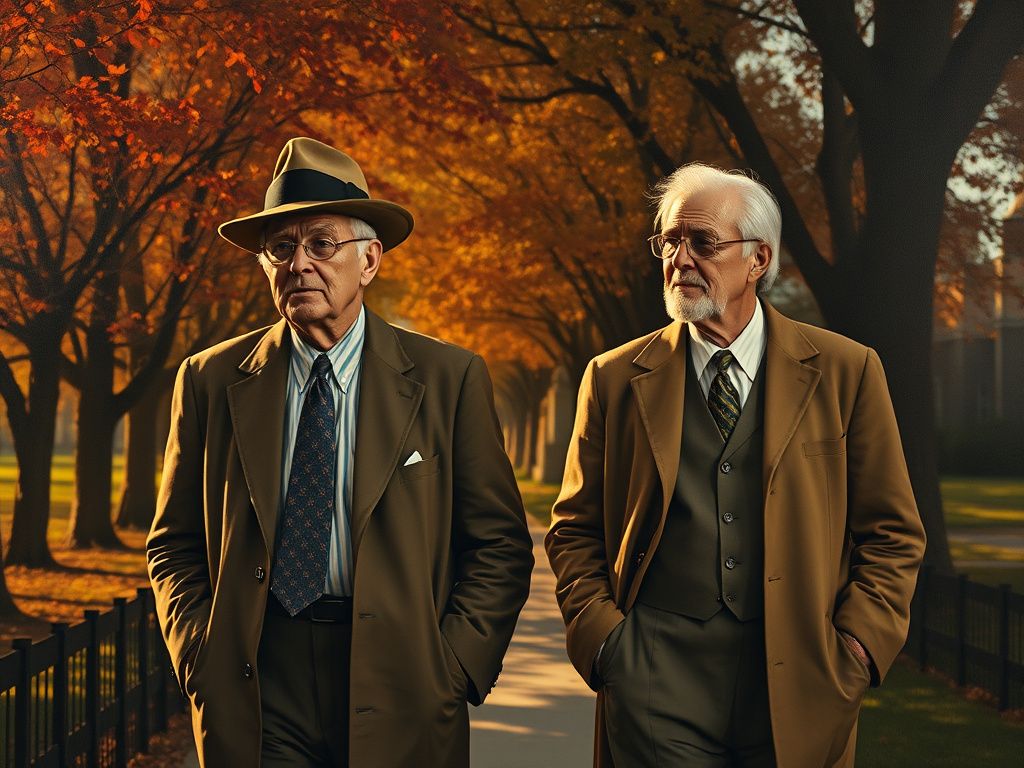
The Long Walk
Princeton, 1947–1955 — two giants, one autumn path.
From 1947 until his retirement in 1966, Oppenheimer directed the Institute for Advanced Study in Princeton, New Jersey. Albert Einstein was down the hall. They had first met in 1932 at Caltech, briefly and formally; they became genuine colleagues only at Princeton, where their offices were on the same corridor and they sometimes walked home together along the Institute’s tree-lined paths. They were not intimate friends — Einstein was individualistic, reclusive, pursuing unified field theory alone; Oppenheimer was collaborative, institutional, exhaustingly social. And they disagreed profoundly: Einstein never accepted quantum mechanics’ fundamental randomness; Oppenheimer’s entire career was built on it. But Einstein defended him when it mattered. After the 1954 hearing, he was outspoken: Oppenheimer was being persecuted, not tried. When Einstein died on April 18, 1955, Oppenheimer delivered the memorial address. Eleven years later he retired. In 1963, President Johnson had handed him the Fermi Award — a gesture Kennedy had planned before the assassination. Partial rehabilitation, but no apology. He died of throat cancer on February 18, 1967, in Princeton, the same city, in some ways the same silence, as Einstein.
Two Letters, One Century
The threads that connect three volumes.
There is a letter Albert Einstein signed on August 2, 1939 — drafted by Leó Szilárd, delivered to Roosevelt that October, warning that Germany might build a weapon of unprecedented destruction. That letter is the founding document of the Manhattan Project. Without it, or something like it, there is no Los Alamos, no General Groves choosing Oppenheimer, no Trinity, no Hiroshima. And there is something poignant in the circuit: Einstein, who never worked on the bomb and was denied clearance, signed the letter that created the project led by the man who would become his Princeton colleague — and whose persecution Einstein would publicly call a conspiracy. As for Nikola Tesla: he died in January 1943, in a New York City hotel room, as Oppenheimer was building Los Alamos. They never met, have no documented contact, share no direct thread. But they share something else — the same arc, the same ending. Both men gave the world instruments of world-altering power. Both were surveilled by their own governments. Both were discarded. Both were vindicated only when it no longer mattered to them. The stories search can’t give you are often the ones hiding in plain sight, one volume at a time. (Tap Einstein in the map above to revisit Volume II, or seek Tesla for Volume I.)