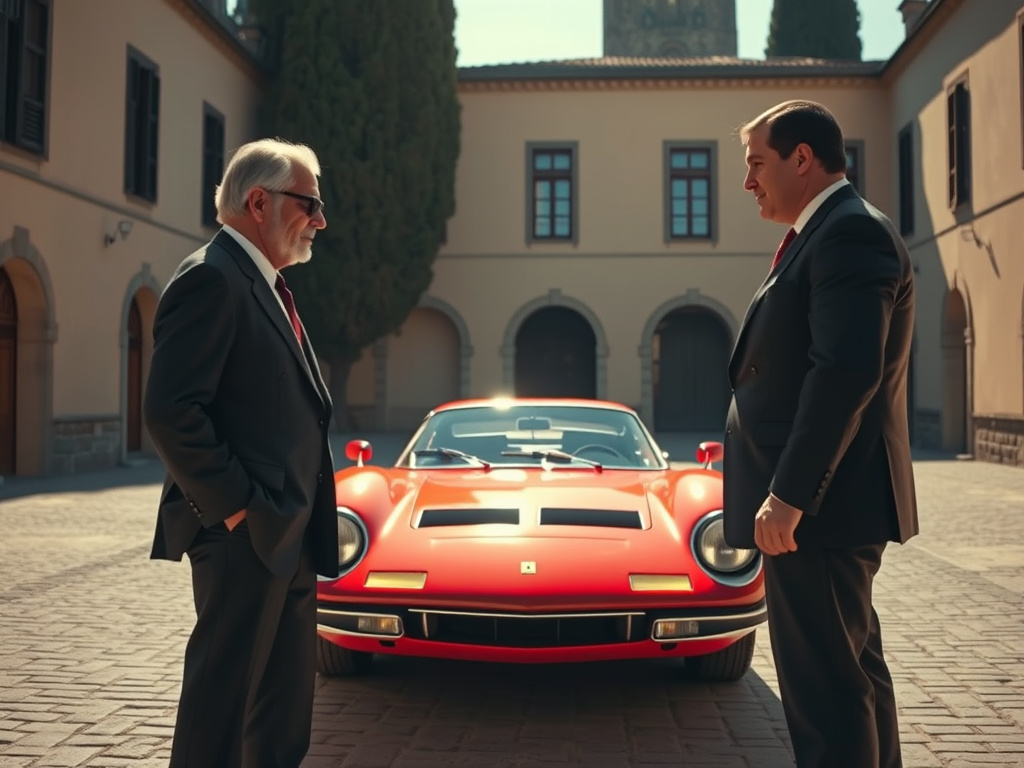
He built the most beautiful cars on earth, watched his drivers die in them, buried his son, kept a secret family for forty years — and never once apologized for any of it.
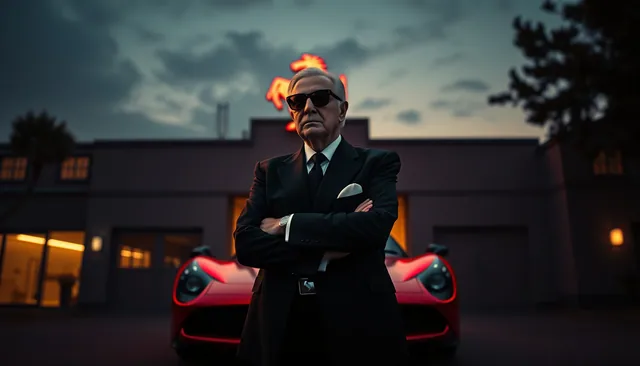
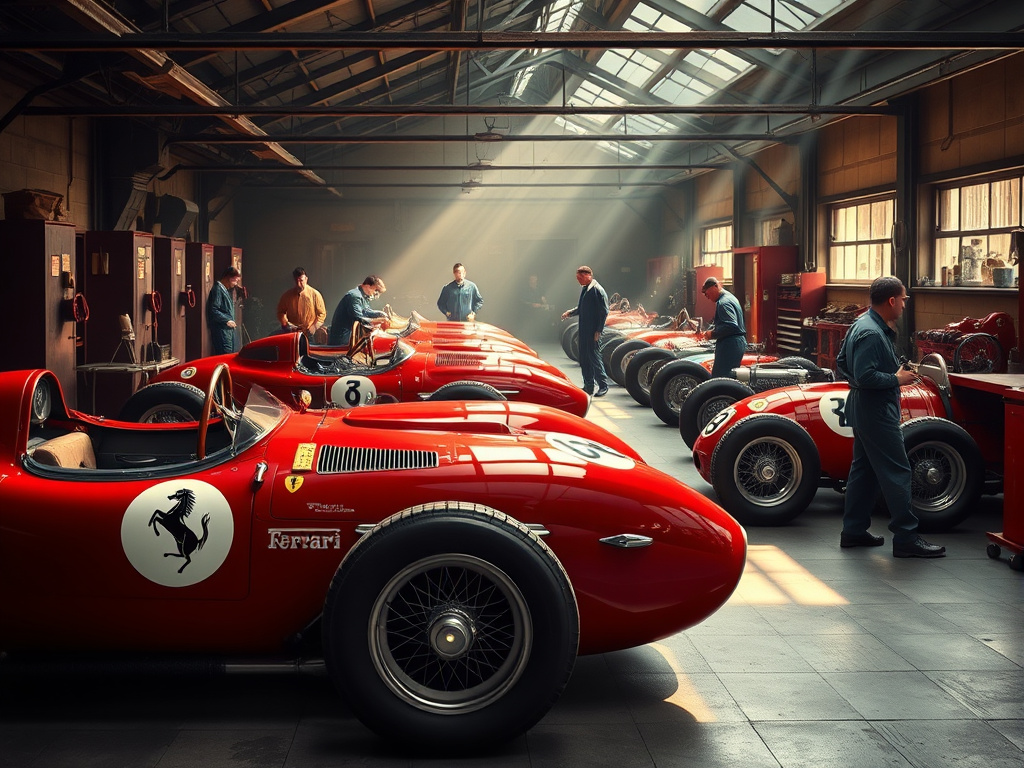
Enzo Ferrari was not primarily a car manufacturer. He was a racing man who built road cars to fund his obsession. Born in Modena in 1898, he raced for Alfa Romeo, founded Scuderia Ferrari in 1929, and spent World War II in a factory in Maranello before building the 125 S in 1947 — the first car to bear his name. What followed was five decades of Formula One domination, catastrophic driver losses, a hidden second family, a war with Henry Ford, a reluctant deal with Fiat, and the creation of a brand so powerful that the color red is now legally associated with it in motorsport. He died in August 1988, having spent the final months of his life on dialysis in his Maranello home. His death was not announced until after his private burial — per his own instructions. Three weeks later, at Monza, Ferrari went 1–2. The old man had one last race to win.
MotorsportAutomotive DesignTeam ManagementItalian Industry
Born in Modena; birth registered February 20 due to snowstorm.
1908
Age ten, watches Felice Nazzaro win the Circuito di Bologna. Decides to race cars.
1916
Father Alfredo and brother Alfredo Junior die from a flu outbreak. Not combat deaths.
November 1918
Fiat turns him away when he seeks employment in Turin. He never forgives it.
1920
Joins Alfa Romeo as a racing driver.
June 17, 1923
Wins his first Grand Prix at the Savio Circuit, Ravenna. After the race meets the Baracca family; Countess Paolina gives him permission to use the Prancing Horse.
November 16, 1929
Founds Scuderia Ferrari in Modena as an Alfa Romeo satellite team.
July 9, 1932
The Prancing Horse appears on a Scuderia Ferrari car for the first time, at the Spa 24 Hours.
1939
Breaks with Alfa Romeo. Non-compete clause bars him from using the Ferrari name for four years.
1947
Non-compete expires. Builds the Ferrari 125 S in Maranello — his first Ferrari-badged car. It wins its second-ever race.
1951
Ferrari beats Alfa Romeo for the first time, at Silverstone. He says: ‘I have killed my mother.’
June 30, 1956
His son Dino dies aged 24 of Duchenne muscular dystrophy. Ferrari begins wearing a black tie every day.
May 1957
De Portago crash at Mille Miglia kills driver, co-driver, and nine spectators. Ferrari charged with manslaughter; passport confiscated.
1957
Laura discovers the secret family. She shouts at Piero at the factory for years.
1958
Luigi Musso and Peter Collins killed in successive Grands Prix.
1961
Eight senior executives walk out in the Palace Revolt, including chief engineer Chiti and team manager Tavoni. Ferrari fires them all.
September 10, 1961
Wolfgang von Trips killed at Monza; 15 spectators die. Phil Hill wins the championship. Ferrari acquitted of manslaughter from 1957 case.
May 1963
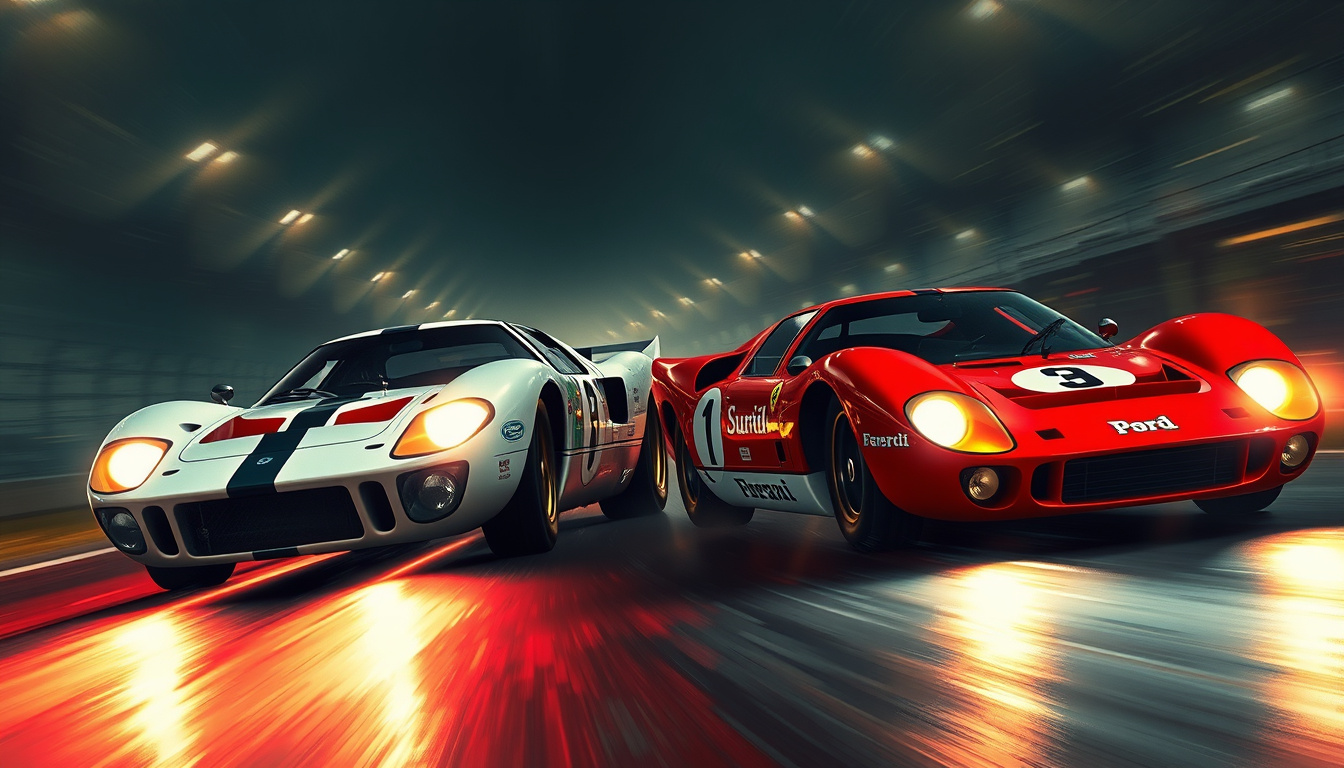
Ford acquisition talks collapse. Ferrari rejects Ford’s demand for racing budget control. Ford begins building the GT40.
June 1966
Ford GT40 goes 1–2–3 at Le Mans. Ferrari’s six-year winning streak ends.
June 1969
Sells 50% of Ferrari S.p.A. to Fiat, retaining full control of Scuderia Ferrari.
February 27, 1978
Laura Ferrari dies. Enzo legally recognizes Piero as his son that same year.
1987
Approves the Ferrari F40, his final production car, for the company's 40th anniversary.
August 14, 1988
Dies at 7 a.m. in Maranello, age 90. Death not announced until August 16 per his own instructions.
September 11, 1988
Ferrari goes 1–2 at Monza (Berger, Alboreto) — the only race McLaren did not win that season.
■ Quotes & Attribution
“I am an agitator of men.”
— Enzo Ferrari✓ Verified
His self-description of his management philosophy, used throughout his career and in his memoirs. He said this was his true talent — not engineering, not driving, but extracting maximum performance from people.
“I have killed my mother.”
— Enzo Ferrari✓ Verified
Said after Ferrari beat Alfa Romeo for the first time, at Silverstone in 1951. Scuderia Ferrari had been built on Alfa Romeo machinery; beating them felt, to him, like parricide.
“Aerodynamics are for people who can’t build engines.”
— Enzo Ferrari✓ Verified
Said to racing driver Paul Frère at Le Mans, circa 1960. He built V12 engines before he cared about aerodynamics — and paid the price in the 1960s against Ford and in the 1980s against turbo competition.
“One must keep working continuously; otherwise, one thinks of death.”
— Enzo Ferrari✓ Verified
From his memoirs. Written, most likely, after Dino died.
“Second is the first of the losers.”
— Enzo Ferrari~ Reported
His most quoted competitive philosophy. The Italian ‘il secondo è il primo dei perdenti.’ Attributed in Italian sources and biographies; no single dated interview identified.
“The client is not always right.”
— Enzo Ferrari✕ Apocryphal
Attributed to Ferrari universally across quote databases, and consistent with his known contempt for customers who told him what to build. However, no primary source — no specific book, interview, or dated occasion — has been identified as the origin.
“Staying at Ferrari was a kind of hell where you felt like hitting your head against a brick wall — but it didn’t matter because it was the most beautiful wall in the world.”
— Phil Hill (1961 World Champion)✓ Verified
Hill raced for Ferrari 1958–1962. His ambivalent relationship with Enzo was well documented — he wanted Ferrari’s affection and believed he never received it.
“Ferrari, why don’t you put my son’s prancing horse on your cars? It’ll bring you good luck.”
— Countess Paolina Baracca✓ Verified
Said to Enzo Ferrari after his Savio Circuit victory in Ravenna, June 17, 1923. Her son Francesco Baracca was Italy’s top WWI ace, killed June 19, 1918. Ferrari waited nine years before acting on the suggestion.
■ Connections
Click nodes to open connected volumes
■ The Myths vs. The Record
He Never Drove a Ferrari
Medium confidence
The claim: Ferrari famously said ‘I don’t sell cars; I sell engines — the cars I throw in for free since something has to hold the engines in.’ The implication that he never drove his own products is often stated as fact.
The reality: This is mostly true but overstated. Ferrari stopped driving competitively in the 1930s and did not drive on public roads as a habit — but there are documented accounts of him driving prototypes on the Fiorano test track in private. The popular framing ‘never drove a Ferrari’ is essentially accurate as a description of his public behavior and self-image, not a literal biographical fact.
The kernel: His disdain for road driving was genuine and consistent with his self-identity as a racing man, not a motoring enthusiast.
He Refused to Meet Drivers’ Wives
Medium confidence
The claim: Ferrari kept a hard rule never to meet his drivers’ wives or families, because he could not face them if their husbands died.
The reality: No verified primary source — no quote, no interview, no memoir passage — confirms this as an explicit rule. What is documented: after the deaths of personal friends Giuseppe Campari (1933) and Alberto Ascari (1955), Ferrari deliberately maintained emotional distance from drivers. Phil Hill felt like a ‘tool.’ Jacky Ickx believed Ferrari kept distance ‘so as not to suffer.’ The ‘refuses to meet wives’ detail is almost certainly a crystallization of this documented emotional withdrawal into a dramatic rule that may never have been stated.
The kernel: Ferrari’s emotional distancing from drivers was real, documented, and deliberate. The specific formulation as a ‘no wives’ rule is unverifiable.
Enzo Used Ford to Squeeze Fiat
High confidence
The claim: The 2019 film Ford v Ferrari (and popular retellings) depicts Ferrari using Ford’s acquisition interest as leverage to negotiate a better deal with Fiat.
The reality: This is fiction. The Ford talks collapsed in May 1963. The Fiat deal happened in June 1969 — six years later. There is no evidence Ferrari used Ford as a Fiat negotiating tactic, no account from any party to either deal, and no temporal logic supporting it. The two events were separated by six years and entirely distinct circumstances.
The kernel: Ferrari did need external capital for his road car operation — that financial pressure was real both in 1963 and 1969.
The Prancing Horse Came from a Downed Enemy Plane
High confidence
The claim: A popular alternative origin holds that Francesco Baracca shot down a German pilot from Stuttgart whose city coat of arms features a prancing horse, and painted it on his own plane as a trophy.
The reality: The Museo Francesco Baracca in Lugo — the official museum dedicated to Baracca — has explicitly investigated and rejected this story. A letter Baracca wrote to his mother on April 27, 1918, confirms the horse was taken from the emblem of his cavalry regiment, the Piemonte Reale Cavalleria (2nd), which used it since 1692. The Stuttgart coincidence (both Porsche and Baracca use a prancing horse) is unrelated: Porsche’s logo was separately designed by Max Hoffman based on Stuttgart’s city seal.
The kernel: Stuttgart does feature a horse in its city seal, creating a superficially appealing story.
Ferrari Was Mainly a Car Manufacturer
Medium confidence
The claim: Ferrari SpA is one of the world’s most valuable car brands; Enzo must have been primarily a businessman.
The reality: Ferrari was a racing man who built road cars to fund his obsession. He said it explicitly: ‘I don’t sell cars; I sell engines.’ The road car division was chronically unprofitable under his management — hence the need for the Fiat deal. He resented having to produce road cars and viewed customers with a contempt he barely disguised. Luca di Montezemolo, his assistant who later became CEO, called him ‘an intentional prisoner of his own myth.’ The myth was racing, not manufacturing.
The kernel: Ferrari SpA did become an extraordinarily valuable brand — but mostly after Enzo handed it over to Fiat.
■ The Man Behind the Myth
Wore a black tie every day from 1956 until his death Documented
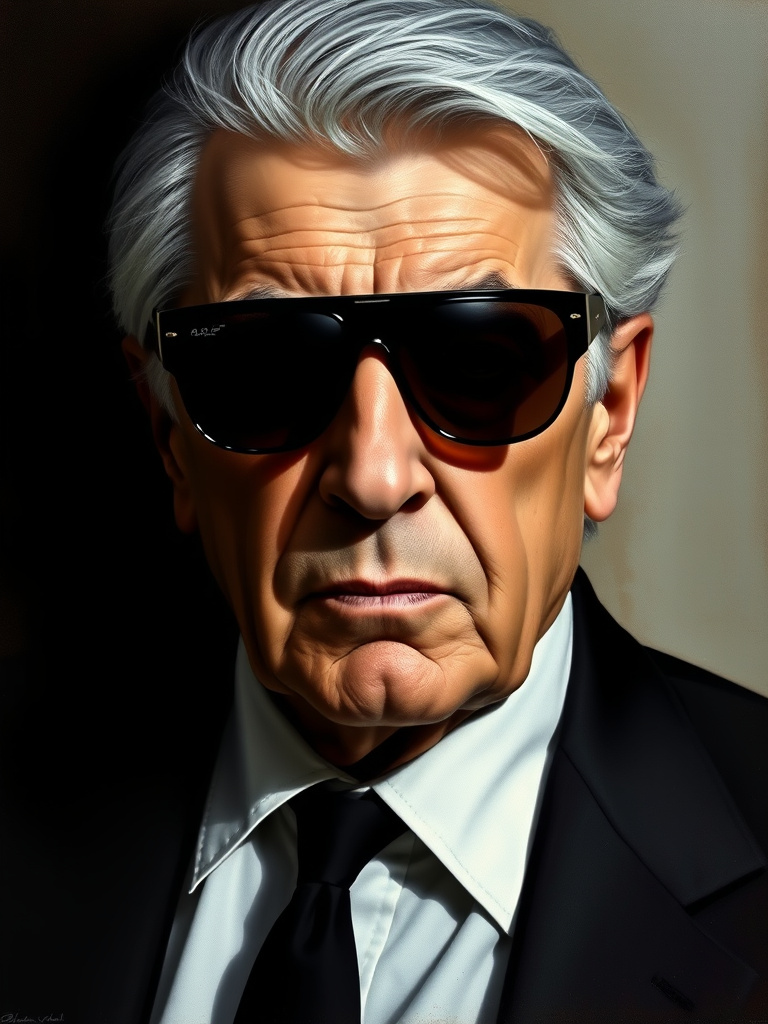
After his son Dino died on June 30, 1956, Ferrari adopted a permanent black tie as a uniform of mourning. He wore it every day for the remaining 32 years of his life, combined with his trademark dark sunglasses.
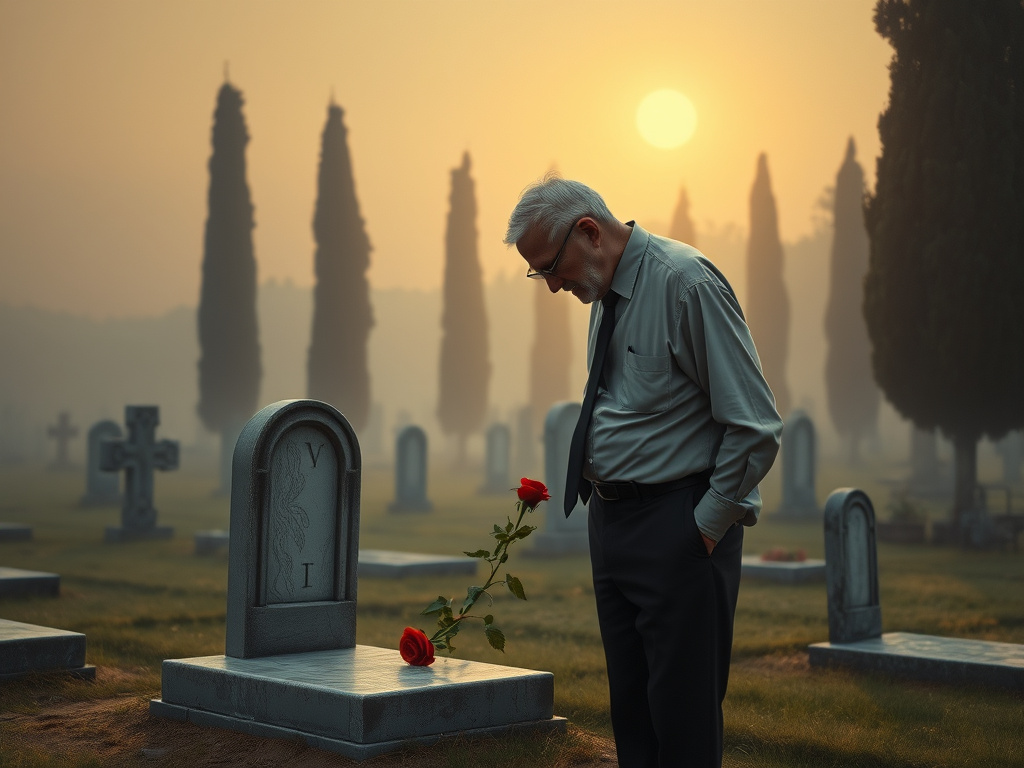
Visited Dino’s grave every morning for 32 years Verified
San Cataldo Cemetery in Modena, every single morning, first act of every day, from June 1956 until August 1988. Confirmed across multiple sources including biographers and his own writing.
Never boarded an airplane in his life Verified
Ferrari had a lifelong fear of flying. Combined with his confiscated passport following the 1957 Mille Miglia disaster, he effectively never traveled internationally after the late 1950s. He later presented this as personal preference. His last confirmed international trip was to Paris in 1982 for the FISA-FOCA negotiations.
Kept a secret son for 33 years Verified
Piero Lardi Ferrari, born May 22, 1945, was not publicly acknowledged until 1978 — 33 years later. Ferrari made weekly visits to his companion Lina Lardi and their son throughout this period, on his drive home from the Maranello factory.
Used violet ink in all correspondence Documented
Ferrari wrote all his personal correspondence and notes in violet ink. This is documented by multiple aides and biographers, including in the account of him underlining the offensive Ford contract clause twice in his violet pen before ending negotiations.
Lunched at the same restaurant table for decades Documented
The Ristorante Cavallino opposite the factory gate — his private table, back to the wall, his saletta. Business lunches during the week, friends-only on Saturdays (‘gli amici del sabato’), watched races on TV from the same room on Sundays. Guests included Niki Lauda, Gilles Villeneuve, the Shah of Persia, Paul Newman, Peter Sellers.
His dark sunglasses were primarily medical, not theatrical Verified
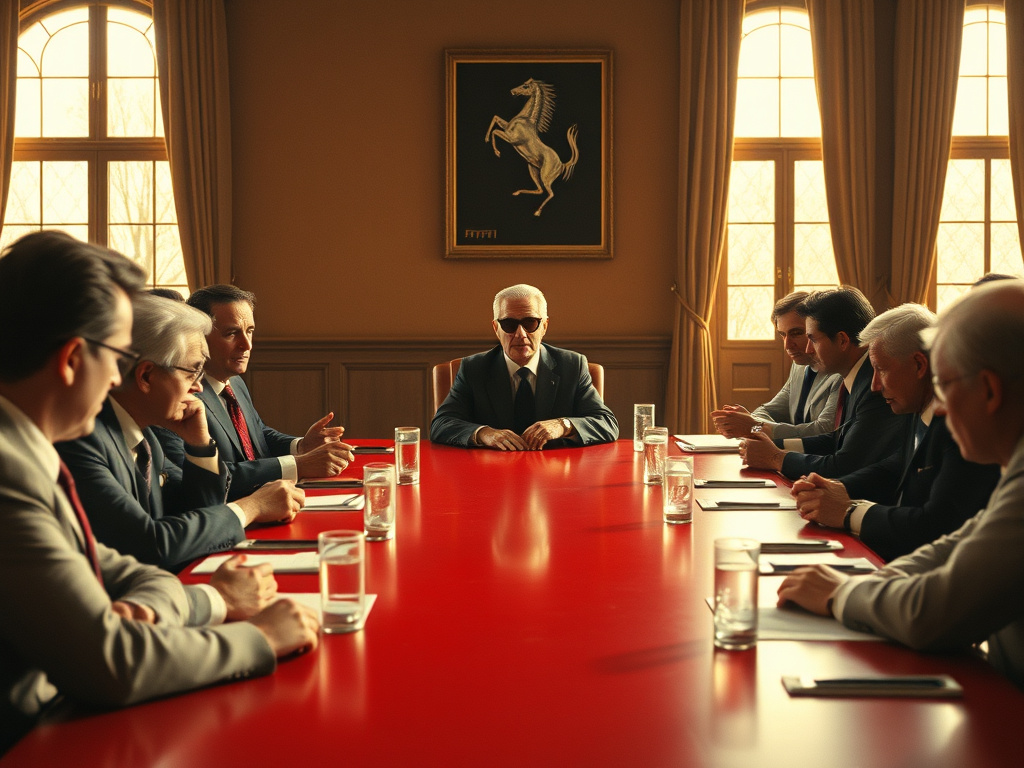
Light sensitivity (photophobia) was the confirmed medical reason — documented by motorsport historian Doug Nye, who called Ferrari’s own theatrical explanations ‘An Enzo Joke.’ He wore them indoors, at press conferences, in negotiations. Photographers at his press events were instructed not to use flash. After Dino died, the glasses also became a permanent element of his mourning uniform.
Fired eight senior executives in one morning Verified
The 1961 Palace Revolt: eight engineers and managers, including chief engineer Carlo Chiti and team manager Romolo Tavoni, sent Ferrari a group letter through a lawyer demanding his wife Laura be removed from factory operations. Ferrari called a normal staff meeting, said nothing, then had his secretary intercept each man in the corridor and hand them an envelope with one month’s severance. ‘I lost my generals because they behaved like corporals.’
Ask the Archive
Go deeper on anything — the 1957 Mille Miglia, the Palace Revolt, Dino’s last days, the Ford deal clause.