Four Cents and a Letter of Fire
New York, 1884 - an immigrant meets his rival.
In June 1884 a 28-year-old Serbian engineer stepped off a steamer into New York with four cents in his pocket, a book of his own poetry, and a letter of introduction to Thomas Edison. The letter reportedly read: ‘I know two great men and you are one of them. The other is this young man.’ Edison put Tesla to work improving his direct-current dynamos. Tesla labored at a furious pace and later claimed Edison had dangled a $50,000 bonus, then laughed it off with, ‘When you become a full-fledged American, you will appreciate an American joke.’ That exchange survives only in Tesla’s own memoir, written 35 years later, so it is best read as his account rather than settled fact. Tesla quit and, for one brutal winter, dug ditches for two dollars a day. The most consequential rivalry in the history of electricity had just been lit.
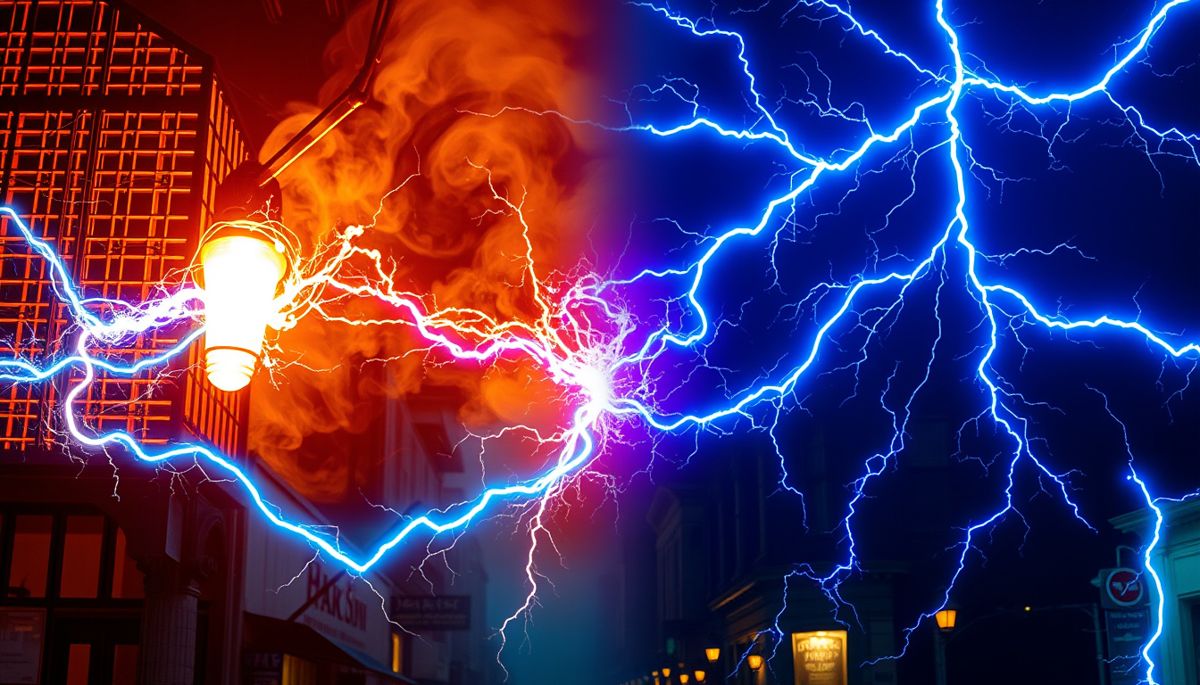
The War of the Currents
Edison’s direct current vs. Tesla’s alternating current.
Edison had staked his fortune on direct current - reassuringly simple, but it faded within about a mile of the power plant. Tesla’s alternating current, backed by industrialist George Westinghouse, could be stepped up to high voltage, pushed for many miles, then stepped back down. The physics favored Tesla; Edison fought back with fear. His circle staged public electrocutions of animals to brand AC a killer and helped engineer the first electric-chair execution in 1890 using an AC generator, hoping the public would say a condemned man had been ‘Westinghoused.’ It was gruesome theater, and it failed. In 1893 Westinghouse and Tesla lit the Chicago World’s Fair with ~100,000 lamps; in 1896 their machines sent power from Niagara Falls to Buffalo, 26 miles away. Alternating current had won the world. Years later Edison reportedly admitted to a colleague’s son: ‘Tell your father I was wrong.’
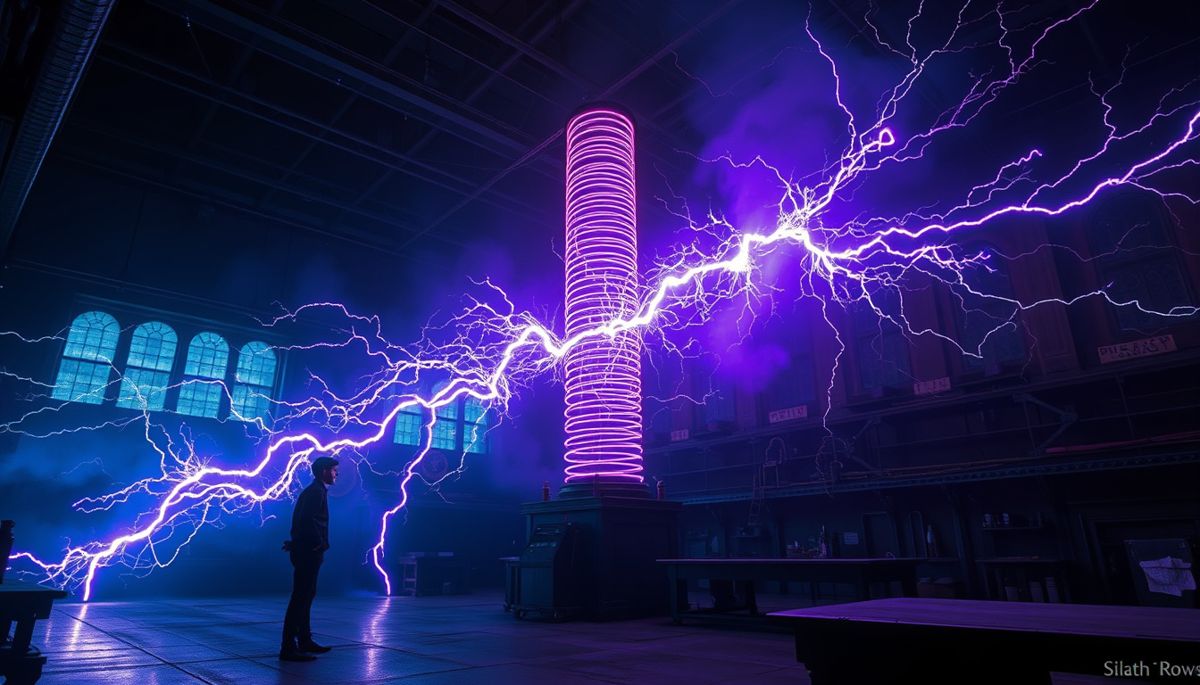
The Coil That Tamed Lightning
1891 - a machine that made the air glow.
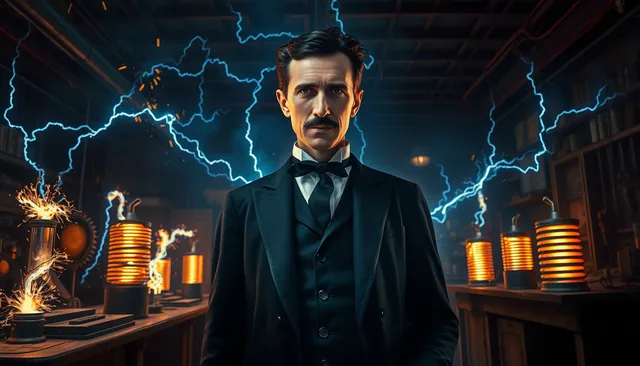
In 1891 Tesla unveiled his most theatrical creation: a coil that could conjure hundreds of thousands of volts at frequencies far beyond household current, throwing branching arcs of violet lightning across a darkened room. He would stand on stage and pass the current through his own body to light glass tubes he held in his bare hands - dramatizing that high-frequency electricity was not the monster Edison claimed. But the coil was never just a spectacle. Tesla believed this high-frequency current was the key to his grandest ambition: sending power through the earth and air itself, so that electricity could one day be as free and universal as sunlight.
A Tesla coil is a resonant transformer. A small primary circuit dumps energy into a tall secondary coil tuned to the exact same frequency, so the energy ‘sloshes’ back and forth and builds to enormous voltages. Because the two circuits resonate - like one tuning fork setting another ringing across the room - you get long, branching sparks and the eerie trick of lighting a tube held in midair, with no wires at all.
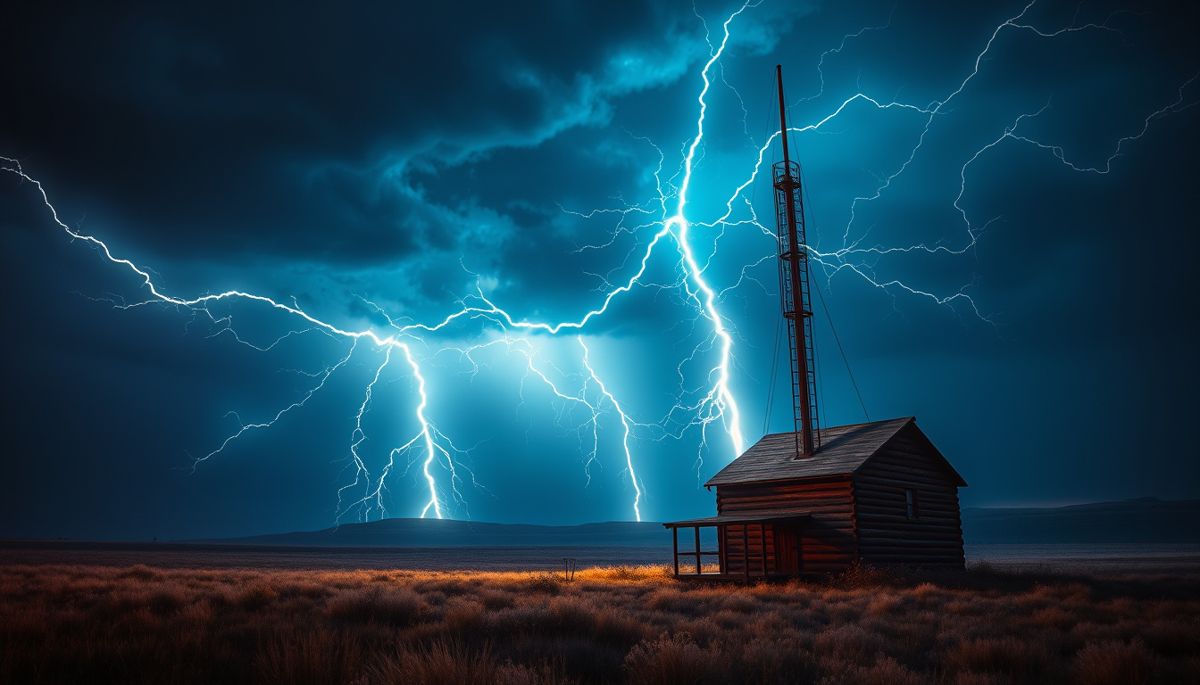
Man-Made Lightning at Colorado Springs
1899 - the inventor plays Zeus on the prairie.
In 1899 Tesla moved to a laboratory on the high, dry plains of Colorado Springs, where thin air and nightly thunderstorms made the perfect stage. There he built a ‘magnifying transmitter,’ a gigantic coil crowned by a mast and copper sphere. On one test it hurled artificial lightning bolts more than a hundred feet long - and the surge burned out the local power company’s generator, blacking out the whole town. Tesla also reported lighting lamps wirelessly at a distance, and, one quiet night, receiving strange rhythmic signals he wondered might be messages from another planet. He was ridiculed for it. The signals were never explained - possibly distant radio noise, possibly natural - and remain one of his most tantalizing loose ends.
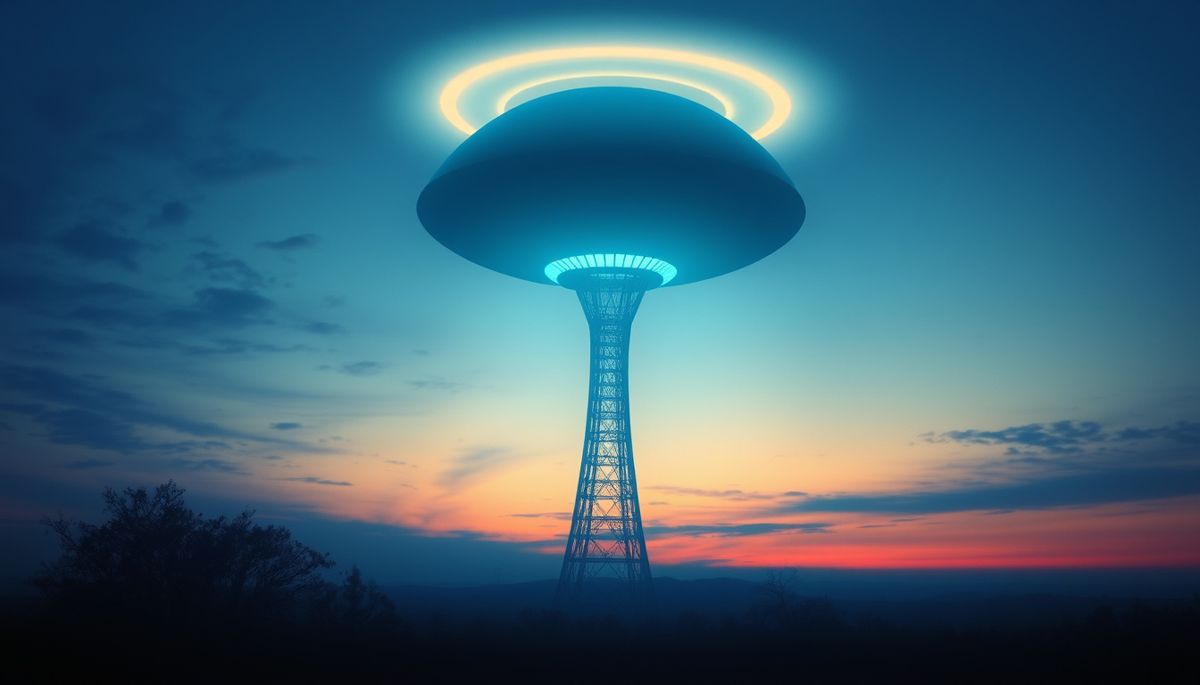
The Tower That Touched the Sky
Wardenclyffe - the world’s most beautiful failure.
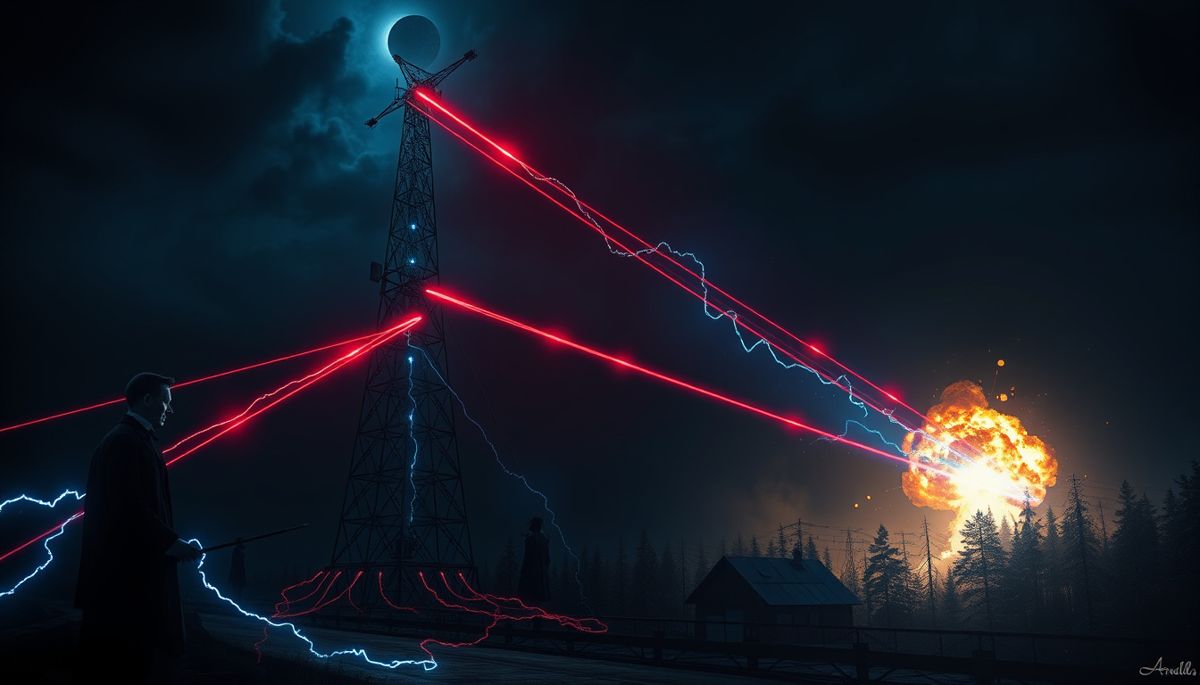
Back in New York, Tesla persuaded financier J. P. Morgan to stake $150,000 on his boldest dream: Wardenclyffe, a 187-foot mushroom-domed tower on Long Island, the first node in a planned global network that would beam news, messages, and free electrical power to anywhere on Earth. Then, in December 1901, Marconi flashed a radio signal across the Atlantic with far simpler gear - and Morgan saw no way to put a meter on free power. The money evaporated. The tower stood silent as Tesla’s debts mounted, and in 1917 it was dynamited for scrap to settle his hotel bills. Contrary to legend, the government did not destroy it; creditors did. It remains the most poignant ruin in the history of invention - a monument to a future that arrived a century too early.
The Death Ray
The 1930s - an old genius and his ‘peace beam.’
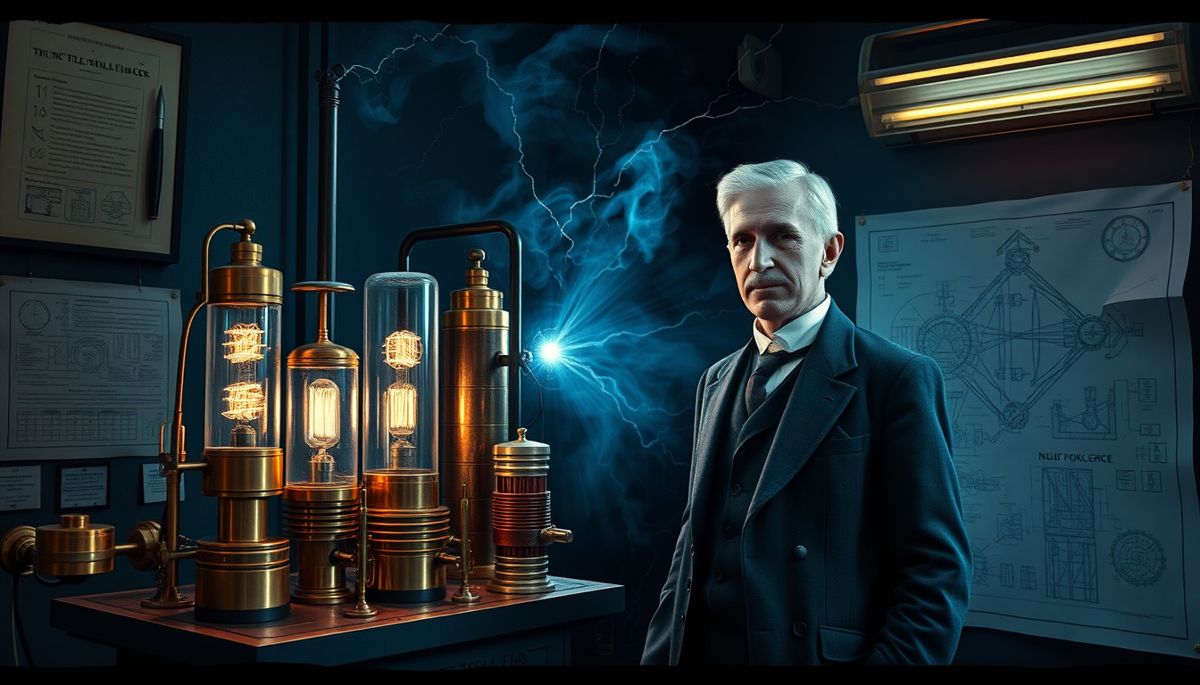
Each year on his birthday, the aging Tesla summoned reporters and announced new marvels. The most famous was ‘Teleforce’ - which the newspapers gleefully dubbed the ‘death ray.’ Tesla hated the phrase. He insisted it was not a ray at all but a stream of charged particles, flung by a 60-million-volt generator, capable (he claimed) of dropping a fleet of 10,000 aircraft at 250 miles and making any nation impregnable - a weapon so terrible it would end war itself. He mailed the plans to governments in Washington, London, and Moscow; the Soviets reportedly paid him $25,000 to study it. No one ever built it. Physicists then and now agree the beam, as described, could not hold together across the open air. It was the last great what-if of a mind that never stopped reaching.
The Inventor and the Pigeon
A tender, lonely twilight.
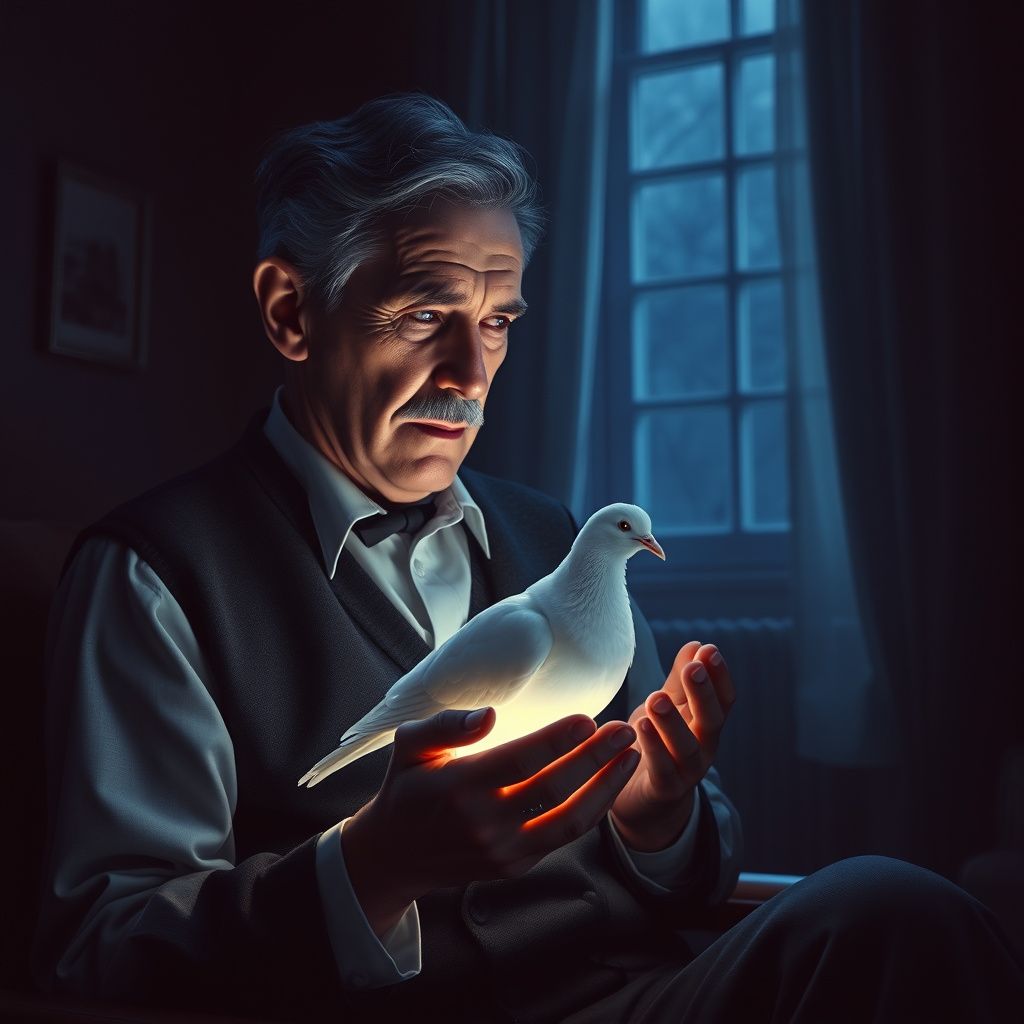
By his final years Tesla had been broke for decades - always one deal from solvency, always another hotel bill behind a ‘Do Not Disturb’ sign. He lived on warm milk and crackers and the kindness of Westinghouse, which quietly paid his rent. His truest companions were the pigeons he fed each day in the parks of Manhattan. One white female he nursed in his room, building a special perch for her broken wing and spending, by his account, more than $2,000 on her care. ‘I loved that pigeon,’ he reportedly told a biographer, ‘as a man loves a woman, and she loved me. As long as I had her, there was a purpose to my life.’ When she died, he said, something in him went with her.
The Government Takes Everything
January 1943 - death, then the trunks.
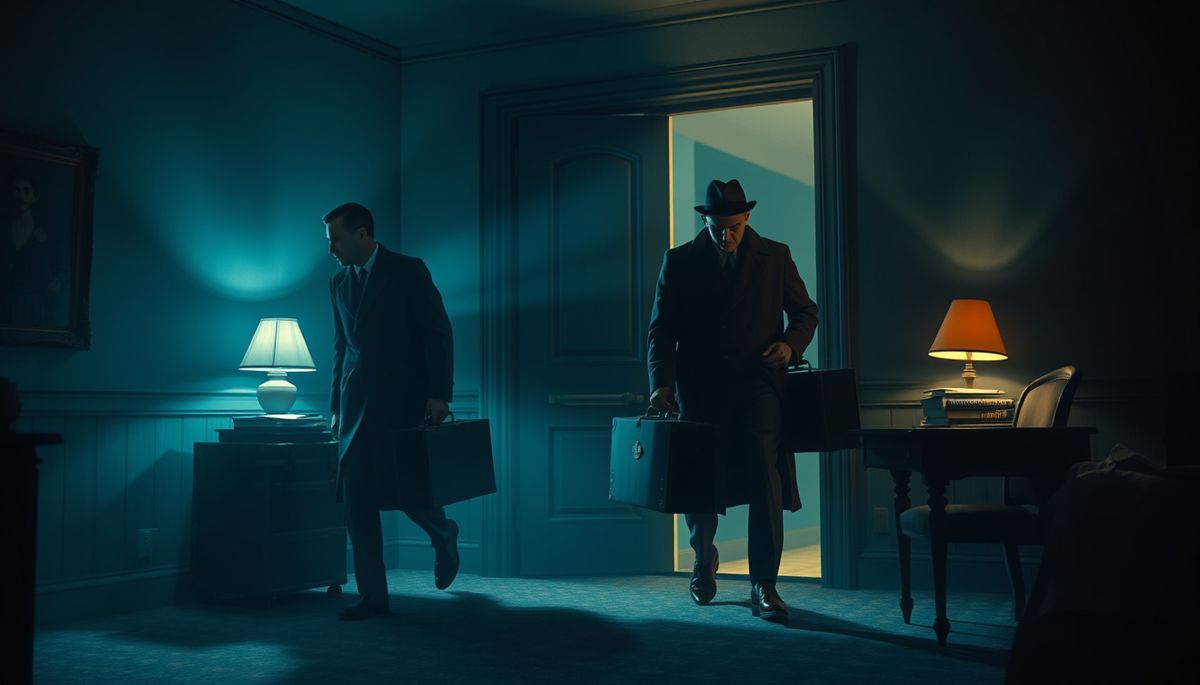
On the night of January 7, 1943, Tesla died alone in room 3327 of the Hotel New Yorker, of a heart failure, at age 86; a maid found him the next morning. Within hours, agents of the federal Office of Alien Property took possession of roughly 80 trunks of his papers and belongings - even though Tesla was a naturalized U.S. citizen. (The FBI is usually blamed, but it has stated plainly that it never seized or held his papers.) The government brought in a young MIT engineer named John G. Trump - uncle of Donald Trump - to judge whether any of it was dangerous. After two days he reported the late work was ‘speculative’ with nothing of military use; the safe rumored to hold a death-ray prototype contained only a Wheatstone bridge, a simple instrument for measuring resistance. In 1952 the trunks were shipped to Belgrade, where they rest today in the Nikola Tesla Museum.
Tesla & Einstein: The Next Spark
Where this story connects to the one you’ll tell next.
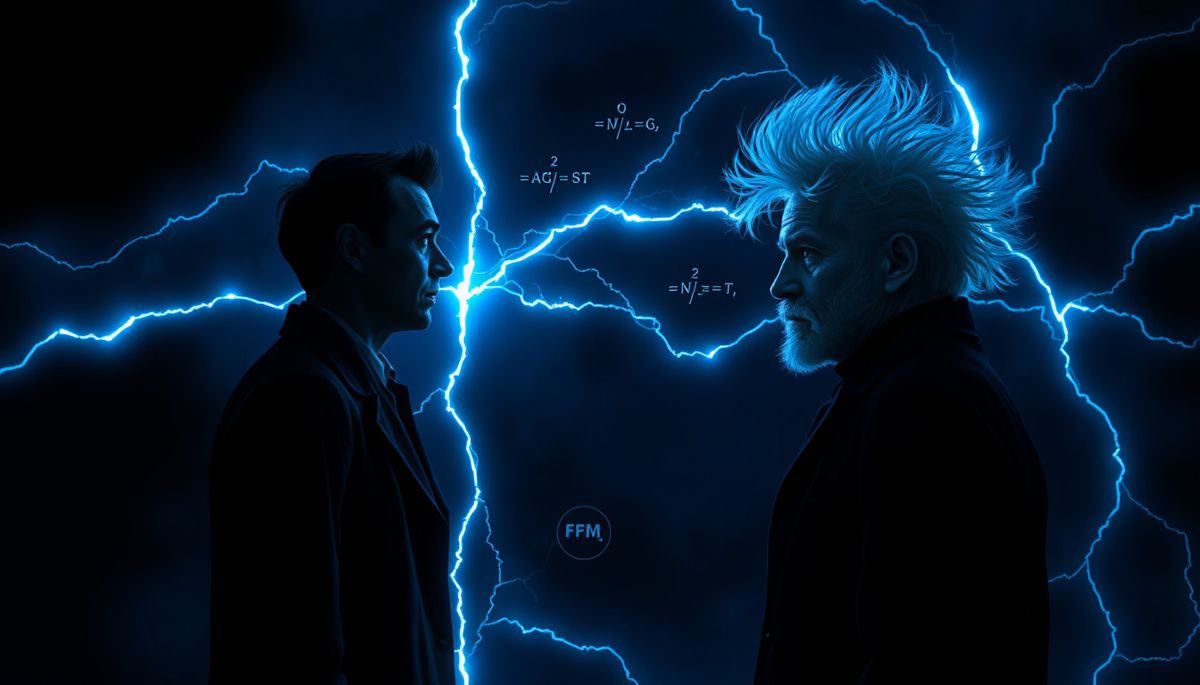
Tesla and Albert Einstein lived in the United States at the same time - Einstein at Princeton from 1933, Tesla in Manhattan until 1943, barely 55 miles apart - yet no meeting between them was ever documented. They did connect once on paper: for Tesla’s 75th birthday in 1931, Einstein sent a warm note hailing him as ‘an eminent pioneer in the realm of high-frequency currents.’ But the admiration ran one way. Tesla publicly scorned Einstein’s relativity as ‘a beggar clothed in purple whom ignorant people take for a king,’ clinging to the 19th-century ‘ether’ that Einstein had swept away. And that beloved internet line - where Einstein, asked how it feels to be the smartest man alive, supposedly says ‘I don’t know, ask Nikola Tesla’ - is pure fiction, traceable to no source at all. Two giants, one electric age, almost no real contact. Add Einstein to your collection, and the vector database can begin tracing the hidden threads between them for you.