
Claude Shannon
A small-town Michigan tinkerer turned a maze-solving toy mouse, a wearable roulette computer, and a college thesis into the mathematical bedrock of every digital device on Earth — then spent his last years unable to remember writing any of it.
Claude Shannon was an American mathematician and electrical engineer who, in a single 1948 paper, invented the field of information theory and gave the world the 'bit' as the basic unit of digital data. Twelve years earlier, in a master's thesis written at 21, he had already shown that Boolean algebra — the same true/false logic George Boole invented in 1854 — could design electrical switching circuits, the literal blueprint for the computer chip. He died in 2001 after a long battle with Alzheimer's, having spent his most productive final years not on further breakthroughs but on juggling machines, unicycles, and a robotic mouse that solved mazes.

The Tinkerer of Gaylord
Born April 30, 1916, in Petoskey, Michigan, and raised in nearby Gaylord, where his father Claude Sr. served as a probate judge and his mother Mabel was a high school principal. Young Shannon built model airplanes and a barbed-wire telegraph line to a friend's house half a mile away, and took apart radios to see how they worked. His childhood hero was inventor Thomas Edison — and he later discovered the admiration ran in the blood: both men descended from the same colonial settler, John Ogden, making them genuine, if very distant, cousins.
Shannon's small-town telegraph line used the same principle as real long-distance telegraphy — a barbed-wire fence run as a bare conductor between two houses — proving out ideas about circuits and signals years before he had a name for either.
Ann Arbor, Two Degrees at Once
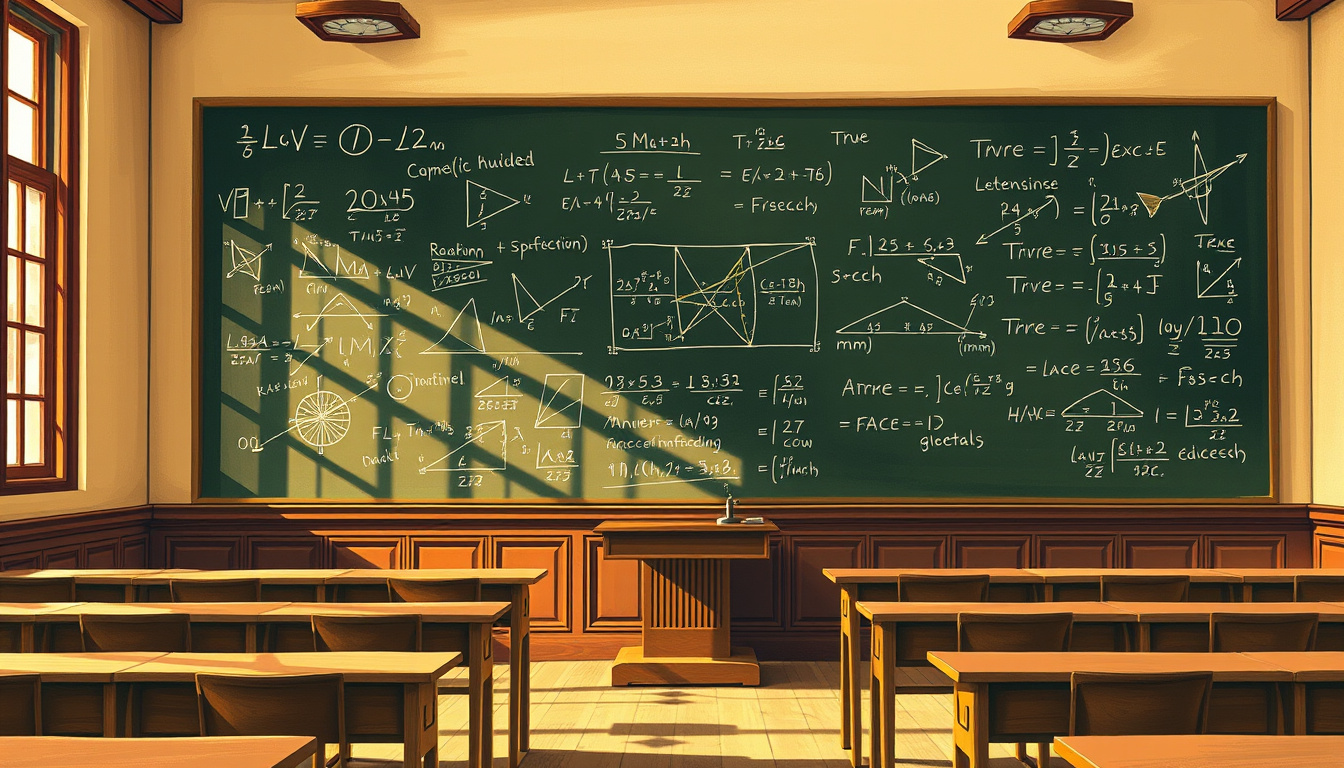
Shannon enrolled at the University of Michigan in 1932 and, unusually, pursued two bachelor's degrees simultaneously — one in mathematics, one in electrical engineering — graduating with both in 1936. A course in symbolic logic exposed him to George Boole's century-old algebra of true and false, an idea most mathematicians treated as an elegant philosophical curiosity with no practical use. Shannon filed it away.
Symbolic logic courses in the 1930s taught Boole's true/false algebra purely as an abstract branch of philosophy and mathematics — nobody in the room, including the professor, expected it to have an engineering application.
The Most Important Master's Thesis of the Century
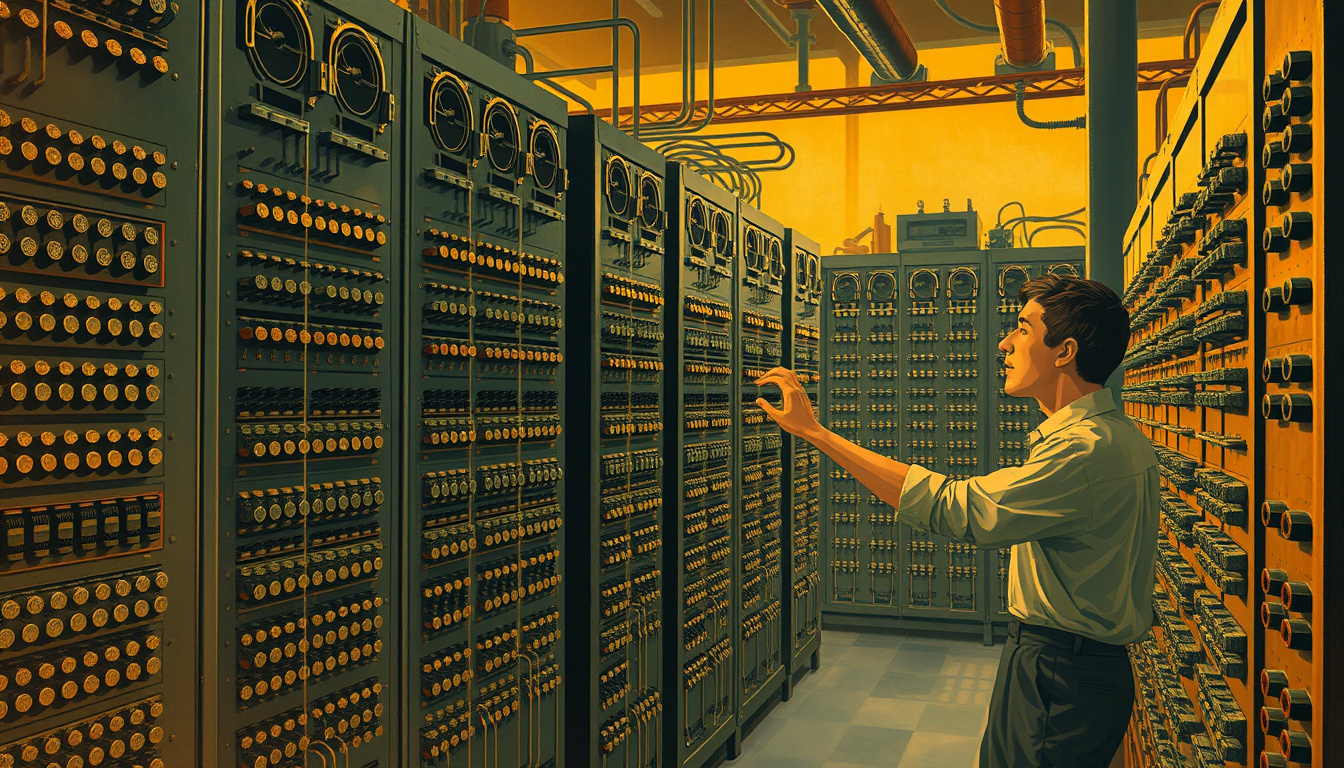
At MIT, Shannon took a research post operating Vannevar Bush's differential analyzer — a room-sized mechanical computer wired together with hundreds of electrical relays. Wiring and rewiring the machine's relay circuits by trial and error, 21-year-old Shannon realized Boole's true/false algebra was exactly the tool needed to design them systematically instead. His 1937 master's thesis, 'A Symbolic Analysis of Relay and Switching Circuits,' proved it — and went on to win the 1940 Alfred Noble Prize, a top American engineering honor.
Every relay in Bush's analyzer was either open or closed — true or false, one or zero — so Boole's 80-year-old algebra of true/false statements mapped onto switching-circuit design almost without modification, letting engineers calculate a circuit instead of guessing at it.
A Detour Into Genetics
On Vannevar Bush's advice, Shannon spent time at Cold Spring Harbor Laboratory applying his algebraic methods to an entirely different field: Mendelian genetics. His 1940 MIT PhD thesis, 'An Algebra for Theoretical Genetics,' used symbolic notation to describe how traits propagate through populations — pure mathematics applied to biology, decades before computational biology existed as a field.
Shannon treated inherited traits the same way he'd treated switching states — as discrete symbols that could be combined and manipulated by algebraic rules — the same pattern-matching instinct that would later let him reduce human communication itself to mathematics.
War Work in Secret
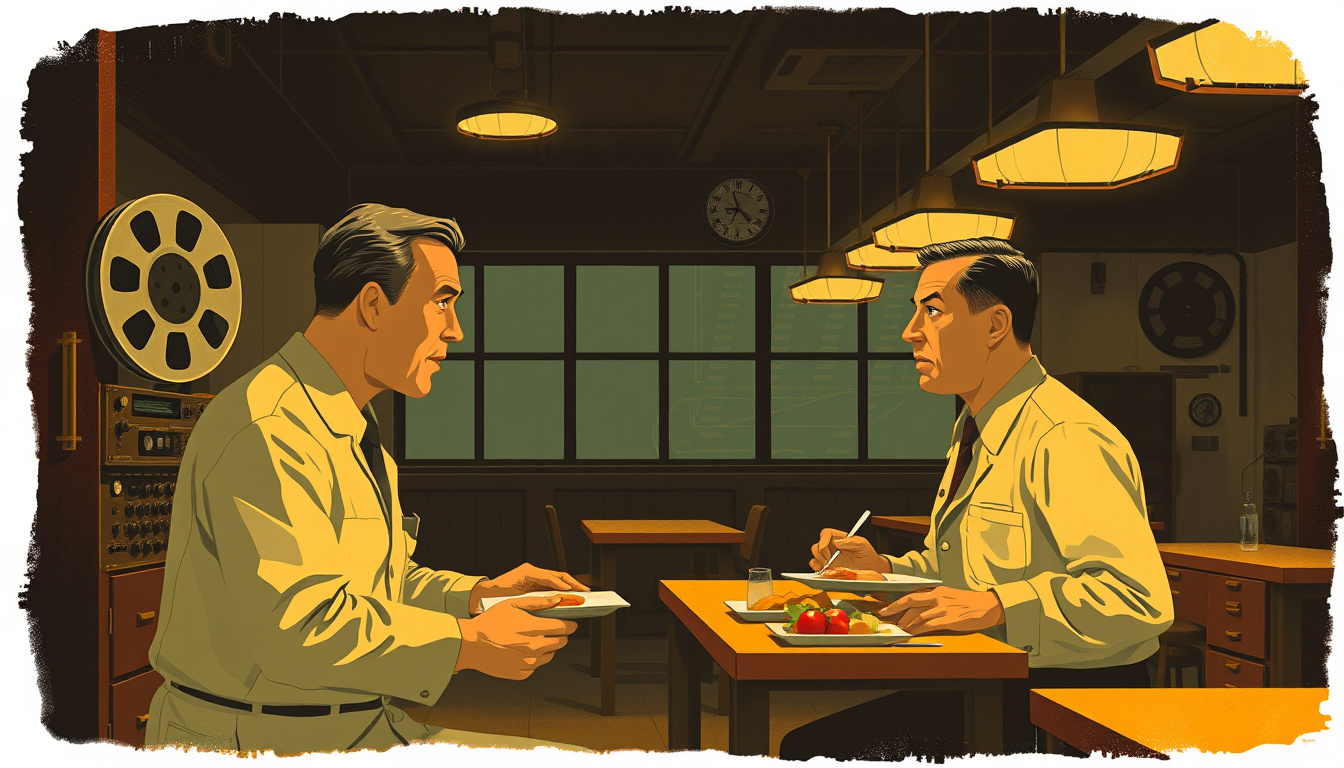
At Bell Labs from 1941, Shannon spent the war on classified cryptography, mathematically proving that SIGSALY — the scrambled radiotelephone system linking Roosevelt and Churchill — was unbreakable. In 1943, British mathematician Alan Turing visited Bell Labs on a cryptographic exchange; the two met daily over lunch, trading ideas about machine intelligence rather than the codebreaking work they were officially there to discuss. Shannon's classified 1945 report 'A Mathematical Theory of Cryptography' quietly laid groundwork for what came next.
SIGSALY encrypted voice using a one-time pad of true random noise pressed onto a vinyl record — an identical copy at the receiving end subtracted the exact same noise, and because the noise was genuinely random and used only once, Shannon could mathematically prove no amount of enemy computation could ever crack it.

The Bit Is Born
In July and October 1948, the Bell System Technical Journal published Shannon's two-part paper 'A Mathematical Theory of Communication.' It defined, for the first time, a mathematical measure of information itself — entropy — and showed that any message, whether English text, a photograph, or a phone call, could be reduced to a stream of 'bits,' a term Shannon adopted from colleague John Tukey's contraction of 'binary digit.' The paper founded an entirely new field, information theory, almost overnight.
Shannon showed that the meaning of a message doesn't matter to how efficiently it can be sent — only how much genuine uncertainty, or entropy, it resolves — a reframing that let engineers calculate the exact capacity of any communication channel, from a telegraph wire to fiber optic cable, decades before either fully existed.
Betty, Bell Labs, and a Mouse Named Theseus
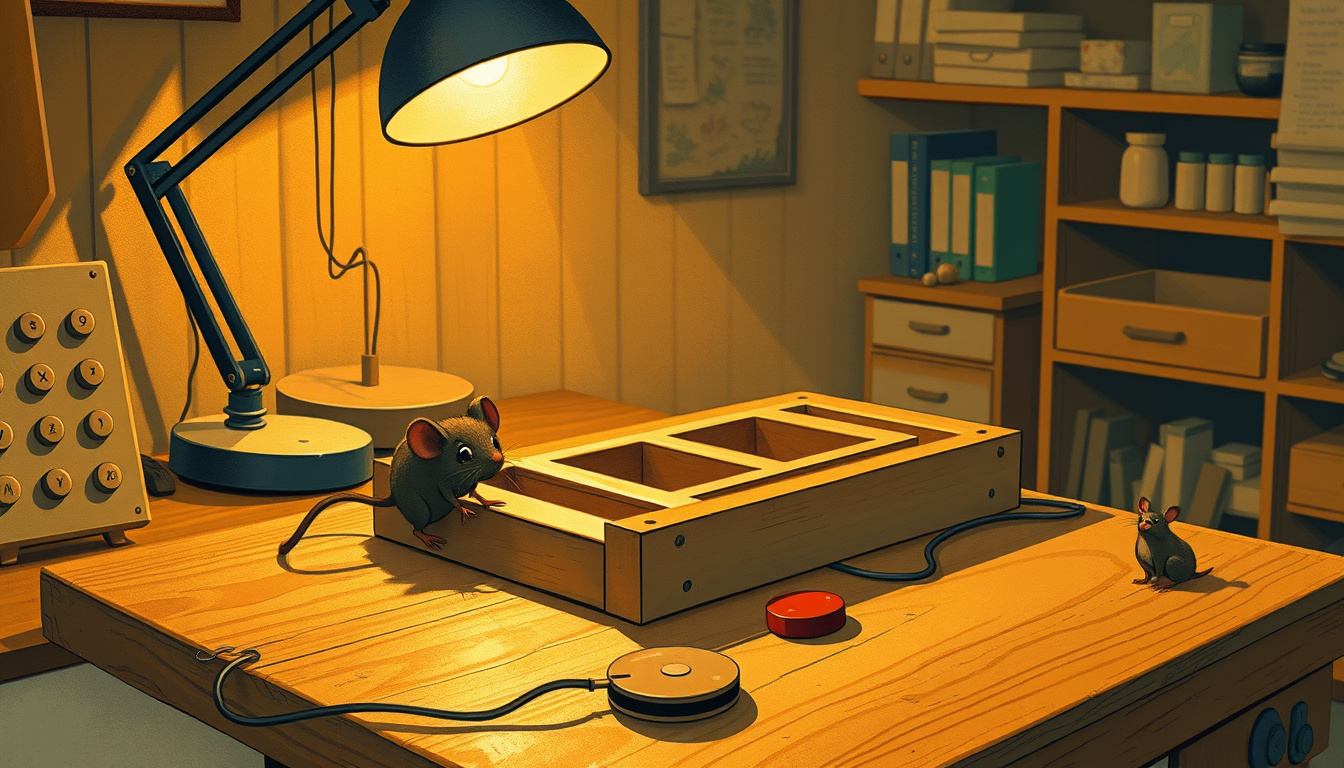
In 1948 Shannon asked Bell Labs numerical analyst Betty Moore on a date; they married in 1949. Betty became his closest collaborator, helping wire 'Theseus' — a magnetized mechanical mouse Shannon built in 1950 that could learn to navigate a 25-square maze using relay logic, one of the earliest working demonstrations of a machine learning from experience. Around the same years, Shannon became known for riding a unicycle down Bell Labs' halls at night while juggling.
Theseus 'remembered' the maze the same way a relay-based phone switch remembers a routing: each square stored, via relay state, whether the mouse had already tried a given direction and failed, so a second run through a learned maze went straight to the cheese.
Vegas, Toys, and a Return to MIT
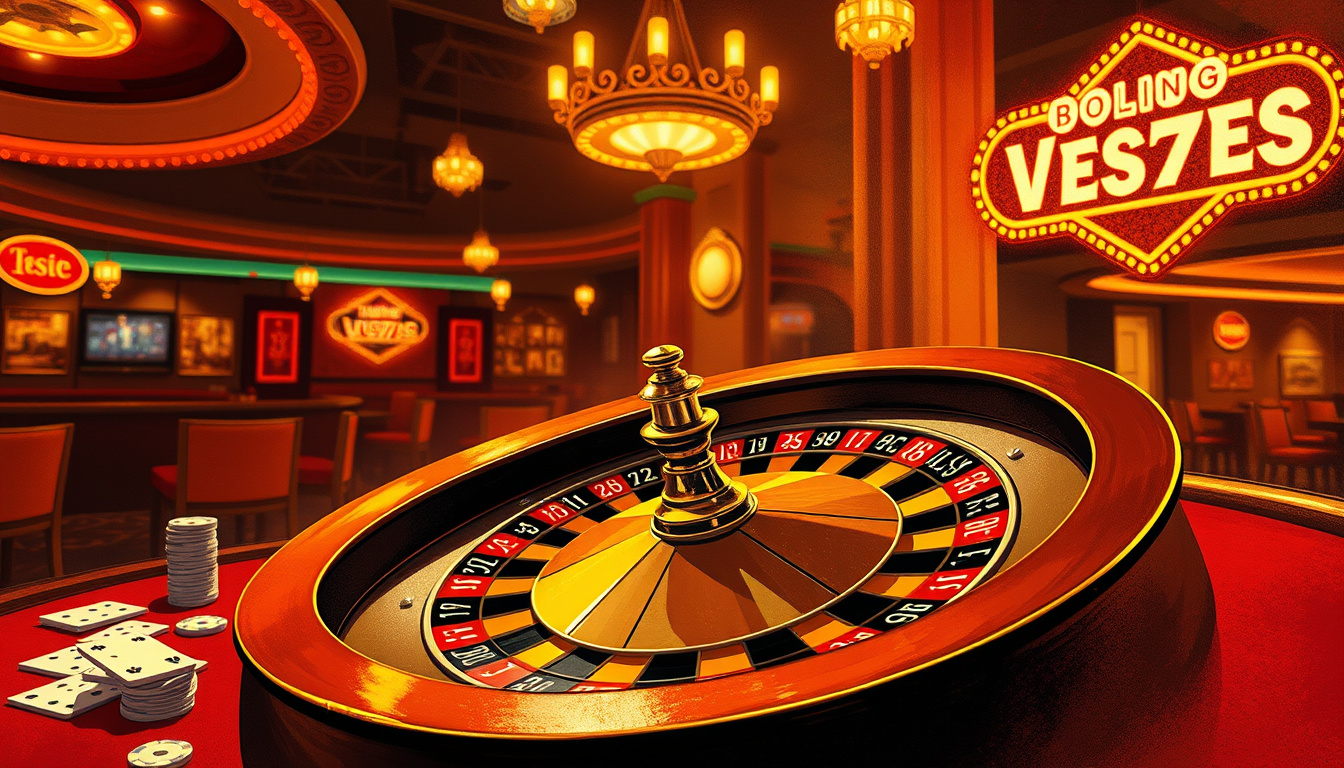
Shannon returned to MIT as a professor in 1958, but his curiosity kept wandering outside the lecture hall. In 1960–61, working with mathematician Ed Thorp, he built the first wearable computer — a cigarette-pack-sized device, operated by toe switches, that predicted roulette outcomes — and tested it in Las Vegas casinos in 1961. He also built rocket-powered frisbees, a flame-throwing trumpet, a machine that solved Rubik's Cubes, and, with Marvin Minsky, the 'Ultimate Machine': a box whose only function, when switched on, was to open its own lid and switch itself back off.
The roulette-predicting computer tracked the wheel's rotor speed against the ball's speed to forecast which eighth of the wheel the ball would likely land in — enough of a statistical edge, once relayed by hidden radio to an earpiece, to give an estimated 44% advantage over the house.
The Signal Fades
By 1985, Betty and their children noticed Shannon's memory beginning to fail; Alzheimer's disease was diagnosed, and by the early 1990s he could no longer recall having written the papers that reshaped the twentieth century. He spent his final years in a Massachusetts care facility, physically strong but unaware that his 1948 paper now underpinned every phone call, broadcast, and byte on Earth. He died February 24, 2001, two months short of his 85th birthday — outlived, in the end, not by his ideas' relevance but by his own awareness of them.
Alzheimer's progressively destroys the brain's ability to form and retrieve memories — meaning Shannon's decline erased his own biography from the inside, even as the 'bit' he'd named kept multiplying, unrecognized by its own namesake, in every computer being built around him.
Timeline
Quotes
“I just wondered how things were put together.”
“I am very seldom interested in applications. I am more interested in the elegance of a problem.”
“Crudely speaking, the amount of information is how much chaos is there in the system.”
“I would have, but I didn't know how to spell the word.”
Myths
Shannon invented the internet
Shannon is sometimes credited outright with inventing the internet.
Shannon's 1948 work laid the mathematical foundation — entropy, channel capacity, error coding — that all digital communication, including the internet, depends on. But the internet itself was built decades later by different people and institutions (ARPANET, TCP/IP). Crediting Shannon with the internet's invention overstates a genuinely foundational but indirect contribution.
"Information is the resolution of uncertainty" is a real Shannon quote
This tidy, widely-shared line is often presented as something Shannon himself said or wrote.
It's a popular paraphrase of Shannon's central idea in his 1948 paper, not a verbatim sentence traceable to any of his writings or interviews. It captures the concept accurately, but it isn't a direct quotation.
Shannon coined the word "bit"
Because the 1948 paper made "bit" a household term, Shannon is often assumed to have invented the word.
Shannon explicitly credited his Bell Labs colleague John W. Tukey, who had contracted "binary digit" into "bit" in an internal memo. Shannon adopted, formally defined, and popularized the term — he didn't originate it.
Connections
Click a name to jump to their story below.
19th-century mathematician whose 1854 algebra of true and false Shannon's 1937 thesis showed could design electrical switching circuits — the founding link between logic and computing.
Bell Labs numerical analyst and Shannon's closest collaborator; married 1949, helped wire Theseus the maze-solving mouse and test the Las Vegas roulette computer.
MIT engineer who employed Shannon on his differential analyzer and steered him toward both the switching-circuits thesis and the unlikely genetics PhD.
British mathematician who met Shannon daily over lunch at Bell Labs in 1943, trading ideas about machine intelligence during a wartime cryptographic exchange.
Statistician whose contraction of "binary digit" into "bit" Shannon adopted and popularized in his 1948 paper, crediting Tukey by name.
Mathematician who partnered with Shannon to build the first wearable computer, a roulette-predicting device the two tested together in Las Vegas in 1961.
AI pioneer and Bell Labs-era colleague who co-built the "Ultimate Machine" with Shannon — a box whose only function was switching itself back off.
Character
Playful curiosity over ambition
Built dozens of "useless" machines purely because the problem was elegant, largely indifferent to fame, funding, or practical application.
Cross-disciplinary pattern-matching
Moved fluidly between switching circuits, genetics, cryptography, and communication, applying the same algebraic instinct to each field in turn.
Indifference to fame
Never sought public attention despite reshaping the twentieth century; remained largely unknown outside academic and engineering circles during his own lifetime.
Mechanical tinkering instinct
Built radios and a telegraph line as a child, unicycles and juggling machines as an adult — never stopped building things with his hands.
Rigorous formalism paired with whimsy
Proved unbreakable-cipher theorems and built a box whose sole purpose was switching itself off, treating both pursuits with equal seriousness.
Genuine partnership with Betty
Relied on his wife as an actual technical collaborator on real engineering projects, unusual for the era's treatment of women in science.
No ego about breakthroughs
Rejected the dramatic "eureka moment" narrative about his own most famous discovery, describing it instead as gradual synthesis rather than a flash of genius.
Legacy patience, echoing Boole
His most consequential work, the 1937 thesis, took years to be fully recognized as the literal blueprint for computing — much like Boole's own algebra sat dormant for over 70 years before Shannon revived it.