People Worth Knowing · Volume XII

NAPOLEON BONAPARTE

1769 — 1821 · Ajaccio, Corsica
He crowned himself emperor, rewrote a continent's laws, and lost an empire to a Russian winter and an island called Elba that wasn't nearly far enough away.

The Story in Nine Chapters

Napoleon Bonaparte was born on an island that had become French only the year before, rose through the chaos of the Revolution on artillery fire and audacity, and by thirty-five had crowned himself Emperor of the French with his own hands rather than the Pope's. He rewrote the laws of an entire continent, reinstated slavery in France's colonies while losing Haiti to the only successful slave revolution in history, sold Louisiana to a country he'd never see, and won a run of battles so lopsided that Austerlitz is still taught as a tactical masterpiece. Then he overreached in Spain and overreached far worse in Russia, lost an empire, escaped one exile and built an army out of nothing in a hundred days, lost it all again at Waterloo, and spent his last six years on a rock in the South Atlantic turning his own defeat into the legend that outlived him -- height, pose, and poisoning myths included.
A Corsican at the École Militaire
Chapter 1 · Corsica / Paris, 1769-1784

A Corsican at the École Militaire

0:00

Napoleone di Buonaparte was born August 15, 1769, in Ajaccio, Corsica -- an island the Republic of Genoa had sold to France barely a year earlier, which meant the boy who would one day rule France was born French by a matter of months rather than birthright. He was the second of eight surviving children of Carlo Buonaparte, a lawyer of minor Corsican nobility, and Letizia Ramolino, in a family with standing but little money. In 1779, at age nine, he was sent to mainland France for schooling, arriving with a heavy Corsican-Italian accent that mainland French cadets never let him forget. He was admitted to the École Militaire in Paris in September 1784 to train as an artillery officer, excelling at mathematics, history, and geography while struggling with French and German grammar his whole life. He became the first Corsican ever to graduate the school, and was commissioned a second lieutenant in September 1785, assigned to the La Fère artillery regiment at age sixteen -- unremarkable on paper, a foreign-accented artillery officer among hundreds of others, with nothing yet to suggest what came next.
How it workedCorsica's sale to France in 1768 was a real-estate transaction between Genoa and the French crown, not a conquest of the Buonaparte family's choosing -- the entire trajectory of Napoleon's later French career rests on a border redrawn the year before his birth.
Toulon and the Whiff of Grapeshot
Chapter 2 · 1789-1795

Toulon and the Whiff of Grapeshot

0:00

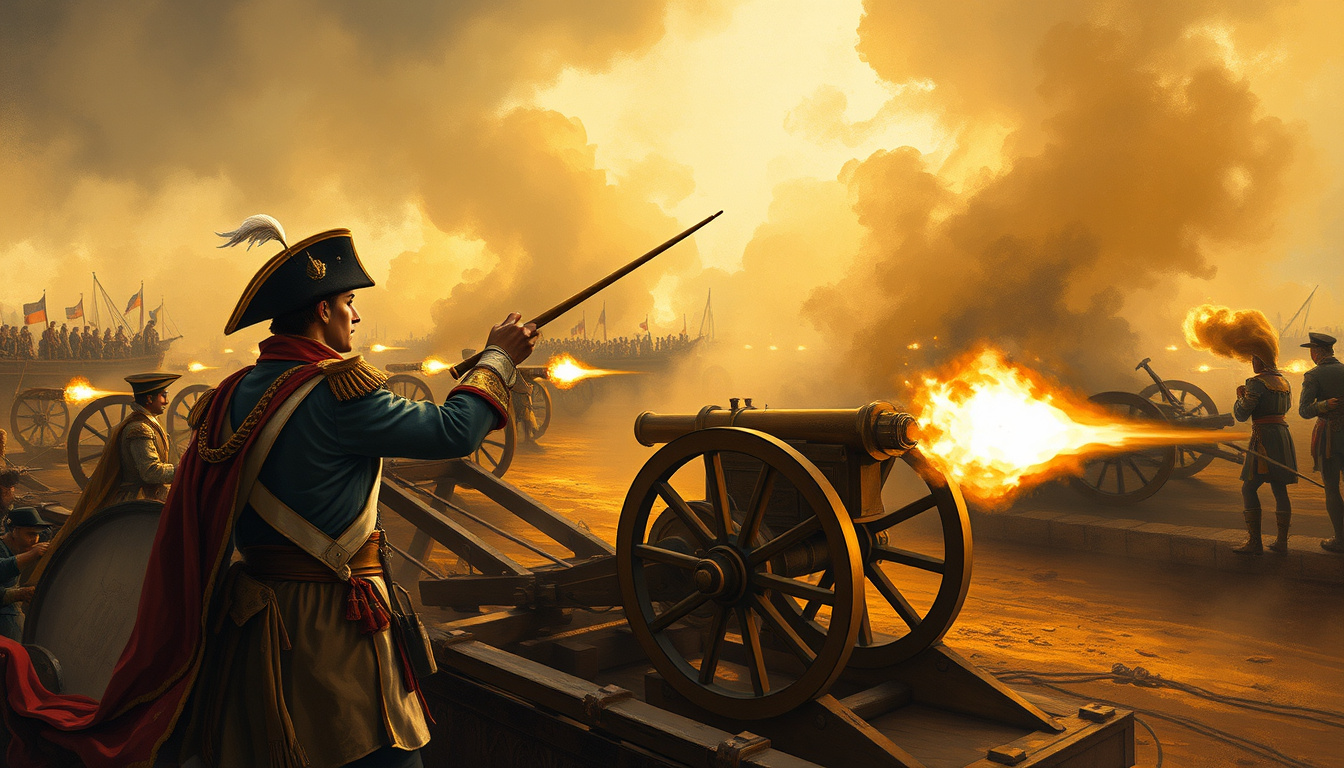
Napoleon backed the Revolution from its earliest years, promoting its cause among Corsican political factions before turning fully to the French mainland military once his family fell out with Corsican nationalist leader Pasquale Paoli. His decisive break came in 1793 at the Siege of Toulon, where royalist rebels had handed the strategic port over to a combined British and Spanish fleet. As a young artillery captain, Napoleon proposed and executed the plan that retook the harbor's high ground, forcing the allied fleet to withdraw; he was promoted to brigadier general at twenty-four, a startling rise for an officer with no aristocratic patronage. Two years later, on 13 Vendémiaire (October 5, 1795), he was called on again -- this time to defend the Revolutionary government itself against a royalist uprising in the streets of Paris. He turned artillery on the crowds, later described with chilling understatement as clearing them with "a whiff of grapeshot," and the massacre cemented both the government's survival and Napoleon's reputation as the Republic's most useful and most ruthless soldier. Command of the Army of Italy followed within months.
How it workedToulon and Vendémiaire share the same lesson that shaped Napoleon's entire rise -- artillery, correctly placed, could decide a battle or a political crisis faster and more cheaply than infantry, and the officer who understood that better than his superiors kept getting promoted past them.
Italy, Egypt, and Joséphine
Chapter 3 · 1796-1799

Italy, Egypt, and Joséphine

0:00

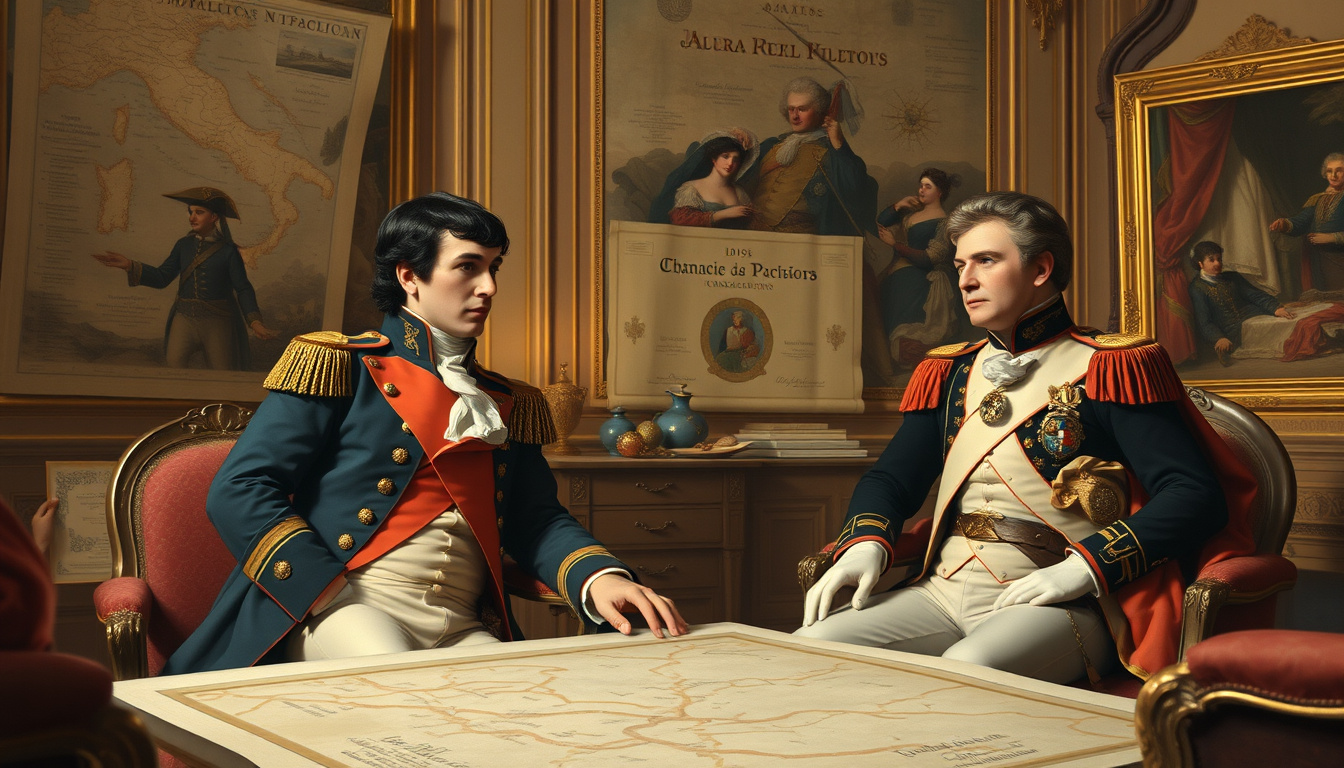
Days after taking command of the Army of Italy in March 1796, Napoleon married Joséphine de Beauharnais, a Parisian widow six years his senior with two children and a string of connections to the Directory's leadership -- he was twenty-six, she was thirty-two, and their courtship had lasted only months. He left almost immediately for the front, where his Italian campaign became the making of his legend: a chronically under-supplied, outnumbered French army won battle after battle against Austrian and Sardinian forces through speed and audacity rather than numbers, and Napoleon negotiated the peace terms himself, well beyond his formal authority, forwarding an already-adoring public image back to Paris in his own dispatches. In 1798 the Directory, wary of his growing popularity, dispatched him to Egypt to threaten Britain's route to India; the campaign captured Cairo but stranded his army after Admiral Nelson destroyed the French fleet at the Battle of the Nile, and ended in military stalemate. Napoleon abandoned his own army in Egypt in 1799 and sailed back to France alone, arriving to a political crisis and a public that had heard only of his victories, never his failures.
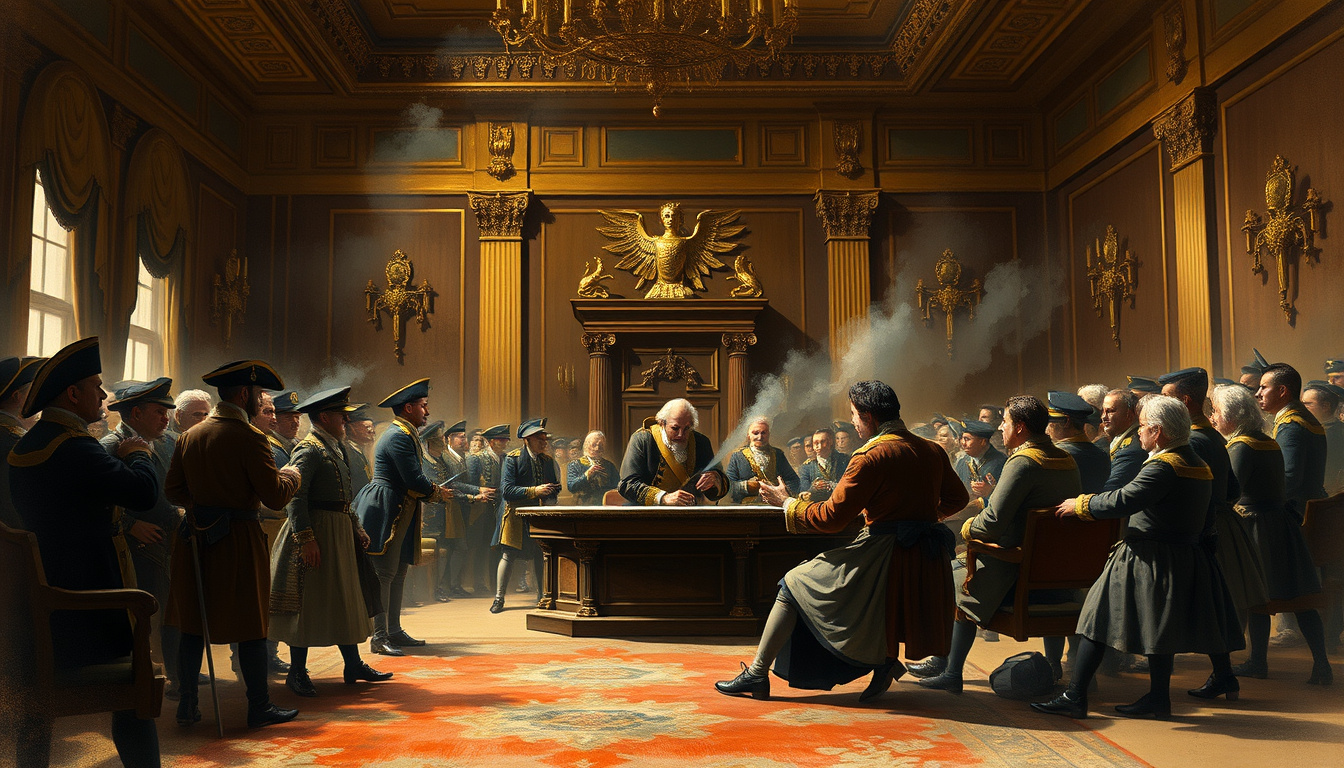
How it workedNapoleon's dispatches from both campaigns were themselves a kind of weapon -- he controlled the only version of events reaching Paris, curating his own myth in real time well before he held any political office to enforce it.
18 Brumaire
Chapter 4 · 1799-1804

18 Brumaire

0:00

On 18 Brumaire, Year VIII (November 9, 1799), Napoleon joined a conspiracy with the political theorist Abbé Sieyès and the diplomat Talleyrand to overthrow the floundering Directory in a coup that turned genuinely chaotic -- Napoleon was jeered and nearly seized on the floor of the Council of Five Hundred before his brother Lucien and loyal troops secured the outcome by force. The Constitution of the Year VIII made him First Consul, formally one of three but in practice supreme; the Constitution of the Year X, in 1802, made him First Consul for Life. In the years between, he pursued the project he would later call his true legacy: the Napoleonic Code, a single, standardized civil law replacing the patchwork of regional and feudal law across France, covering property, contracts, and family law in language ordinary citizens could read. It was enacted in 1804 and spread, by conquest and by imitation, across much of continental Europe and eventually Latin America -- a body of law substantively still in use, in various descendants, in dozens of countries today.
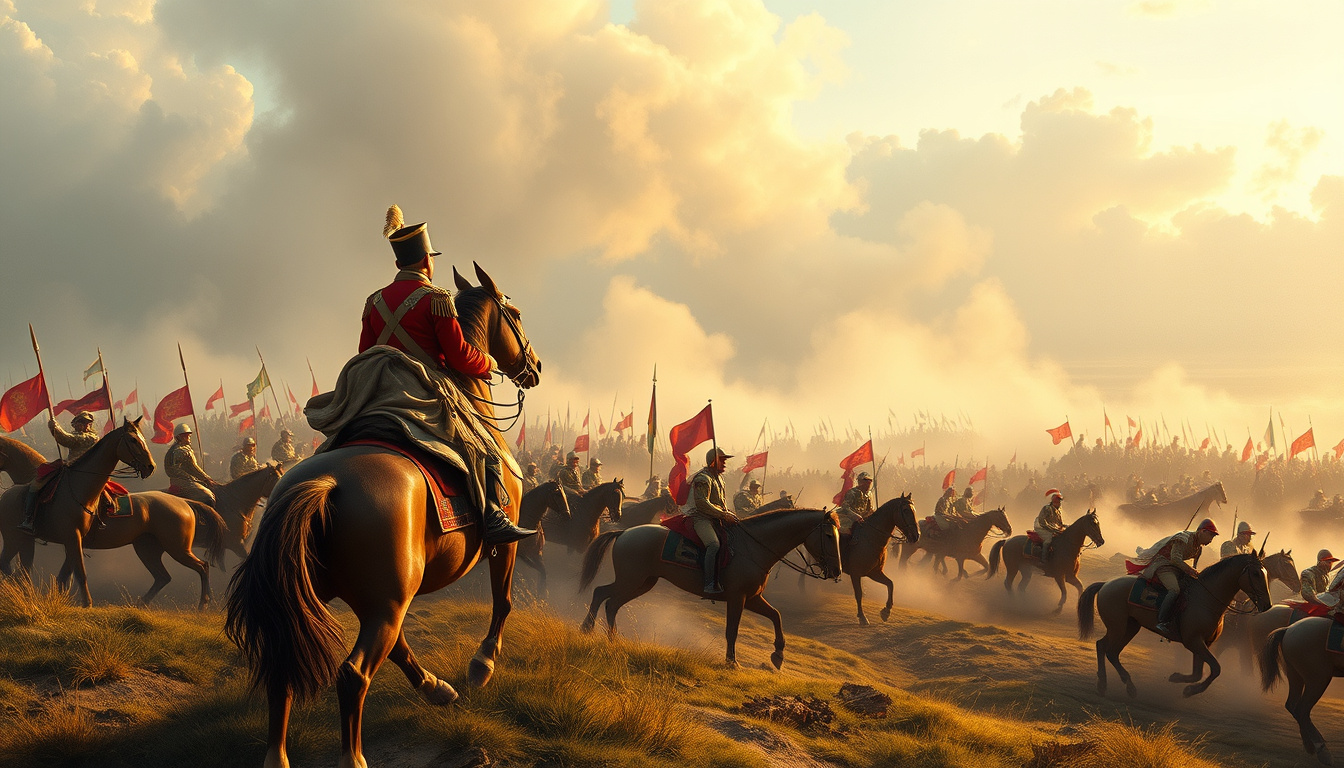
How it workedThe Napoleonic Code succeeded less because Napoleon invented its ideas from nothing -- many were already circulating among Revolutionary jurists and Roman law scholars -- and more because he had the political authority to force a single, final, enforced version onto a country that had never had one.
The Self-Coronation
Chapter 5 · 1804-1805

The Self-Coronation

0:00

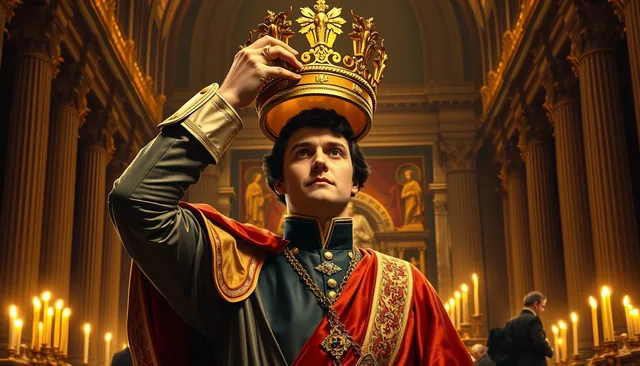
On May 18, 1804, the French Senate proclaimed Napoleon Emperor of the French. His coronation on December 2, 1804, at Notre-Dame Cathedral in Paris was staged with the full ceremonial weight of a European monarchy, Pope Pius VII present and participating -- and then, at the decisive moment, Napoleon took the crown from the Pope's hands and placed it on his own head himself, a calculated and widely noted break from tradition meant to announce that his authority came from himself and the state, not from the Church's blessing. A year later, on December 2, 1805 -- the coronation's anniversary -- he won what is generally regarded as his tactical masterpiece, the Battle of Austerlitz, against a combined Russian and Austrian force nearly twice his army's size, luring the allies into attacking a deliberately weakened flank before crushing them with a concealed reserve. Contemporaries and historians alike still call it the "Battle of the Three Emperors," and it marked the high point of Napoleon's military reputation, never quite matched again.
How it workedThe self-crowning gesture worked precisely because everyone watching understood the older alternative -- centuries of European monarchs had been crowned BY the Church, and Napoleon's audience knew exactly what statement he was making by refusing that script in front of the Pope himself.
Haiti and the Price of Louisiana
Chapter 6 · 1802-1804

Haiti and the Price of Louisiana

0:00

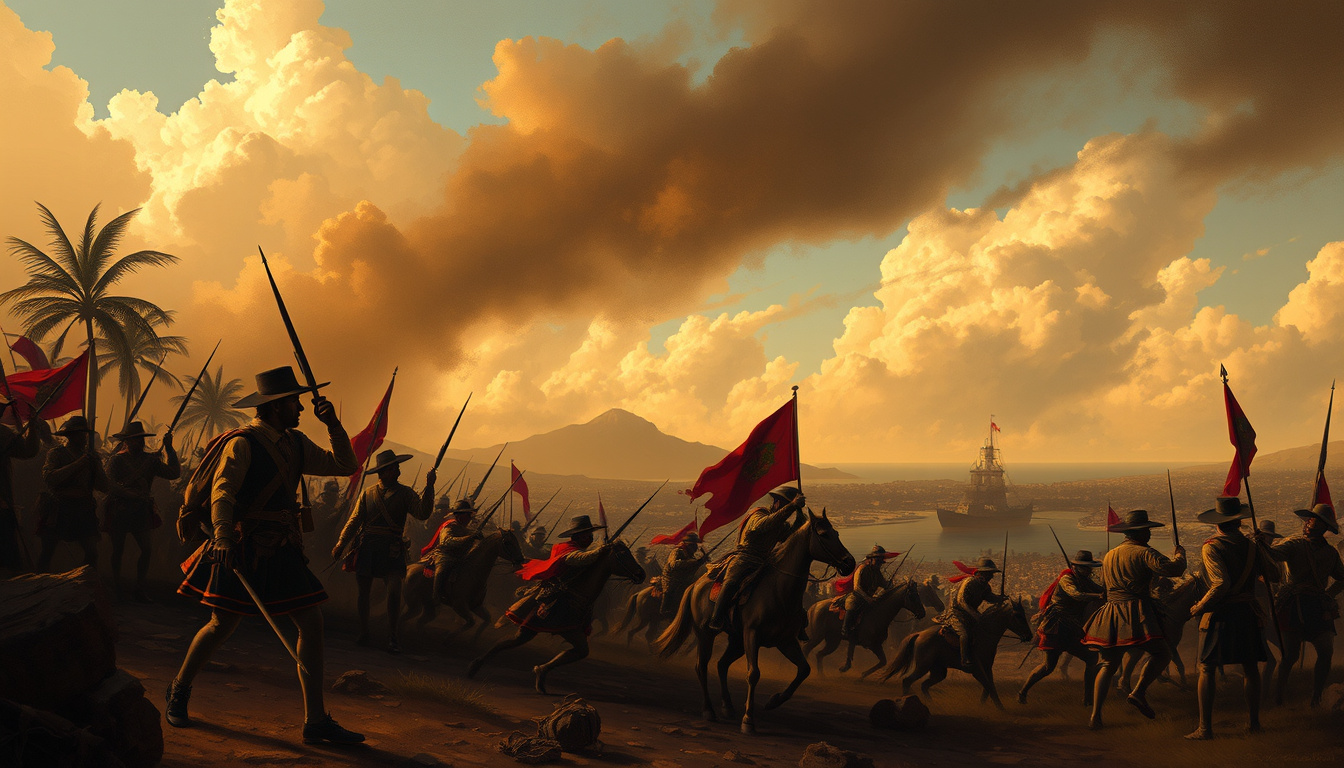
In March 1802, Napoleon reinstated slavery across France's colonies, reversing an abolition the Revolutionary government had declared eight years earlier -- a decision driven by plantation-owner lobbying and by his flat refusal to accept an independent, Black-led government in France's most profitable colony, Saint-Domingue. He sent General Leclerc and roughly 20,000 troops to retake the colony from the forces of Toussaint Louverture, a formerly enslaved man who had risen to govern it. Louverture negotiated a peace agreement with Leclerc in May 1802, only to be seized under Napoleon's orders shortly afterward, shipped to France, and imprisoned in a cold mountain fortress, where he died in April 1803. The expedition failed anyway, worn down by yellow fever and continuing resistance under Louverture's former officers; French troops withdrew by the end of 1803, and the colony declared its independence as Haiti in January 1804 -- the only nation in history born of a successful slave revolt. The Haiti disaster directly convinced Napoleon to abandon his ambitions in the Americas: unable to hold or supply a North American empire without a secure Caribbean base, he sold the entire Louisiana Territory to the United States in 1803 rather than continue trying to defend it.
How it workedNapoleon's Louisiana sale is conventionally remembered in the United States as a real-estate bargain and barely remembered at all as a direct consequence of a failed war to keep Black Haitians enslaved -- the two events are the same decision, viewed from two very different sides of the Atlantic.
The Peninsula and the Russian Winter
Chapter 7 · 1807-1812

The Peninsula and the Russian Winter

0:00

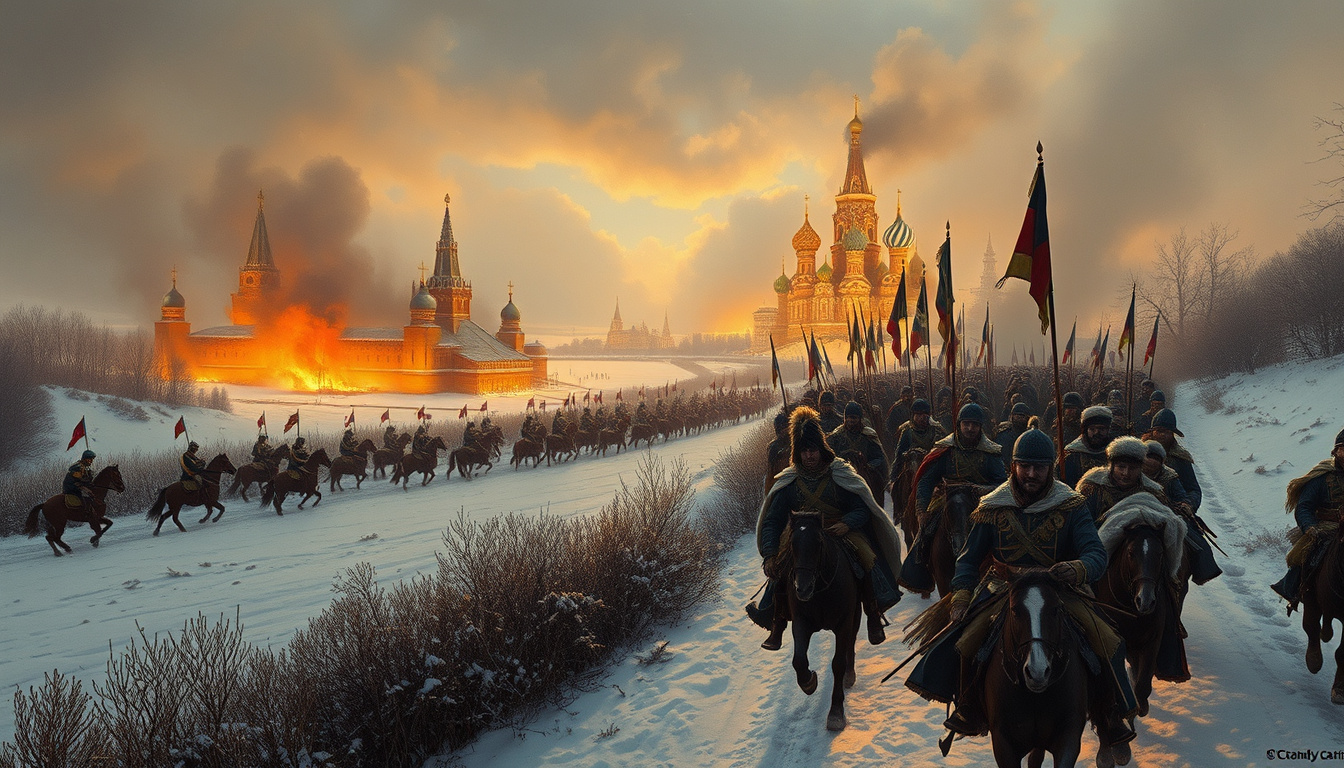
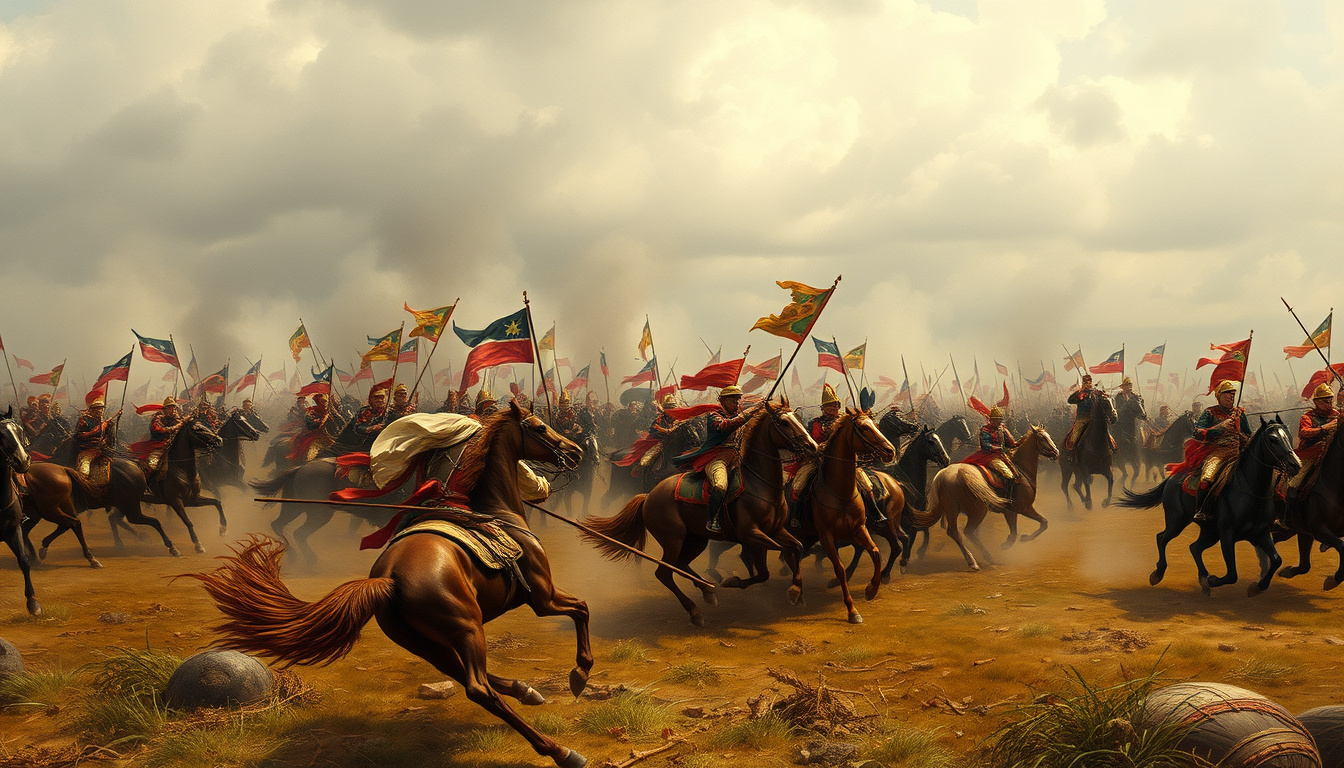
Napoleon's invasion and occupation of Spain and Portugal, beginning in 1807 and 1808, dragged on for years against an enemy that rarely fought him in open battle -- Spanish and Portuguese guerrillas, backed by a British expeditionary force under Arthur Wellesley, the future Duke of Wellington, waged a grinding campaign of ambush and attrition that steadily drained French troops, money, and morale, and gave the word "guerrilla" (Spanish for "little war") to the world. The Peninsular War was still unresolved when Napoleon made his most catastrophic decision: on June 24, 1812, a Grande Armée of more than 600,000 men crossed the Neman River into Russia, the largest invasion force Europe had ever assembled. The army fought its bloodiest single day of the entire Napoleonic Wars at Borodino that September, roughly 250,000 combatants and staggering losses on both sides, then occupied a burning, evacuated Moscow that it could not supply through the coming winter. The retreat began October 19, 1812; of the more than 600,000 troops who had entered Russia, only about 112,000 returned, the overwhelming majority of the losses caused by cold, starvation, and disease rather than combat.
How it workedThe Russian catastrophe and the Spanish quagmire were not separate failures -- they were the same failure twice, an empire that had grown by decisive, fast, single-battle victories running out of room to apply that formula against enemies who simply refused to fight it on those terms.
Elba, the Hundred Days, and Waterloo
Chapter 8 · 1812-1815

Elba, the Hundred Days, and Waterloo

0:00

The Russian disaster broke the myth of Napoleon's invincibility, and allied armies pressed into France itself through 1813 and 1814; he abdicated for the first time in April 1814 and was exiled to Elba, a small island just ten miles off the Italian coast -- close enough, as it turned out, that escaping it took him less than a year. He landed back in France on March 1, 1815, and reached Paris on March 20 without a shot fired against him, as the troops sent to arrest him defected to his side one regiment at a time; the ensuing period, remembered as the Hundred Days, ended on June 18, 1815, at Waterloo, in Belgium, where British forces under Wellington held out through a long, desperate day until Prussian forces under Field Marshal Blücher arrived to complete the French army's collapse. Napoleon abdicated a second time on June 22, 1815, in favor of his four-year-old son, a gesture the victorious allies had no intention of honoring.

How it workedThe Hundred Days is a genuinely strange event in European history for a simple structural reason -- Napoleon retook an entire country from a sitting monarch without fighting a single battle to do it, purely because his own former soldiers preferred him to the government that had replaced him.
St. Helena and the Myths
Chapter 9 · 1815-1821

St. Helena and the Myths

0:00

The British, determined this time to make escape impossible, exiled Napoleon to Saint Helena, a remote volcanic island in the South Atlantic more than a thousand miles from any other landmass, arriving October 15, 1815, specifically chosen so that he could, in the era's phrase, "no longer disturb the peace of the world." He spent his final years dictating memoirs that shaped his own legend for the century that followed, and died on May 5, 1821, at fifty-one; the original autopsy attributed his death to a stomach ulcer or cancer. He left behind a legend far larger and considerably tidier than the record -- the myth of his unusual shortness, mostly the invention of British caricaturist James Gillray's wartime cartoons rather than his actual, roughly average-for-the-era height; the hand-tucked-in-the-waistcoat pose, a standard genteel portrait convention centuries older than Napoleon rather than a personal quirk; and a poisoning theory built on elevated arsenic found in his hair, which modern analysis suggests reflects lifelong environmental exposure rather than a late murderous dose. Each myth, examined, says less about Napoleon than about how thoroughly the century after his death was willing to reshape him into whatever story it needed him to tell.

How it workedSt. Helena's extreme isolation was the point, not an accident -- Elba's proximity to Europe was precisely the mistake the British were determined not to repeat a second time.

Timeline · 1769 → today

Gold marks the hinge moments.

Aug 15, 1769
Born Napoleone di Buonaparte in Ajaccio, Corsica, one year after Corsica became French
1779
Sent to mainland France for schooling at age nine
Sept 1784
Admitted to the École Militaire in Paris as an artillery cadet
Sept 1785
Commissioned second lieutenant, La Fère artillery regiment, age 16
1793
Siege of Toulon: retakes the port, made brigadier general at 24
Oct 5, 1795
13 Vendémiaire: crushes a royalist uprising in Paris with artillery -- "a whiff of grapeshot"
Mar 9, 1796
Marries Joséphine de Beauharnais
1796-97
Wins the Italian campaign against Austrian and Sardinian forces
1798-99
Egyptian campaign; fleet destroyed by Nelson at the Battle of the Nile
Nov 9, 1799
18 Brumaire coup overthrows the Directory; becomes First Consul
1802
Constitution of the Year X makes him First Consul for Life
Mar 20, 1802
Reinstates slavery in French colonies
May 1802
Toussaint Louverture negotiates peace, then is seized under Napoleon's orders
Apr 1803
Toussaint Louverture dies in a French prison
1803
Sells the Louisiana Territory to the United States
1804
Napoleonic Code enacted
May 18, 1804
Proclaimed Emperor Napoleon I by the Senate
Dec 2, 1804
Crowns himself Emperor at Notre-Dame, taking the crown from Pope Pius VII's hands
Dec 2, 1805
Battle of Austerlitz, the "Battle of the Three Emperors"
1807-08
Peninsular War begins in Spain and Portugal
Jan 10, 1810
Divorces Joséphine
Mar 11, 1810
Marries Marie-Louise of Austria by proxy
Mar 1811
Birth of his heir, Napoleon II
Jun 24, 1812
Grande Armée of 600,000+ crosses the Neman River into Russia
Sep 7, 1812
Battle of Borodino, the bloodiest single day of the Napoleonic Wars
Oct 19, 1812
Retreat from Moscow begins; only ~112,000 of 600,000+ troops return
Apr 11, 1814
Abdicates for the first time; exiled to Elba
May 1814
Learns of Joséphine's death while on Elba
Mar 20, 1815
Escapes Elba, returns to Paris; the Hundred Days begin
Jun 18, 1815
Defeated at the Battle of Waterloo
Jun 22, 1815
Abdicates a second time, in favor of his son
Oct 15, 1815
Arrives in exile on Saint Helena
May 5, 1821
Dies on Saint Helena, age 51

Quotes — and which ones are real

Graded from verified contemporary record to internet-era fabrication.

Verified
“My real glory is not to have won forty battles; Waterloo will erase the memory of so many victories; what nothing will erase, what will live on forever, is my Civil Code.”
— Napoleon Bonaparte
Reflecting from exile on his own legacy
Widely cited in biographies drawing on his St. Helena memoirs
Reported
“France, the army, head of the army, Joséphine.”
— Napoleon Bonaparte
Reputed dying words at St. Helena, invoking his first wife rather than his second
Per attendants' later accounts, not independently verifiable
Apocryphal
“Able was I ere I saw Elba.”
— Attributed to Napoleon Bonaparte
A famous English-language palindrome supposedly spoken about his exile
Almost certainly a much later English wordplay invention -- Napoleon was a native French speaker
Disputed
“History is a set of lies agreed upon.”
— Attributed to Napoleon Bonaparte
Commonly quoted in popular culture as a cynical aside on how history gets written
No confirmed primary-source citation; treated as disputed/apocryphal by most historians
Apocryphal
“An army marches on its stomach.”
— Attributed to Napoleon Bonaparte
Widely repeated maxim about military logistics
No primary source has ever been located; likely a later paraphrase of his documented emphasis on supply lines
Apocryphal
“Never interrupt your enemy when he is making a mistake.”
— Attributed to Napoleon Bonaparte
A frequently quoted piece of strategic advice
No period source has been identified; consistent with his style but unverified
Disputed
“Impossible is a word only to be found in the dictionary of fools.”
— Attributed to Napoleon Bonaparte
A widely circulated motivational quote
Repeated in quote compilations without a confirmed primary citation
Reported
“Four hostile newspapers are more to be feared than a thousand bayonets.”
— Napoleon Bonaparte
On his lifelong effort to control the French press
Recounted in multiple 19th-century biographies discussing his press censorship policy
Plausible
“The best way to keep one's word is not to give it.”
— Attributed to Napoleon Bonaparte
A cynical maxim on diplomacy widely attached to his name
No confirmed primary source; consistent with his diplomatic reputation but unverified
Apocryphal
“A leader is a dealer in hope.”
— Attributed to Napoleon Bonaparte
Widely quoted in leadership literature
No primary citation located; likely a later paraphrase attributed retroactively
Disputed
“It is worse than a crime, it is a mistake.”
— Talleyrand (or Joseph Fouché, disputed)
Reaction to Napoleon's 1804 execution of the Duke of Enghien on flimsy charges of conspiracy
Widely quoted in histories of the Consulate; the exact original speaker is genuinely disputed between the two men
Verified
“Soldiers of my Old Guard: I bid you farewell. For twenty years I have constantly accompanied you on the road to honor and glory... Do not lament my fate; if I have consented to survive, it is to serve your glory still.”
— Napoleon Bonaparte
Farewell address to the Imperial Guard at Fontainebleau upon his first abdication, April 1814
Widely documented in contemporary accounts of the Fontainebleau farewell
Verified
“It has been a damned nice thing -- the nearest run thing you ever saw in your life.”
— The Duke of Wellington
His own assessment of how close the Battle of Waterloo actually was
Documented in Wellington's letters and later recorded conversations

Myths vs. the Record

Napoleon was unusually short

The story

Napoleon is remembered as remarkably short for his era, giving rise to the "Napoleon complex" as a term for short men overcompensating with aggression.

The record

He was recorded at "5 pieds 2 pouces" in French measurement units, which converts to roughly 5'7" (170cm) in English units -- average or slightly above average height for a Frenchman of his era. The "short Napoleon" myth is traced largely to British caricaturist James Gillray's wartime political cartoons, which drew him small and stuck far more durably in popular memory than the facts ever did.

Kernel of truth

French and English units of measurement genuinely differed enough to cause real confusion at the time -- his own contemporaries had the raw numbers right, and the mismeasurement myth still spread anyway.

confidence: high

The hand-in-waistcoat pose was a personal quirk or medical concealment

The story

Napoleon's famous hand-tucked-in-his-coat portrait pose is often explained as a nervous habit, a stomach ailment he was hiding, or another personal medical secret.

The record

The pose is a standard, centuries-old genteel portraiture convention, traceable to Greco-Roman statuary and in wide use throughout 18th-century portraits of many other public figures, including Mozart and George Washington -- it simply became most associated with Napoleon because of how often it appeared in his official state portraits.

Kernel of truth

He really was painted this way in his most famous and widely reproduced portraits -- the pose is genuinely his signature image, just not his personal invention or medical secret.

confidence: high

Napoleon was poisoned to death on St. Helena

The story

Elevated arsenic found in Napoleon's preserved hair has fueled theories that he was deliberately poisoned during his exile, including a specific hypothesis involving arsenic-laced green wallpaper pigment in his residence.

The record

Modern forensic analysis found arsenic levels elevated fairly consistently throughout his entire life, not spiking in his final months as deliberate poisoning would show -- pointing toward chronic low-level environmental exposure (common in the era's pigments, medicines, and hair treatments) rather than a targeted assassination. Most historians still favor the original autopsy's stomach cancer or ulcer diagnosis, though the debate has not fully closed.

Kernel of truth

The elevated arsenic itself is a real, measured finding, not an invented rumor -- the dispute is entirely about what it means, not whether it exists.

confidence: medium

Napoleon personally invented the Napoleonic Code from scratch

The story

The Napoleonic Code is popularly remembered as a purely original legal system that Napoleon single-handedly conceived and wrote.

The record

Many of the Code's core legal principles were already circulating among Revolutionary-era legal reformers and drew heavily on older Roman law traditions; Napoleon's real, substantial contribution was consolidating competing drafts into one coherent, enforced code and then spreading it across Europe through conquest -- not inventing its underlying ideas.

Kernel of truth

He was genuinely, personally involved in the Code's drafting sessions and pushed hard for its clarity and consistency -- the myth oversells authorship, not his direct hands-on role in finishing it.

confidence: medium

The Network — allies, rivals, blood

Joséphine de Beauharnais

first wife

Parisian widow he married in 1796; their marriage survived mutual infidelity and a politically necessary 1810 divorce, but he invoked her name, not his second wife's, in his reported dying words.

Marie-Louise of Austria

second wife

Austrian archduchess he married by proxy in 1810 specifically to produce an heir; she gave birth to Napoleon II in 1811.

Talleyrand

foreign minister, later rival

Co-architect of the 1799 coup that made Napoleon First Consul, and one of his most capable diplomats, before turning against him as the empire's fortunes collapsed.

Abbé Sieyès

coup co-conspirator

Revolutionary political theorist who planned the 18 Brumaire coup alongside Napoleon in 1799, expecting to control the resulting government himself.

Toussaint Louverture

adversary

Leader of the Haitian Revolution, negotiated a peace with Napoleon's forces in 1802, then was seized under Napoleon's orders and died in a French prison in 1803.

The Duke of Wellington

final conqueror

British commander who defeated Napoleon at Waterloo in 1815, ending the Hundred Days and Napoleon's political career for good.

Tsar Alexander I

rival emperor

Russian emperor opposed at Austerlitz in 1805 and again in the catastrophic 1812 invasion of Russia that broke Napoleon's military reputation.

Marshal Ney

top military commander

One of Napoleon's most trusted marshals across the Grande Armée's campaigns, present through the Russian retreat and at Waterloo.

Character — eight defining traits

Relentless self-mythologizer

Controlled his own image through curated campaign dispatches, a staged self-coronation, and years of exile spent dictating memoirs that shaped his legend for the century after his death.

Meticulous administrator beneath the myth

Beyond the battlefield, obsessively hands-on in codifying French civil law, reorganizing education and the tax system, and reading state reports late into the night.

Willing to sacrifice ideals for power

Reinstated slavery in the colonies and crowned himself emperor within a decade of rising to power on Revolutionary ideals of liberty and equality.

Audacious risk-taker

Repeatedly staked everything on a single decisive campaign -- Italy, Egypt, Russia -- rather than the slower, more cautious wars his rivals preferred.

Charismatic commander who inspired fierce loyalty

Retook France in 1815 without firing a shot, as the very soldiers sent to arrest him defected to his side regiment by regiment.

Chronically overextended his own ambition

Fought a draining guerrilla war in Spain and a catastrophic invasion of Russia in the same overlapping years, stretching the empire past what it could supply or defend.

Comfortable rewriting his own defeat

Spent his final six years in exile reframing Waterloo, Russia, and his fall from power into a heroic narrative that shaped his reputation for generations.

A legacy that splits along conquest lines

Revered in France as a modernizing lawgiver, reviled in Haiti, Spain, and Russia as an occupier or the man who reinstated their enslavement -- the same man, judged by who was on which side of his army.

ASK THE ARCHIVE

Have a question this chapter didn’t answer? Ask the archive — answered live, checked against the same research as the story above.

Ambient score