The Story in Nine Chapters
Muhammad Ali was the most famous man on Earth for the better part of two decades, and he got there twice -- first with his fists, then by giving them up. Born Cassius Clay in segregated Louisville, he won Olympic gold at eighteen, invented a boxing persona by borrowing it from a professional wrestler, and became heavyweight champion at twenty-two. Then, at the peak of his fame, he changed his name, refused induction into the U.S. Army on religious and moral grounds, and was stripped of his title, his license, and his passport for it -- exiled from the ring for three and a half years of his athletic prime. He came back, lost and reclaimed the crown twice more in fights that are still argued about today, then spent the last three decades of his life in slow public combat with Parkinson's disease. Ancient quotes are not the problem here -- modern ones are: much of what 'everyone knows' Ali said was written by cornermen, copywriters, and protesters, not by him.
The Boy Whose Bike Was Stolen
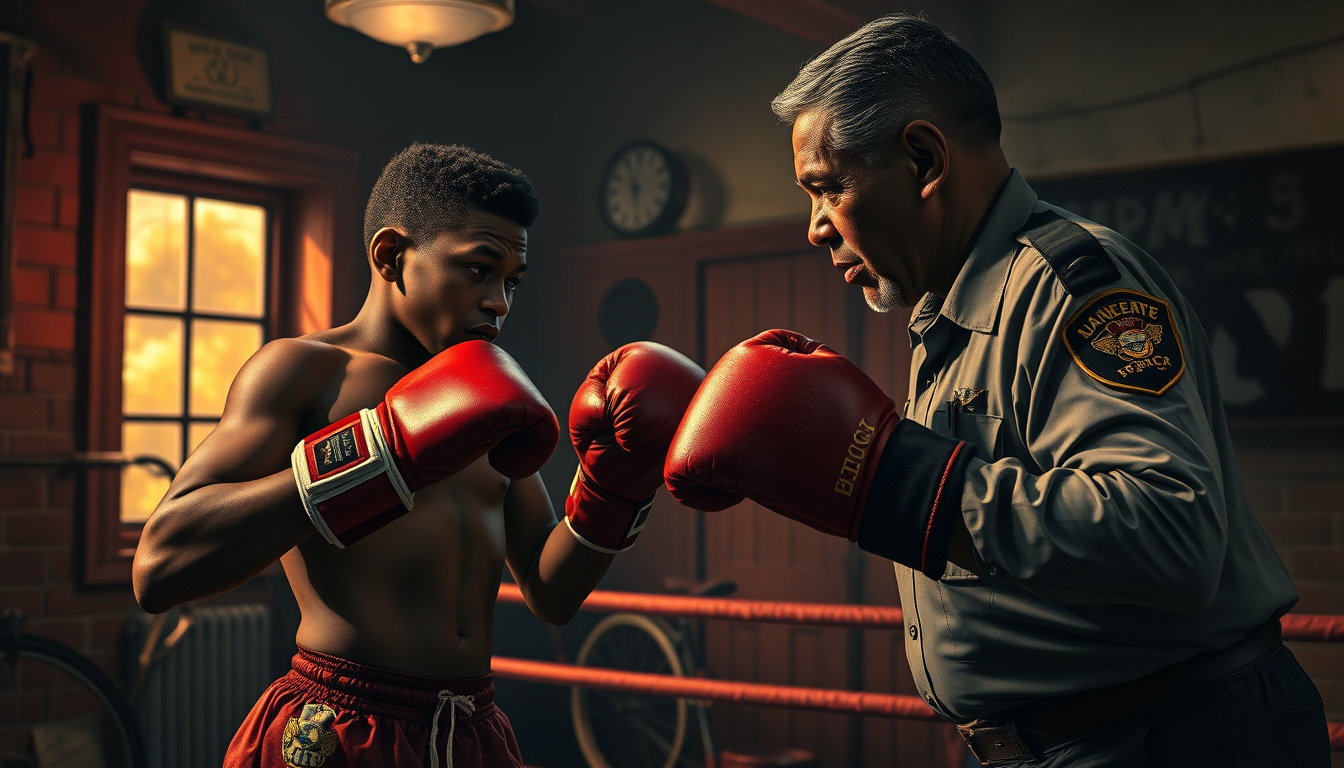
Cassius Marcellus Clay Jr. was born January 17, 1942, in Louisville, Kentucky, named for his father, a sign and billboard painter who was himself named for a nineteenth-century Kentucky abolitionist. His mother, Odessa, worked as a domestic helper. He grew up in the segregated South, attended Central High School, and struggled with reading and writing -- he was dyslexic, though the word was rarely used for a Black child in 1950s Kentucky. The origin story he told for the rest of his life began with a theft: at twelve, his new red bicycle was stolen outside a fairground, and he stormed off to tell a police officer, Joe Martin, that he wanted to find the thief and beat him up. Martin, who also trained amateur boxers in a gym in the basement of a local recreation building, gave him the obvious reply -- you'd better learn how to fight first -- and then did something more useful: he taught him. Clay trained under Martin for six years, turning a furious twelve-year-old into a disciplined amateur with unusually fast hands and an unusually loud mouth. In 1960, eighteen years old, he won the light-heavyweight gold medal at the Rome Olympics and came home a local hero in a city that, months later, would still refuse to serve him at a segregated lunch counter.
Learning to Brag
Clay turned professional in October 1960 and won his early fights with speed rare for a heavyweight, but the mouth came from somewhere specific. In June 1961, a nineteen-year-old Clay was in Las Vegas for a radio spot when he watched the professional wrestler Gorgeous George work a crowd into a frenzy by promising to crawl across the ring and cut off his own hair -- because, he bellowed, he was the greatest wrestler alive. Fifteen thousand people bought tickets hoping to see George lose. Backstage, the aging wrestler gave the young boxer the only advice that mattered: a lot of people will pay to see someone shut your mouth, so keep bragging, keep sassing, and always be outrageous. Clay took it literally. He began predicting the round he'd win in rhyme, mailing poems to opponents, and calling himself 'The Greatest' before he'd beaten anyone who deserved the title. By February 1964 he was a 7-to-1 underdog challenging heavyweight champion Sonny Liston in Miami Beach, dancing, taunting, and promising to shock the world. He did: Liston, citing a shoulder injury, refused to answer the tenth-round bell, and the loudest man in boxing was champion at twenty-two. Days later he confirmed rumors that had trailed him for months -- he was a member of the Nation of Islam -- and the name Cassius Clay began to disappear.
A New Name, A Broken Friendship
Clay had been quietly attending Nation of Islam meetings since 1962, brought in by a recruiter named Sam Saxon, who introduced him to Malcolm X at a Detroit diner before he ever heard Elijah Muhammad speak. Malcolm became his closest friend and mentor inside the movement -- present at training camp, present at the first Liston fight, treated by the champion like an older brother. Four days after beating Liston, Elijah Muhammad renamed him Muhammad Ali, first briefly as 'Cassius X.' The timing was brutal: Malcolm X was in the middle of a public break with Elijah Muhammad over the NOI leadership's conduct, and the Nation demanded total loyalty from its most famous new convert. Ali chose Elijah Muhammad. The two men crossed paths by chance in Accra, Ghana, later that year, and Ali turned away from the man who had brought him into the faith -- there could be no loyalty to both. Malcolm X was assassinated in February 1965, three months before Ali's rematch with Liston in Lewiston, Maine -- a first-round knockout so fast that ringside spectators argued for decades over whether the punch had even landed, and Ali himself reportedly asked his own corner afterward whether he'd actually hit him. Ali later called abandoning Malcolm one of the great regrets of his life.
“I Ain’t Got No Quarrel”
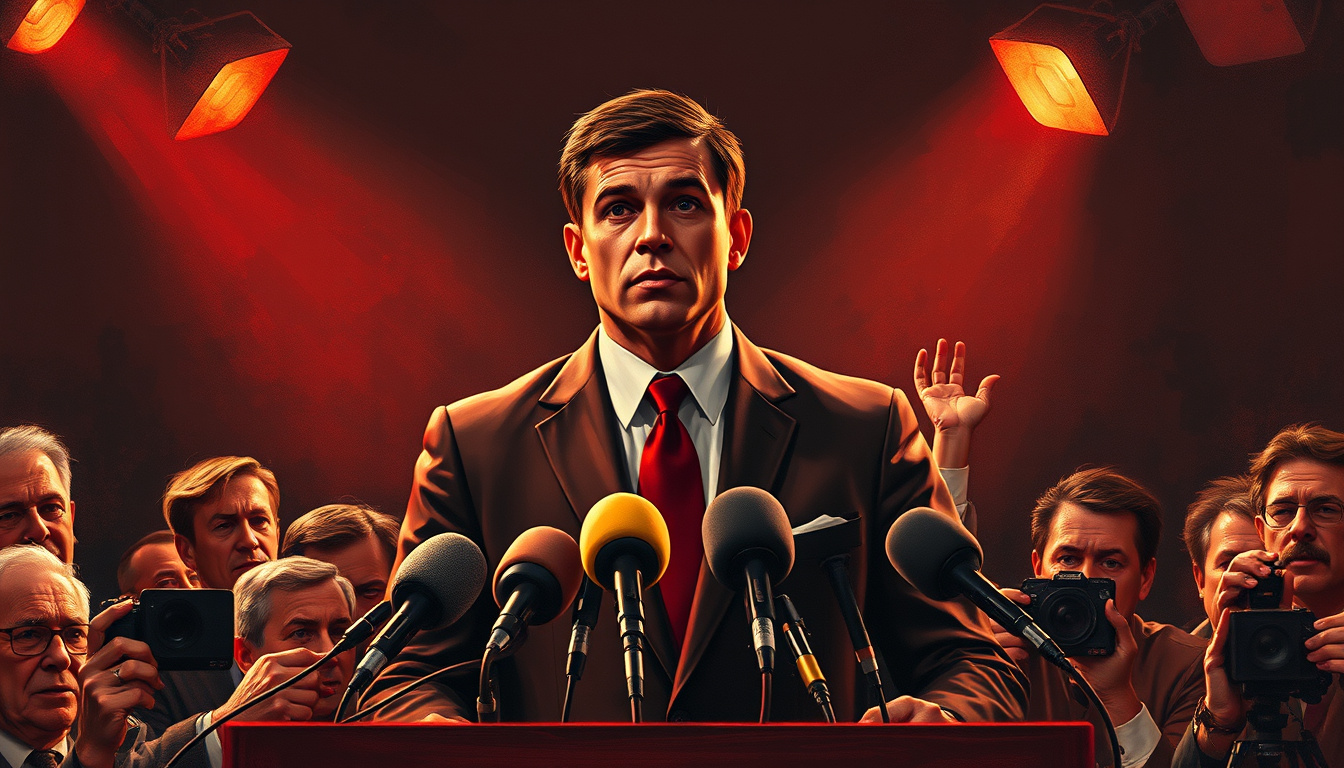
By 1966 Ali's draft status had become a national argument. Reclassified as eligible after an earlier deferment, he told reporters in February, 'I ain't got no quarrel with them Viet Cong' -- a line that detonated across newspapers already anxious about a war with no clear end. The more famous version of that sentiment, 'no Viet Cong ever called me n*****,' was already circulating on protest signs within a week, most likely coined by civil rights activists rather than Ali himself, though it stuck to his name permanently, helped along when he used it in a 1977 film about his own life. On April 28, 1967, he reported for induction in Houston, refused to step forward when his name was called, and cited his status as a Nation of Islam minister along with moral and religious objections to the war: 'Why should they ask me to put on a uniform and go ten thousand miles from home and drop bombs and bullets on brown people in Vietnam while so-called Negro people in Louisville are treated like dogs and denied simple human rights?' Within hours the New York State Athletic Commission suspended his boxing license and the WBA stripped his title. Every state followed. His passport was confiscated. He was twenty-five years old, unbeaten, and effectively banned from his own profession.
The Exile
On June 20, 1967, an all-white jury deliberated for twenty-one minutes and convicted Ali of draft evasion. Judge Joe Ingraham imposed the maximum sentence available: five years in prison and a ten-thousand-dollar fine. Ali never served a day of it -- he remained free on appeal for the four years the case took to climb through the courts -- but he also did not fight. No state would license him. No stadium would book him. He earned a living on the college lecture circuit, arguing his case to students at a moment when public opinion on the war itself was starting, slowly, to turn his way. He would later summarize his own position more simply than any judge: 'I didn't dodge the draft, I just avoided it. Vietnam turned out to be wrong and I ended up right.' The exile cost him three and a half years of his athletic prime -- his mid-twenties, the years a heavyweight is fastest and hardest to hit -- and by the time he returned to a ring in October 1970, he was a different, heavier, slower fighter learning to win with guile instead of pure speed. In June 1971, the Supreme Court reversed his conviction 8-0, ruling that the Justice Department had improperly denied his conscientious objector claim. He had already served his real sentence -- the exile itself -- for four years.
The Fight of the Century
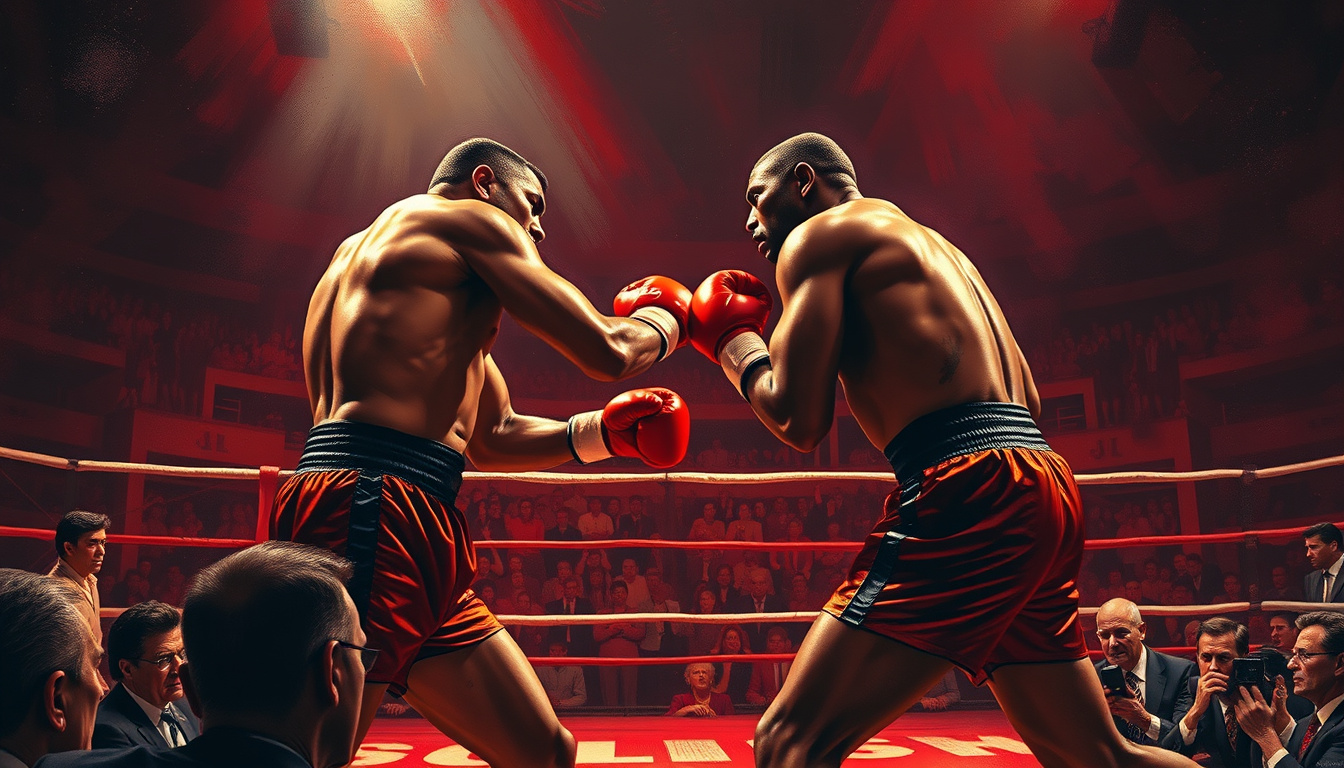
Ali's comeback wins in 1970 set up the biggest fight boxing had ever staged: on March 8, 1971, at Madison Square Garden, he faced Joe Frazier, the champion who had held the title for the years Ali couldn't fight. It was the first time two undefeated men who could both plausibly claim to be heavyweight champion had ever met in the ring, and it was billed, accurately for once, as the Fight of the Century. Ali had spent the buildup calling Frazier an 'Uncle Tom' and a tool of white America -- a cruelty dressed as politics that Frazier, who had quietly helped lobby to get Ali's boxing license restored, never forgave. Frazier won by unanimous decision after fifteen brutal rounds, dropping Ali with a left hook in the final round for good measure. It was Ali's first loss as a professional, in his eleventh fight back from a layoff most boxers never recover from. The two men would fight twice more -- Ali won both -- but the first fight had already done its damage: Frazier believed, for the rest of his life, that Ali had invented a myth about him to sell tickets, and never fully forgave it.
Rumble in the Jungle
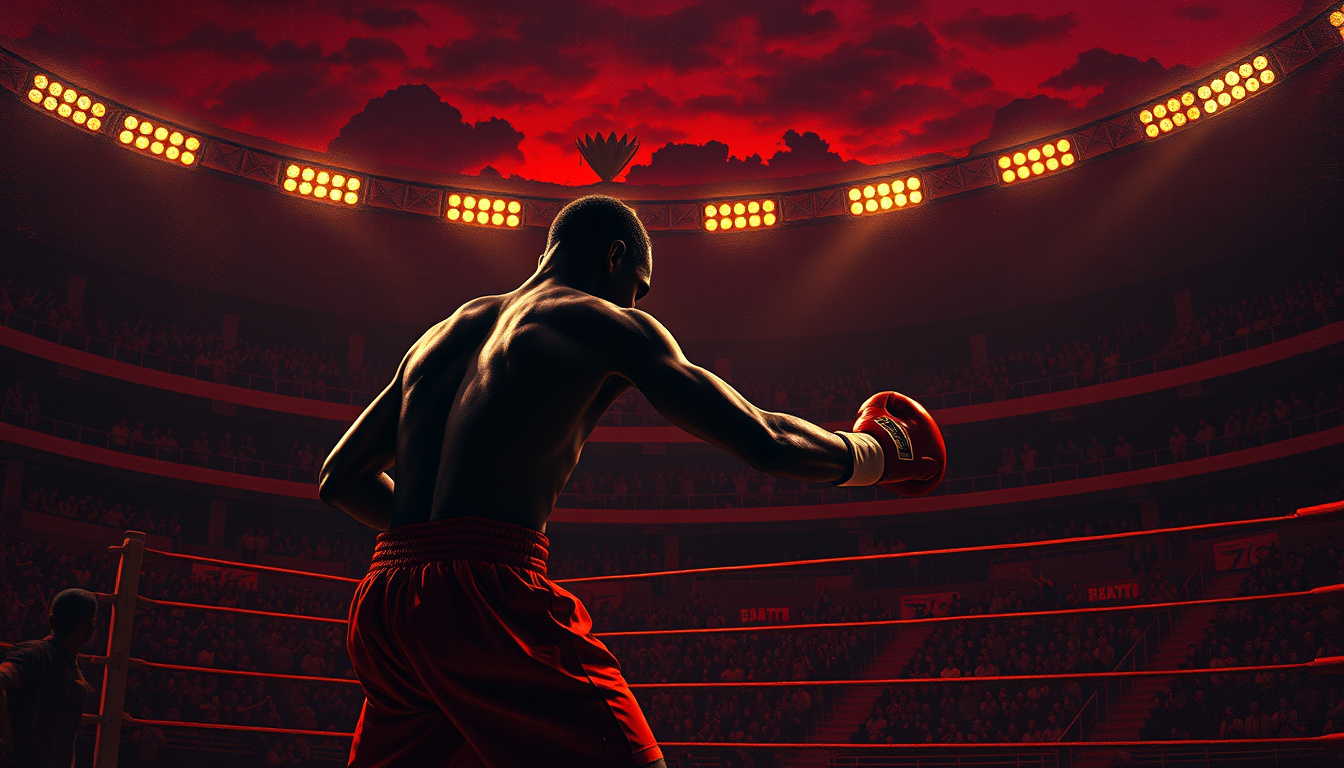
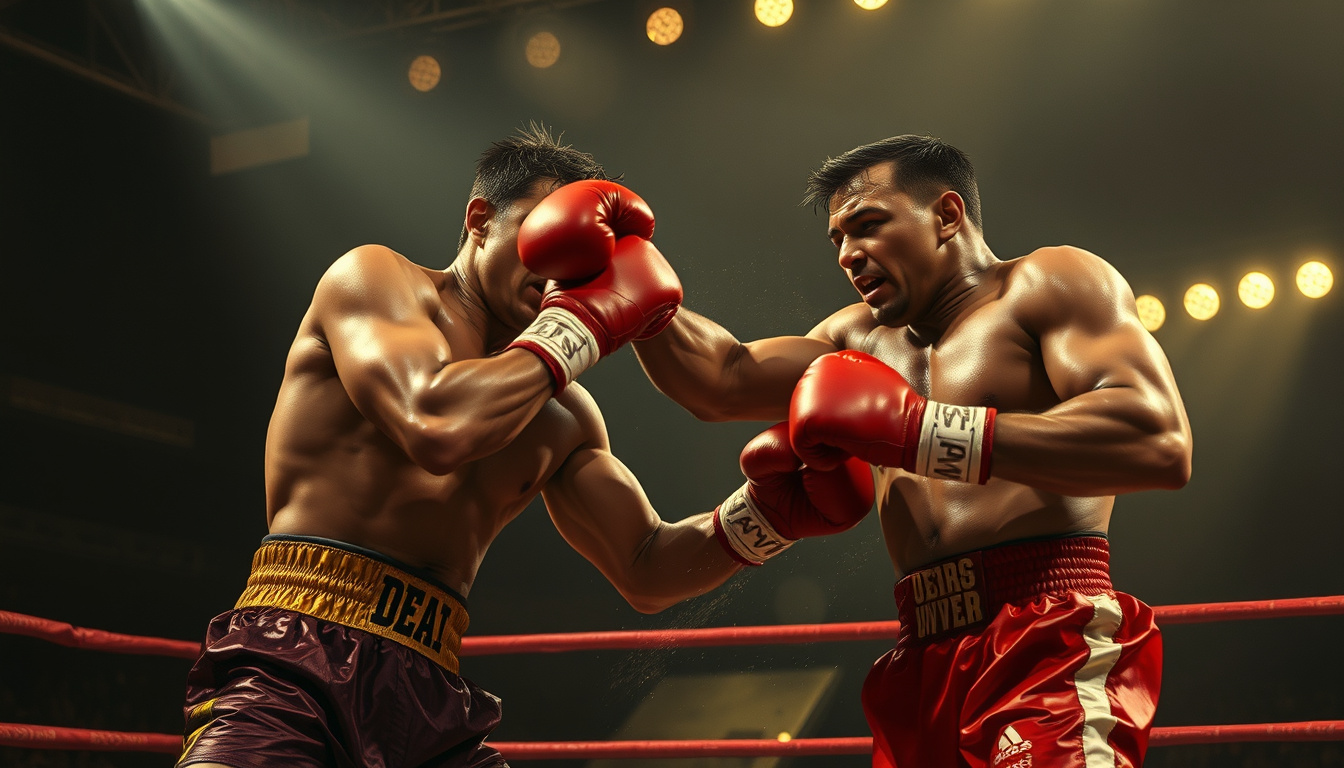
By 1974 George Foreman was undefeated, terrifying, and heavily favored to end Ali's second title run before it started. Promoter Don King staged the fight in Kinshasa, Zaire, on October 30, 1974, in front of sixty thousand fans and one of the largest television audiences in history. Ali, thirty-two and no longer the fastest man in the ring, improvised a strategy nobody had planned for him in training: from the second round he leaned back into the ropes, covered up, and let Foreman hit his arms and sides for round after round, a tactic he later named the rope-a-dope. Foreman, throwing enormous punches that landed without doing real damage, exhausted himself trying to finish a fight that wasn't ending. In the eighth round, with Foreman's arms finally heavy, Ali came off the ropes and knocked him out. He became only the second man in history to regain the heavyweight title, in a fight built entirely around patience rather than the speed that had made him famous a decade earlier.
Thrilla in Manila
The Ali-Frazier rivalry ended where it had to: a third fight, on October 1, 1975, at the Araneta Coliseum outside Manila, in punishing tropical heat. Ali named it himself, in rhyme, promising 'a killa and a thrilla and a chilla, when I get that gorilla in Manila' -- the kind of line that sold tickets and deepened a wound at the same time, since Frazier had spent four years hearing himself called an ape in the press. What followed is widely considered the most brutal heavyweight fight ever fought: fourteen rounds of sustained, close-range violence in suffocating heat, both men operating past the point most fighters quit. After the fourteenth, Frazier's trainer Eddie Futch stopped the fight -- Frazier's eyes were swelling shut and he could no longer see Ali's punches coming. Ali, barely able to stand himself, called it the closest thing to dying he'd ever felt. He won the trilogy two fights to one, but the third fight cost both men something neither fully got back, and it hardened Frazier's resentment into something that lasted the rest of his life.
The Torch and the Tremor
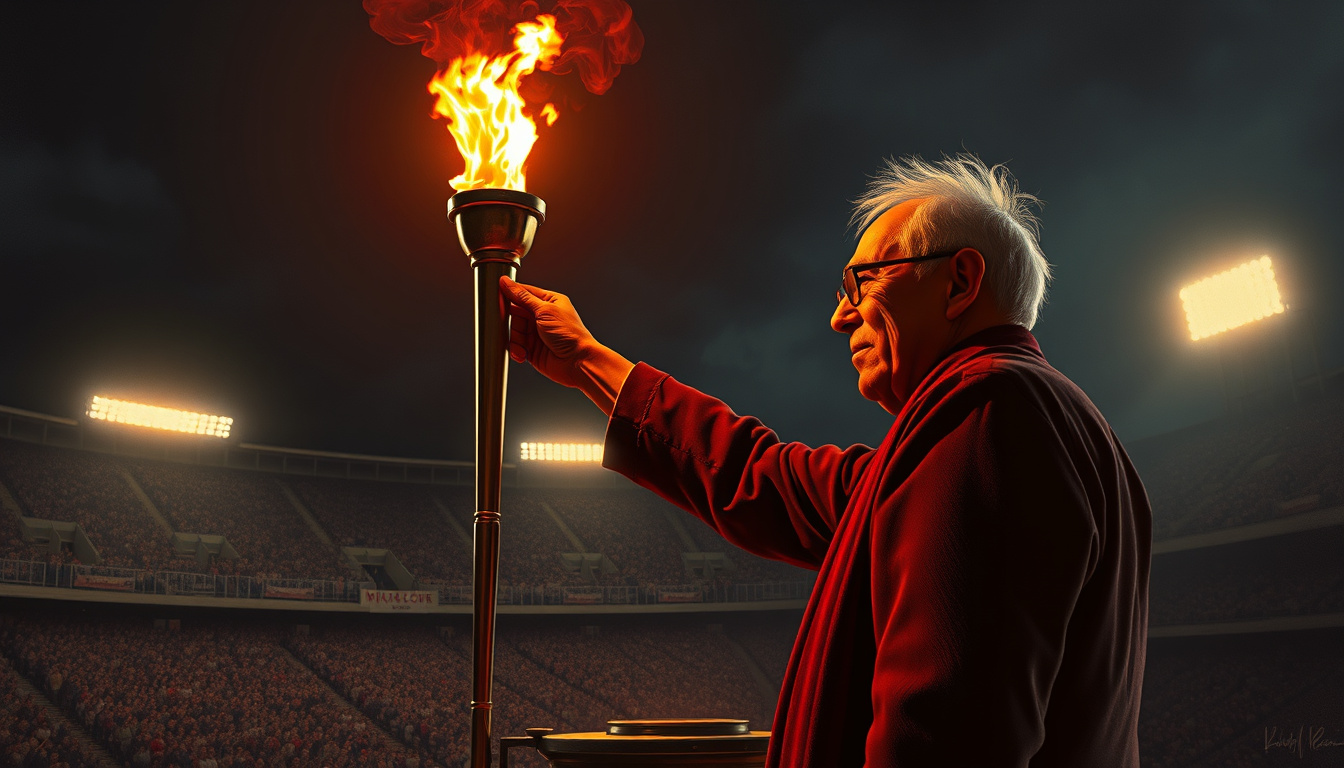
Ali fought on past his prime, losing and regaining the title a third time in 1978 before retiring for good in 1981 after a lopsided loss to Larry Holmes that even his own corner wanted stopped. In 1984, three years later, he was diagnosed with Parkinson's syndrome at forty-two -- the same fast hands and reflexes that had defined him now working against a body that trembled and slowed in public for the next three decades. He became, if anything, more visible rather than less: a global goodwill ambassador, a Parkinson's research advocate, and in 1996, at the Atlanta Olympics, the surprise final torchbearer, lighting the Olympic flame with a visibly shaking left arm steadied by his right -- one of the most watched, and most quietly emotional, moments in Olympic history. He received a replacement gold medal that year, decades after the story of the original -- thrown into the Ohio River in protest, he'd once claimed -- had become one of his own most famous, and most disputed, legends. He died of septic shock on June 3, 2016, at seventy-four. Louisville buried him with a twenty-mile procession and a memorial attended by fifteen thousand people and watched, according to the Muhammad Ali Center, by roughly a billion more -- with a eulogy poem read by Malcolm X's daughter, closing a rift that had opened fifty-two years earlier and never fully healed while both men were alive.