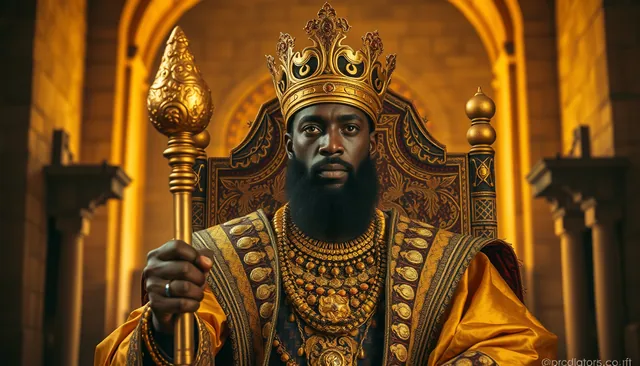
Mansa Musa
He gave away so much gold on a single trip across the Sahara that he reportedly crashed a foreign economy for a decade — and historians still won't put a real number on how rich he actually was.
Mansa Musa ruled the Mali Empire at its territorial and economic peak, commanding direct access to the West African goldfields that made his kingdom the medieval world's dominant gold supplier. His 1324–25 pilgrimage to Mecca turned a religious duty into the era's biggest publicity campaign: tens of thousands of travelers and camel-loads of gold, with spending in Cairo substantial enough that contemporary chroniclers say it measurably crashed the local gold price for roughly a decade. He used the trip to recruit scholars and builders who helped turn Timbuktu into a center of Islamic learning, while a general back home conquered the Songhai capital of Gao, pushing Mali to its largest extent. Modern claims that he was worth "$400 billion" are unverifiable speculation — but the underlying reputation, sovereign command of one of history's great gold monopolies, was real, witnessed, and recorded by people who watched it happen.
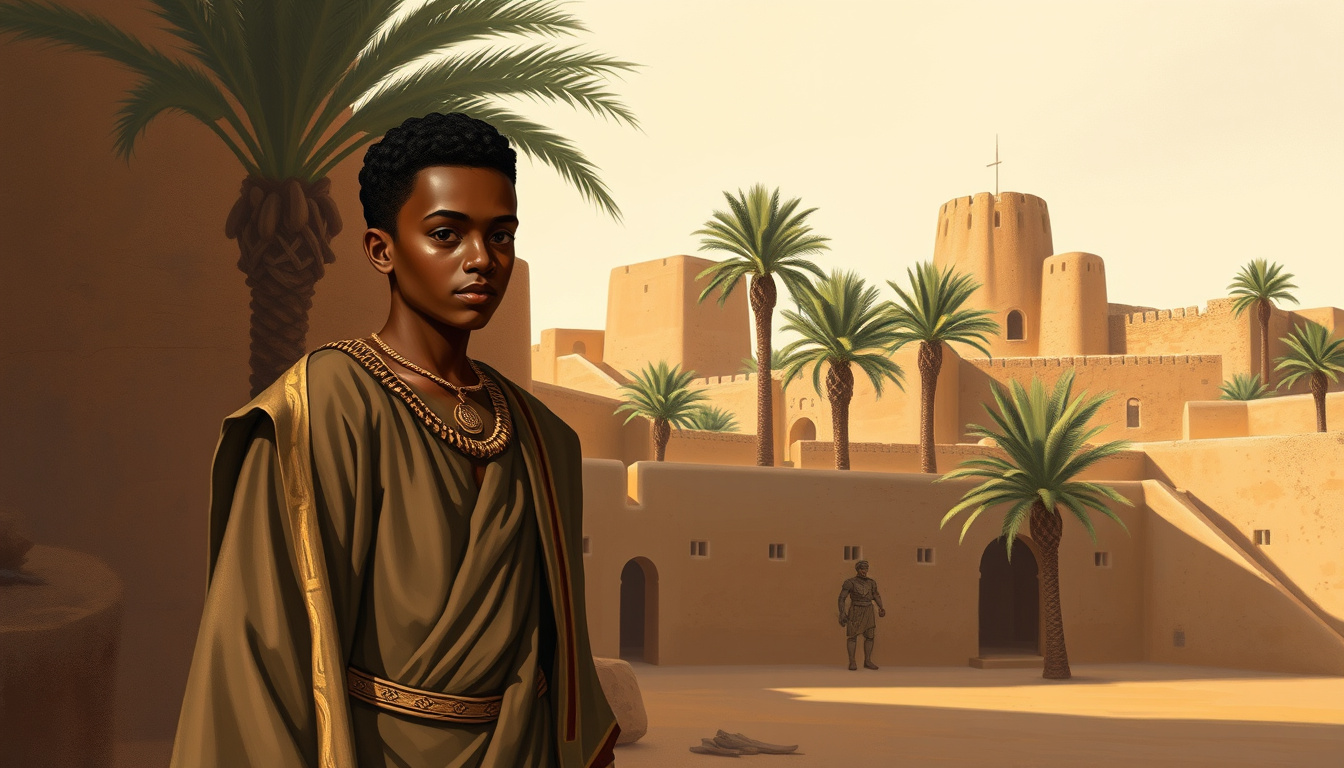
Born Into a Rising Empire
Musa Keita was born around 1280 into Mali's ruling Keita dynasty, likely in or near Niani, the traditional capital — though its exact location is still debated by historians. His family line traced back to Sundiata Keita, who had founded the empire only decades earlier by defeating the Sosso kingdom at the Battle of Kirina in 1235. By Musa's childhood, Mali's mansas had already been Muslim for a generation, ruling a state whose wealth flowed from control of the Bambuk and Bure goldfields. Little is recorded of his early life directly; what survives comes largely through oral griot tradition filtered through later Arabic chroniclers, not contemporary written record.
Mali's throne didn't pass strictly by birth order — sitting mansas appointed a deputy to govern when they left on campaign or pilgrimage, and that deputy could inherit power if the ruler never returned. This built-in succession backup, more than any guarantee of birthright, is what would eventually put Musa on the throne.

A Throne Left Empty
Around 1312, Musa's predecessor — a mansa whose own name al-Umari never records, though popular retellings later gave him the invented name "Abu Bakr II" — reportedly departed with a large fleet to explore the Atlantic Ocean and vanished. Musa, serving as royal deputy, ascended the throne in the resulting vacancy. He later told this story himself to an Egyptian official in Cairo, which is the only reason it survives at all. Modern historians treat the tale as genuine, if unverifiable, Malian oral history — not proof of any landfall — and Musa's actual immediate predecessor was most likely a mansa named Muhammad ibn Qu.
The "Abu Bakr II" name isn't a mistranslation so much as a 20th-century splice: popularizers of the "Mali reached America" claim — most notably Ivan Van Sertima's 1976 book They Came Before Columbus — borrowed the name of an earlier, genuinely documented Mali mansa (a grandson of Sundiata through his daughter, who briefly held the throne generations before Musa, before being displaced) and grafted it onto al-Umari's real anecdote about Musa's actual, unnamed predecessor vanishing at sea. It shows how one documented anecdote can calcify into a much bigger myth once a borrowed name gives it false specificity.
The Road to Mecca
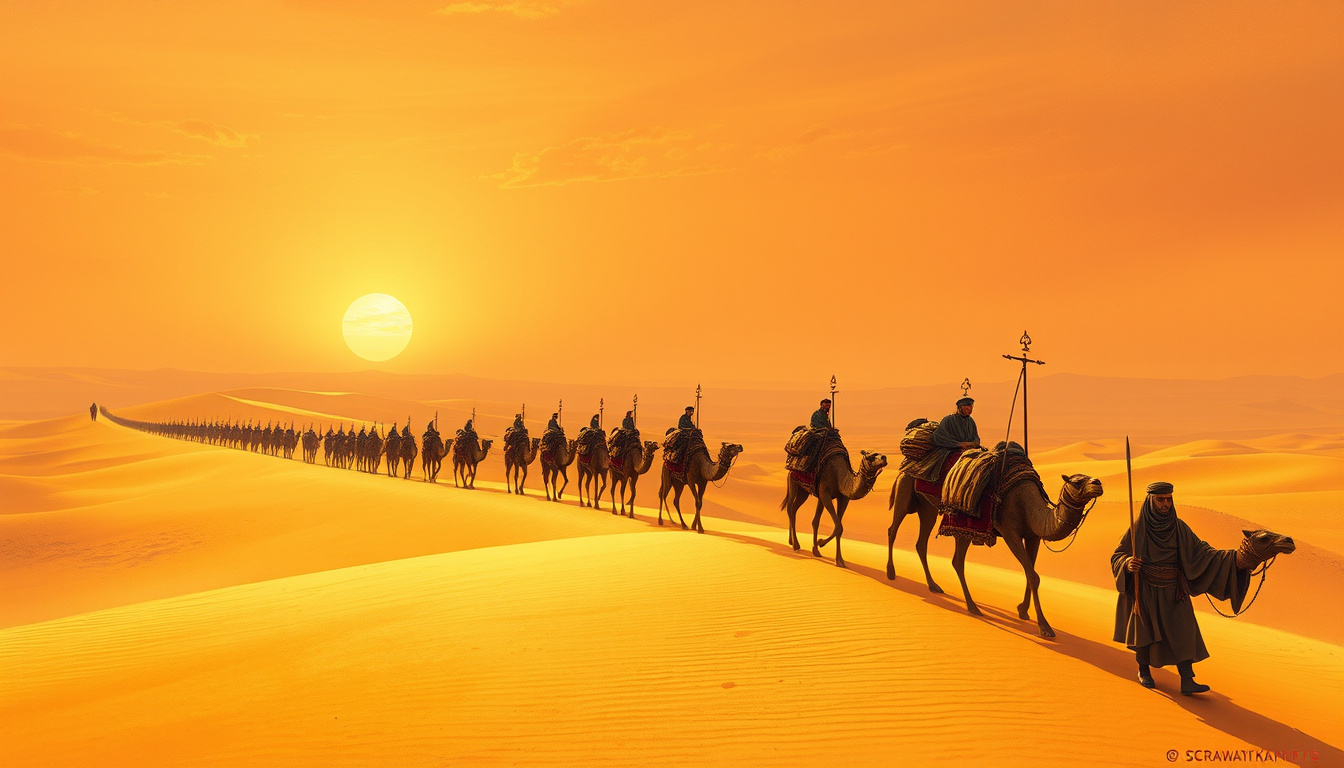
In early 1324, Musa left Niani for the hajj — the pilgrimage every able Muslim is obligated to make once in life. Chroniclers describe a caravan of perhaps 60,000 people, including thousands of enslaved attendants, plus 80 to 100 camels each loaded with roughly 300 pounds of gold (the exact figures vary across sources and are disputed by modern historians). Five hundred attendants reportedly walked ahead of Musa carrying gold-topped staffs. The journey crossed the Sahara to Cairo before continuing to Mecca and Medina — a months-long undertaking that turned a private religious obligation into the largest public display of Mali's wealth the outside world had ever seen.
The hajj wasn't purely devotional — every stop functioned as a diplomatic and trade opening. By parading Mali's wealth through Cairo, the era's central hub of Islamic scholarship and Mediterranean trade, Musa broadcast his kingdom's power to rulers and merchants who'd never had reason to think about West Africa before.
The Gold That Broke Cairo
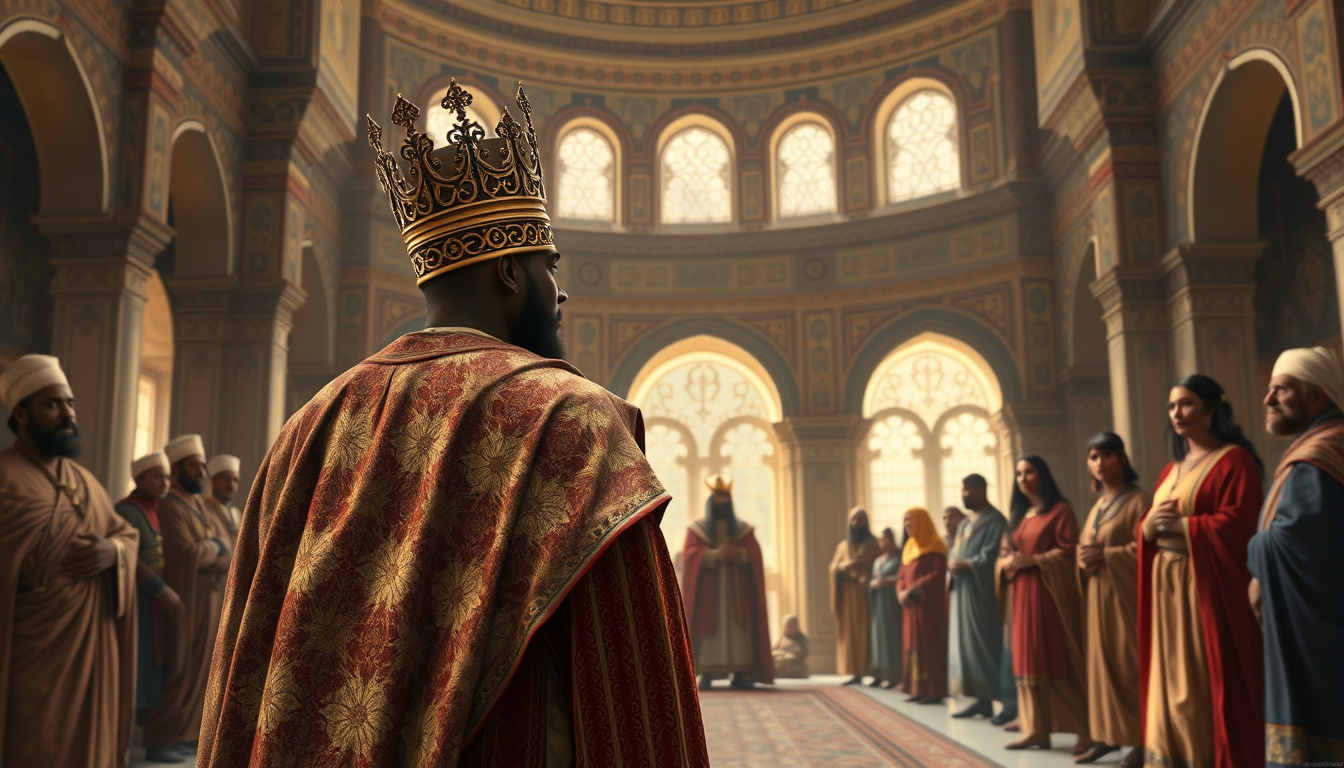
Musa's stay in Cairo turned tense before it turned generous: court officials ordered him to prostrate and kiss the ground before Sultan al-Nasir Muhammad, which he refused outright until an adviser suggested he reframe it as worship of God rather than submission to a fellow king. Diplomacy secured, Musa then spent and gave away gold on a scale Cairo had never absorbed at once. According to chronicler al-Umari, writing from testimony gathered years later, the price of a gold mithqal fell from roughly 25 silver dirhams to about 22 — and reportedly stayed depressed for close to twelve years.
Cairo's gold market ran on comparatively thin, localized liquidity. A single foreign visitor injecting an enormous, concentrated volume of new gold in a few months' spending spree could outpace demand and depress the price citywide — an accidental real-world demonstration of monetary inflation, recorded by contemporaries centuries before economists had the vocabulary for it.
An Empire Doubled by Absence
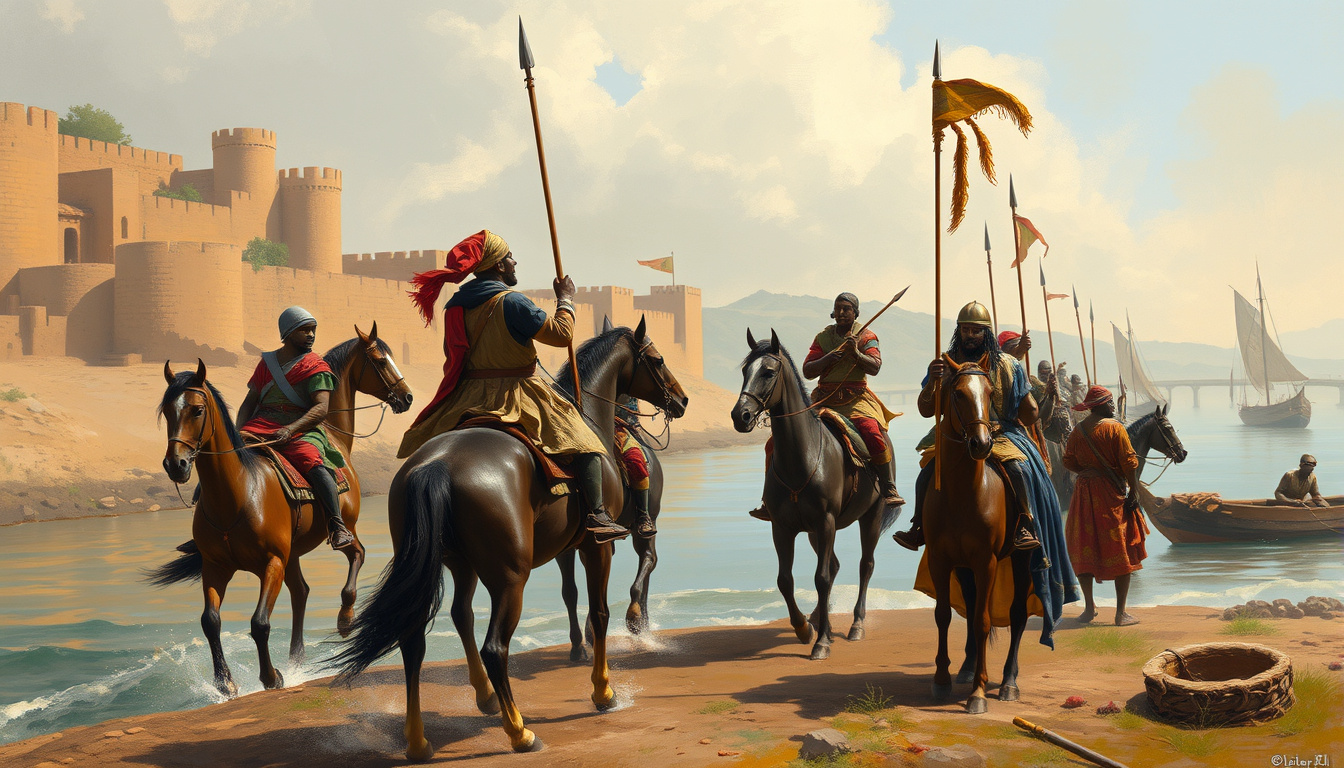
While Musa was away on hajj, his general Sagmandia led an army that captured Gao, capital of the Songhai kingdom — a territory spanning hundreds of miles along the Niger. Musa was reportedly so pleased by the news that he delayed his return home to visit Gao in person, formally receiving the Songhai king's submission and taking his two sons back to Niani as royal hostages, a standard medieval mechanism for securing a newly conquered territory's loyalty. The conquest pushed Mali to its largest territorial extent, folding one of West Africa's other major trading kingdoms into Musa's empire.
Royal hostage-taking wasn't simple punishment — it doubled as political education. Princes raised inside the conquering court absorbed its administration and religion, then sometimes returned home to rule with those loyalties intact; oral tradition even credits descendants of this Songhai hostage line with later founding the dynasty that eventually eclipsed Mali itself.

The Richest Man Who Ever Lived?
Musa's reputation as history's wealthiest individual rests on real contemporary testimony — chroniclers who watched him flood Cairo's markets — but the specific modern claim, a circulated figure of roughly $400 billion, is unverifiable speculation with no basis in economic scholarship. There's no surviving inventory of his assets and no honest exchange rate between fourteenth-century sovereign gold control and a twenty-first-century dollar economy. His fortune should also be read alongside its foundation: his court and pilgrimage caravan relied on enslaved labor, consistent with an economy across West Africa and the wider medieval Islamic world in which war captives and debt bondage were ordinary sources of status and workforce, not an exception to an otherwise clean legacy.
His wealth wasn't a countable pile of cash — it was direct sovereign control over goldfields worked under a state monopoly, protected by a "silent barter" trading system designed specifically to hide the mines' locations from outsiders. That structure made him plausibly among the wealthiest rulers of his age, and makes his wealth mathematically impossible to convert into a modern net-worth figure.
Consolidation and a City of Books
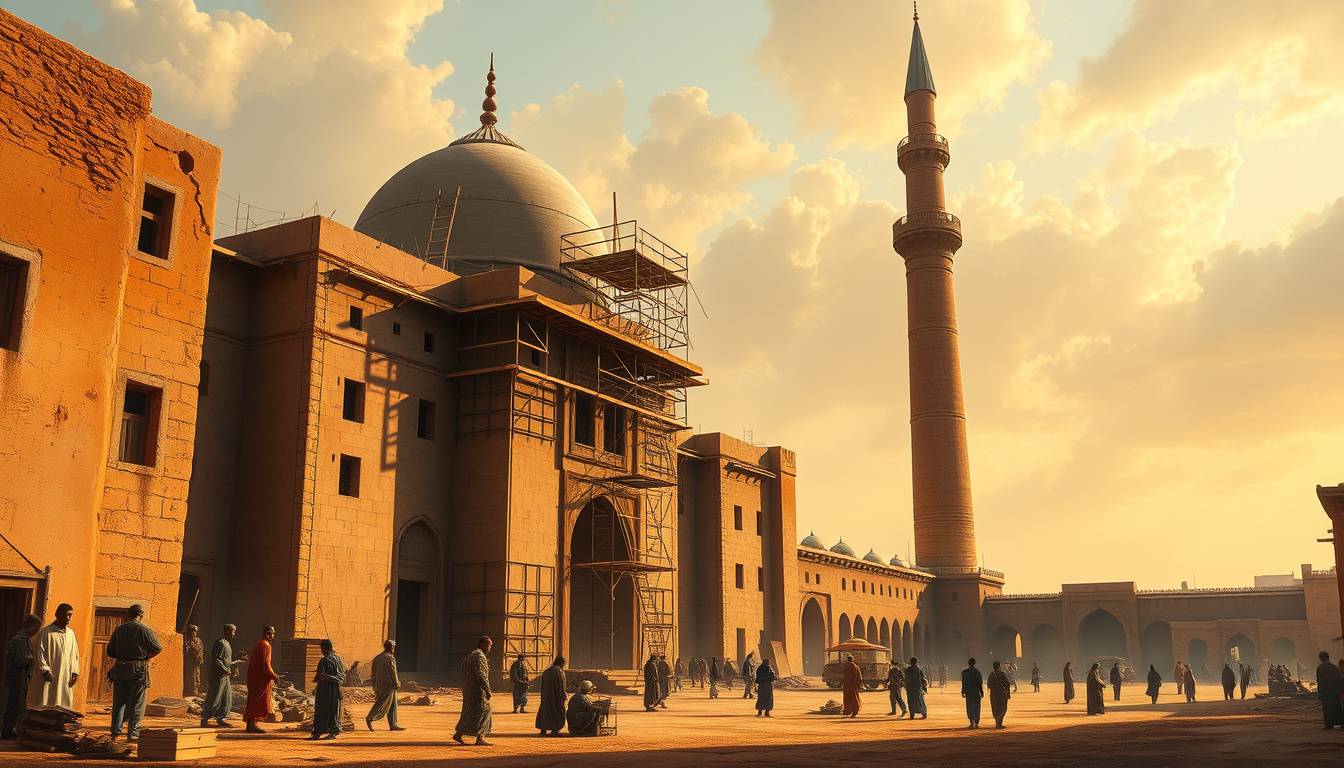
Back in Mali by 1325, Musa spent his remaining years consolidating what he'd built. He recruited the Andalusian poet-architect Abu Ishaq al-Sahili, reportedly paying him 40,000 mithqals of gold to help design the Djinguereber Mosque, completed in Timbuktu in 1327. The Sankore quarter grew from a modest teaching mosque into a center of Islamic legal scholarship whose manuscript trade would flourish for centuries. Musa also reorganized his territory into provinces run by appointed governors (farbas), subject to routine inspection, with Muslim qadis providing literate legal administration — infrastructure that outlasted his own reign by generations.
Later writers gave al-Sahili outsized credit for Timbuktu's look, but architectural historians now trace the mosque's mudbrick Sudano-Sahelian style to existing Saharan and West African building traditions. Musa's real innovation was pairing imported prestige with local craft expertise and a taxable, inspected bureaucracy stable enough to keep funding it.
The Last Years, an Uncertain End
Musa died around 1337, probably in his late fifties, but no surviving chronicle records the date, cause, or circumstances — a striking silence for a ruler whose Cairo stopover thirteen years earlier had been recorded in exhaustive, gossipy detail by outside observers. He was succeeded by his son, Maghan I, who reigned only about four years before a troubled succession passed the throne to Musa's brother, Sulayman, around 1341. The empire Musa left behind was, by every account, at its territorial and commercial peak — the difficulty ahead was holding it there.
The imbalance in the record — a richly detailed hajj, an almost blank death — isn't really about Musa's importance. It's about who was watching: Arab chroniclers in Cairo and Mecca had every reason to write down a spectacular foreign visitor, but nobody outside Mali's own oral-record system was present, or motivated, to document a mansa's death at home.

Gold Fades, the Books Remain
By 1352, when the traveler Ibn Battuta visited Mali under Musa's brother Sulayman, he unfavorably compared the new mansa's fiscal caution to Musa's legendary generosity — though some historians read that caution as deliberate treasury discipline after the hajj's spending. In 1375, the Catalan Atlas, a major European map, depicted Musa enthroned with a gold nugget in hand, captioned as the region's richest and most distinguished ruler — proof his reputation had outlived him by decades. Mali's political power eventually faded and was absorbed by successor states, but Timbuktu's manuscript culture, seeded under Musa, kept growing for centuries after his empire did not.
Gold is portable — it gets spent, redistributed, and looted across generations, which is exactly what happened to Mali's treasury after Musa. Fixed infrastructure like mosques, scribal schools, and manuscript libraries can't be carried off the same way, which is the practical reason Timbuktu is remembered today as a city of books rather than a city that was once rich.
Timeline
Quotes
“I make obeisance to God who created me!”
“From the beginning of my coming to stay in Egypt I heard talk of the arrival of this sultan Musa on his Pilgrimage, and found the Cairenes eager to recount what they had seen of the Africans' prodigal spending.”
“This king is the richest and most distinguished ruler of this whole region on account of the great quantity of gold that is found in his lands.”
“He was an upright man and a great king, and tales of his justice are still told.”
Myths
The $400 Billion Fortune
Musa's wealth is often stated as a precise modern figure — commonly cited as roughly $400 billion — making him definitively the richest person who ever lived.
No economic historian will put a real number on it. There's no surviving inventory of his assets and no consistent way to convert 14th-century sovereign gold control into a 21st-century dollar economy. The $400B figure traces to the speculative ranking site Celebrity Net Worth, popularized to a mass audience by 2015 media coverage (Time/Money.com), not peer-reviewed economic history.
Abu Bakr II's Voyage to America
Musa's predecessor, "Mansa Abu Bakr II," supposedly sailed a huge fleet across the Atlantic and reached the Americas nearly two centuries before Columbus — a story Musa is said to have told Cairo officials himself.
No mansa named "Abu Bakr II" is documented in the primary Arabic sources. Musa's real, unnamed predecessor — the one who vanished on an Atlantic expedition — comes only from al-Umari's account of what Musa told a Cairo official. The invented name and the "reached America" claim are a 20th-century graft: popularizers, most famously Ivan Van Sertima's 1976 book They Came Before Columbus, borrowed the name of a different, genuinely documented mansa named Abu Bakr — a grandson of Sundiata through his daughter, who briefly held the throne generations before Musa — and spliced it onto al-Umari's story of the vanishing mansa.
He Brought Islam to West Africa
Popular retellings sometimes credit Musa with introducing or establishing Islam in Mali and West Africa.
Mali's rulers had been Muslim for generations before Musa. Sundiata's son Mansa Uli made his own hajj to Mecca in the 1260s–70s, and by around 1300 the mansas were consistently Muslim. Musa inherited an already-Islamic royal court; his contribution was scale and visibility, not conversion.
The Andalusian Architect Built Timbuktu's Style
The Djinguereber Mosque and Timbuktu's signature adobe architecture are often credited almost entirely to Abu Ishaq al-Sahili, the Andalusian poet-architect Musa recruited in Mecca.
Al-Sahili was real, was paid handsomely (reportedly 40,000 mithqals of gold), and worked on Musa's mosques — but architectural historians now trace the Sudano-Sahelian building style itself to earlier, indigenous Saharan and West African traditions, not to a single imported Andalusian influence.
A Precise Headcount for the Hajj Caravan
Musa's pilgrimage caravan is frequently quoted with exact figures — 60,000 people, 12,000 enslaved attendants, 80 or 100 camels each carrying 300 pounds of gold.
These numbers come from chroniclers writing years to decades after the fact, based on secondhand memory, and vary significantly between sources. Some modern historians accept large enslaved-retinue figures; others call the biggest numbers implausibly inflated. No contemporary census exists — precision here is manufactured, even if a very large, gold-laden caravan is not in doubt.
Network
Click a name to jump to their story below.
Founder of the Mali Empire after his 1235 victory at the Battle of Kirina; Musa belonged to the Keita royal line Sundiata established, though the exact generational link is preserved mainly through oral griot tradition rather than contemporary written record.
The mansa immediately before Musa, who according to Musa's own account to a Cairo official led a large fleet into the Atlantic and never returned, opening the throne to Musa as deputy. Popular sources call him "Abu Bakr II," a name borrowed from an unrelated, earlier Mali mansa by 20th-century popularizers of the "Mali reached America" claim.
Hosted Musa in Cairo during the 1324 hajj stopover; the two navigated a tense protocol standoff over prostration before settling into an exchange of lavish gifts, later described by chroniclers who interviewed Egyptian officials.
Andalusian scholar-poet from Granada whom Musa met and recruited in Mecca or Cairo; credited, with real but debated influence, for helping design the Djinguereber Mosque and other Timbuktu building projects, reportedly paid 40,000 mithqals of gold.
One of Musa's generals, who conquered the Songhai capital of Gao while Musa was away on hajj, extending Mali to its largest territorial reach.
Musa's son, who inherited the throne on his father's death around 1337 and reigned only about four years before a troubled succession passed the throne to his uncle.
Succeeded his nephew Maghan I; visited in 1352–53 by traveler Ibn Battuta, who unfavorably compared Sulayman's fiscal caution to Musa's legendary generosity, though some historians read that caution as deliberate treasury discipline.
Egyptian scholar who, years after the fact, interviewed Cairo officials who had met Musa; his account is the single most detailed surviving source for the hajj, the Cairo gold crash, and the sultan's-court standoff.
Character
Devout
Undertook the hajj at enormous logistical cost as a religious duty, not just spectacle, and funded mosque construction at Timbuktu and Gao plus Islamic legal scholars (qadis) throughout his provinces.
Extravagantly Generous
Gave away and spent enough gold in Cairo in a matter of months that, per chronicler al-Umari, the metal's local exchange value reportedly stayed depressed for roughly a decade afterward.
Face-Saving Diplomat
Initially refused to prostrate before Egypt's sultan, then accepted a reframe — "I make obeisance to God who created me" — that preserved his dignity as a fellow sovereign while still satisfying court protocol.
Institution-Builder
Reorganized his empire into provinces under appointed governors (farbas) with routine inspection, and imported a court architect-poet plus manuscripts that helped grow Timbuktu's Sankore quarter into a major center of Islamic scholarship.
Opportunistically Expansionist
Let his general Sagmandia conquer the Songhai capital of Gao while he was on pilgrimage, then personally detoured to receive the Songhai king's submission and took two royal hostages to secure the new territory.
Financially Improvisational
Having spent down his gold reserves on the outbound leg of the hajj, borrowed gold back from Cairo moneylenders at steep interest on the return trip — an almost paradoxical reversal for a ruler chroniclers called the world's richest man.
A Product of an Enslaving Economy
His court and hajj retinue relied on enslaved people, per every contemporary account (exact numbers disputed) — consistent with a trans-Saharan and West African economy in which captivity through war and debt was a normal source of labor and status, not an exception to his rule.
Reputation-Conscious
Timed and staged the hajj as much as diplomacy as devotion; the result put Mali on a 1375 European map (the Catalan Atlas) captioned as home to "the richest and most distinguished ruler" in the region — a branding win that outlasted his empire's political power.
Have a question this chapter didn\u2019t answer? Ask the archive \u2014 answered live, checked against the same research as the story above.