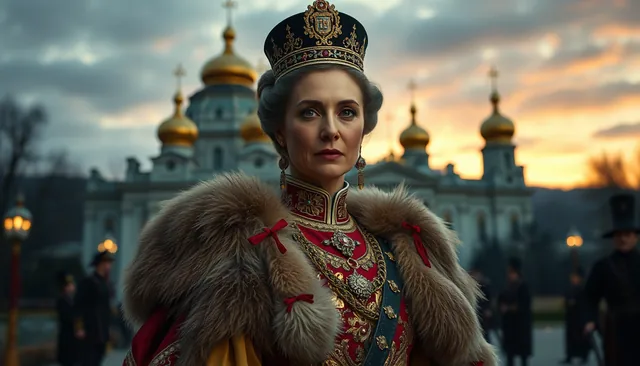
Catherine the Great
A penniless German princess arrived in Russia at fourteen, unable to speak the language. She left it thirty-four years later ruling the largest empire on Earth — having deposed the husband who gave her the crown in the first place.
Catherine the Great turned a marriage of political convenience into one of history's most audacious power grabs, riding into St. Petersburg in a borrowed military uniform to overthrow her own husband and claim the Russian throne for herself. Over the next thirty-four years she nearly doubled Russia's territory through two wars against the Ottomans and three partitions of Poland, corresponded for decades with Voltaire and Diderot while founding Russia's first school for women and one of the world's great art museums, and crushed a massive peasant rebellion by tightening, not loosening, the grip of serfdom. She died of a stroke at sixty-seven — not, as her enemies immediately began claiming, in an incident involving a horse. That fabricated scandal outlived her by centuries; her empire outlived her by even longer.
A Spare Princess
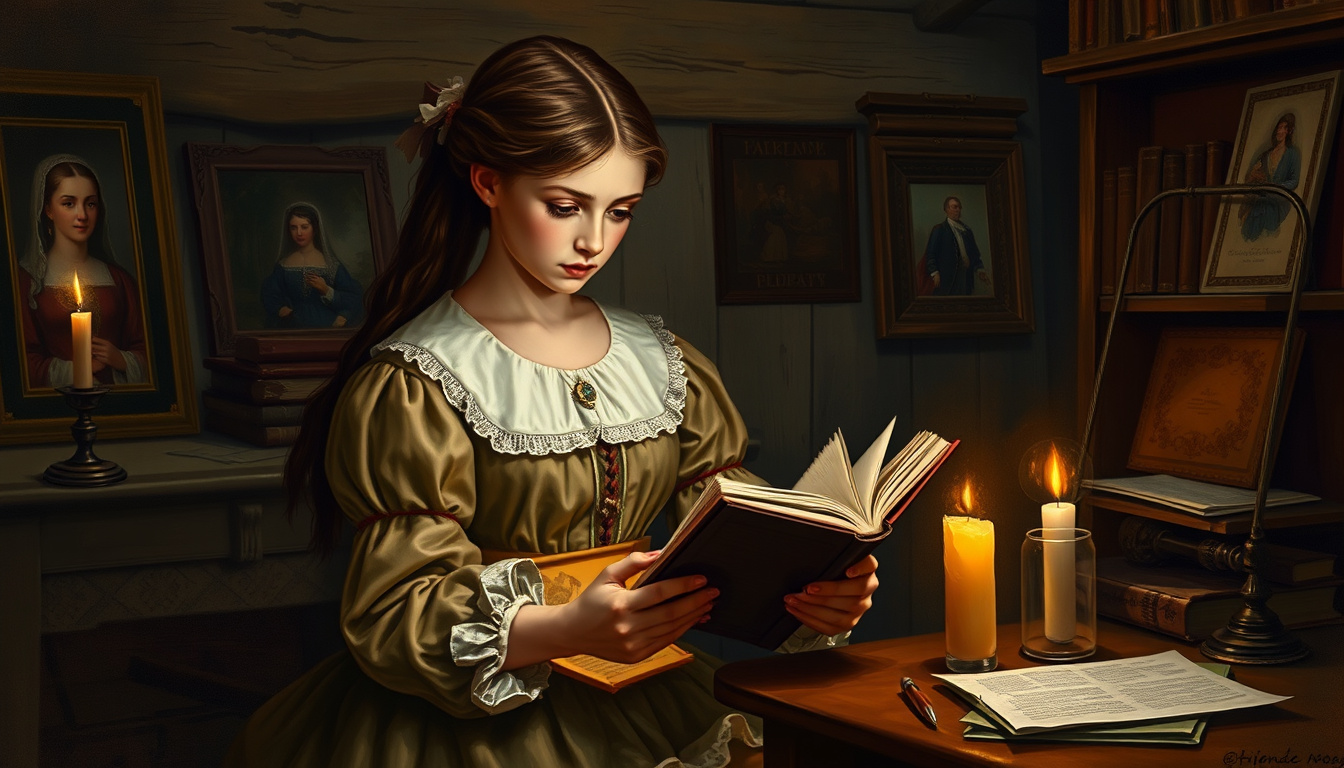
Born Sophie Friederike Auguste on May 2, 1729 (April 21, Old Style), in the Prussian garrison town of Stettin, she was princess of Anhalt-Zerbst — a duchy so small it barely registered on a map. Her father commanded a regiment; the family had rank but little money and less influence. Sophie's own mother favored her sickly younger brother and treated her as an afterthought. What she got instead was an unusually serious education: French, history, religion, and a governess, Babet Cardel, whom Catherine later credited with teaching her to actually think. She read constantly and, by adolescence, had already decided that if she couldn't be adored, she would make herself indispensable.
Empress Elizabeth of Russia wasn't hunting a grand match for her heir — she wanted a bride with no powerful relatives who could make demands. Sophie's obscure, cash-poor duchy made her ideal: no rival dynasty would object, no foreign power would meddle. The poverty that should have limited her prospects was exactly what got her exported to Russia.
The Wedding Trap
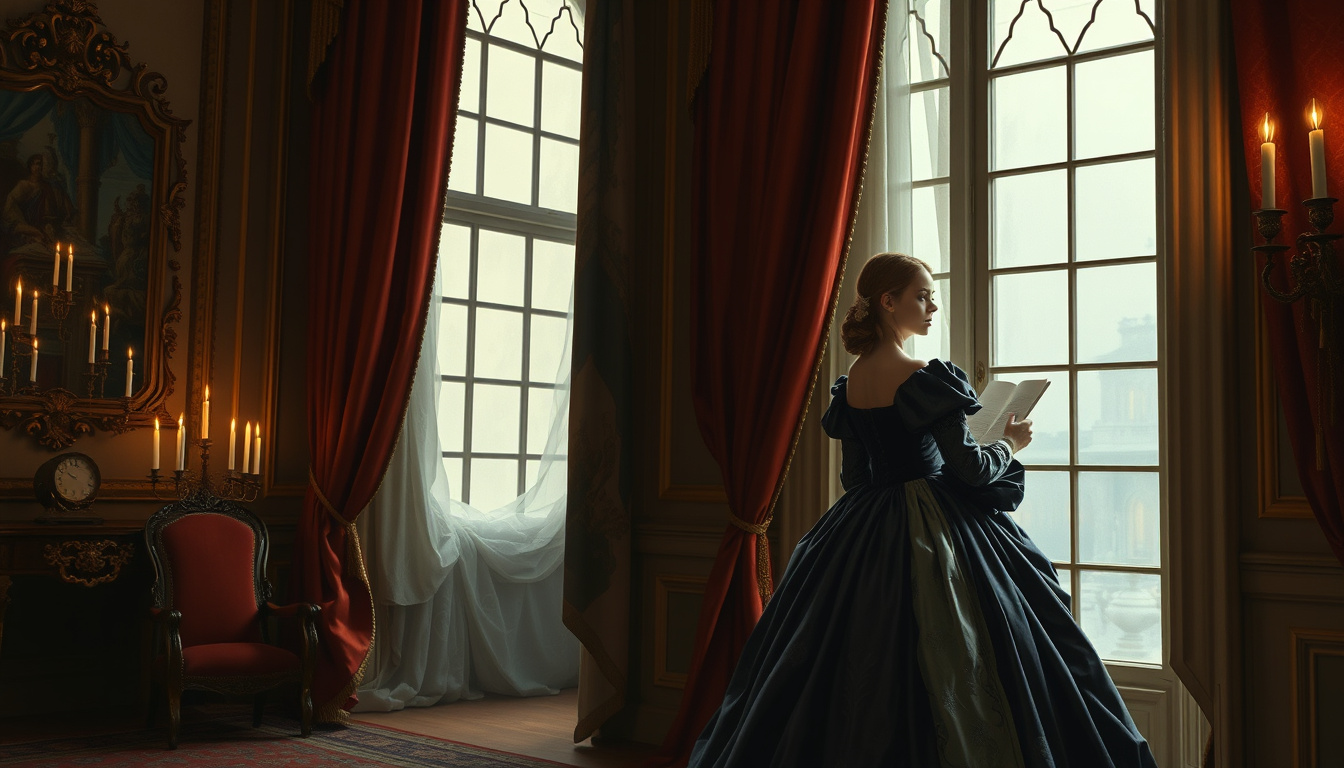
Summoned to Russia at 14, Sophie converted to Orthodoxy, took the name Catherine, and married Grand Duke Peter, heir to the throne, in August 1745. She was 16; he was 17 and reportedly more interested in drilling toy soldiers than in his wife. The marriage went unconsummated for years, and the court — suspicious of the foreign-born grand duchess — kept her isolated and watched. Catherine filled the void with books: Voltaire, Montesquieu, and the Encyclopédie, teaching herself the political philosophy no tsarevna was expected to know. She also began taking lovers, starting around 1752 with courtier Sergei Saltykov — whom her own memoirs later all but named as the real father of her son Paul.
Enforced isolation became an accidental education: with no political role and a husband who ignored her, Catherine had nothing to do but read — and a court obsessed with watching her for scandal never noticed it was overlooking the intellectual toolkit she'd later use to rule the empire it belonged to.
A Coup in Borrowed Uniform
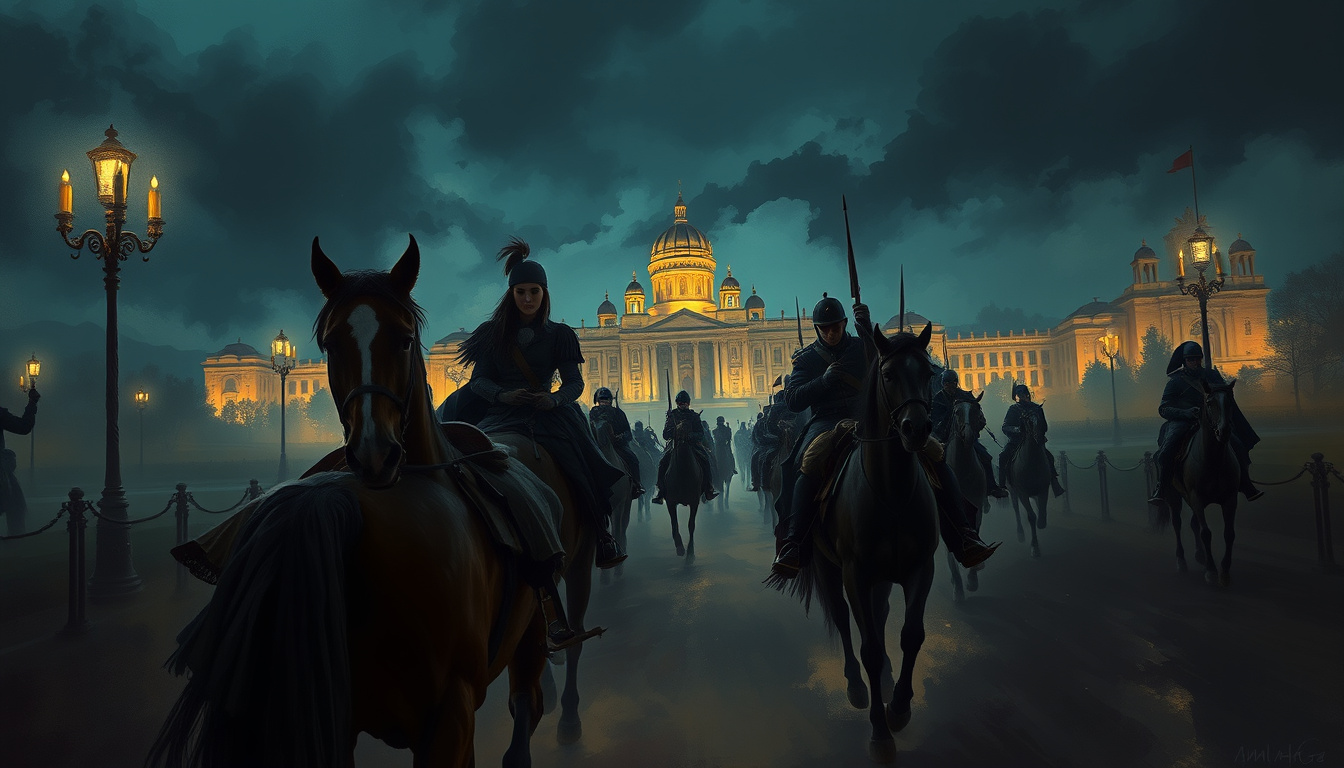
Peter became tsar in January 1762 and spent six months alienating everyone who mattered — pulling Russia out of a war it was winning, mocking Orthodox ritual, and reportedly threatening to set Catherine aside. On July 9, 1762 (June 28, Old Style), with Peter away at Oranienbaum, Catherine's lover Grigory Orlov and his brothers roused the Imperial Guards regiments, who swore their oath to her instead. Catherine rode roughly 20 miles into St. Petersburg wearing a borrowed Preobrazhensky Guards uniform and was proclaimed sole ruler. Peter was arrested and forced to abdicate within days. Eight days after the coup he was dead at Ropsha — officially of 'hemorrhoidal colic,' almost certainly killed by his guards, with Catherine's exact knowledge of or role in it still disputed by historians.
The coup worked because Catherine had spent a decade cultivating the one power base a friendless foreign consort could actually reach: the guards' officer corps, many of them her lover's friends and brothers. She didn't need the aristocracy's blessing or the church's — she needed a few thousand soldiers willing to swear the oath first and ask questions never.
Redrawing the Map
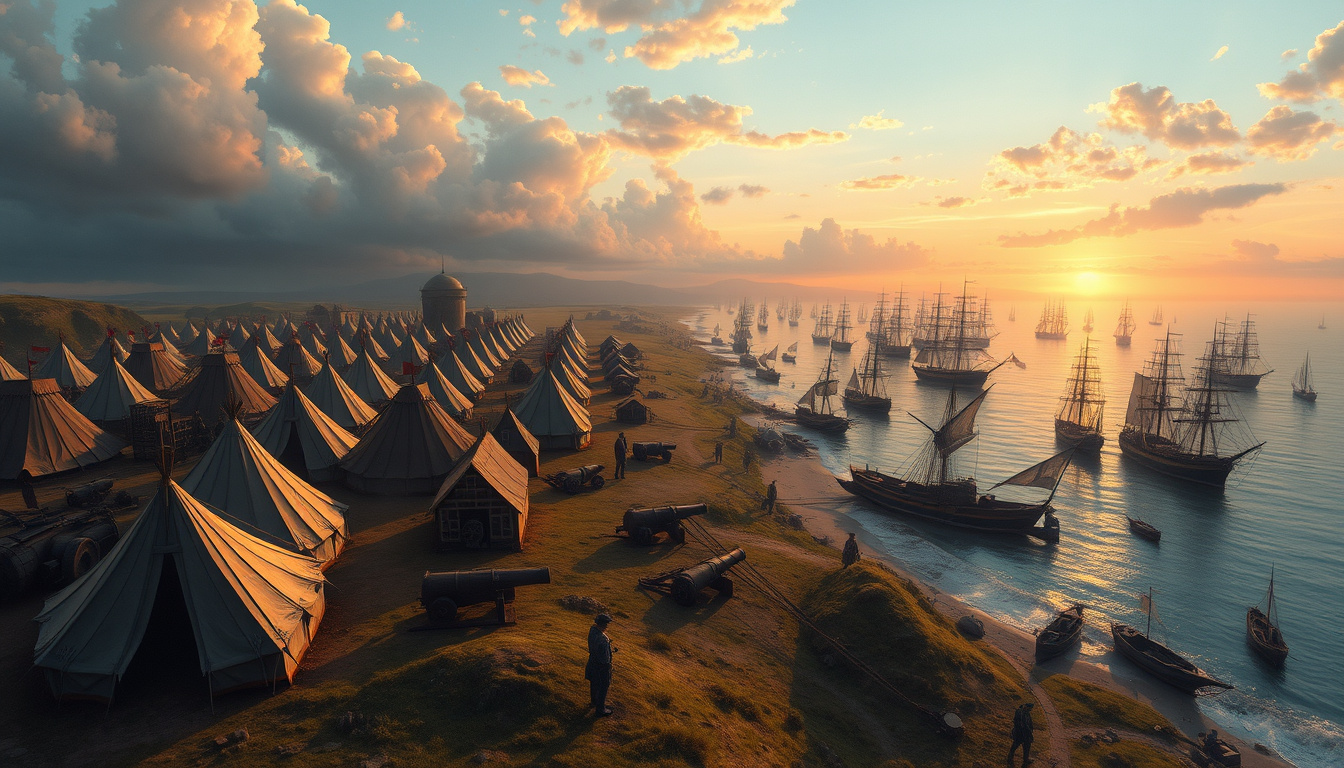
Catherine fought two wars against the Ottoman Empire (1768–1774 and 1787–1792) that pushed Russia's border to the Black Sea for the first time, winning the 1774 Treaty of Küçük Kaynarca and formally annexing Crimea in 1783, where she founded the naval base at Sevastopol. At the same time, she joined Prussia and Austria in three partitions of Poland–Lithuania (1772, 1793, 1795) that erased the Commonwealth from the map and pushed Russia's western border deep into Europe, absorbing Belarus, Lithuania, and right-bank Ukraine. By her death, Russian territory had grown by roughly 200,000 square miles and its population by millions — an expansion matched by almost no other ruler in Russian history.
Catherine paired conquest with careful diplomacy: she let Prussia's Frederick the Great float the idea of partitioning Poland, so Russia wouldn't look like the sole aggressor, then made sure Russia's slice was consistently the largest. Territorial theft by committee, chaired by herself, let her seize land while spreading the blame across three empires.
Letters to Paris
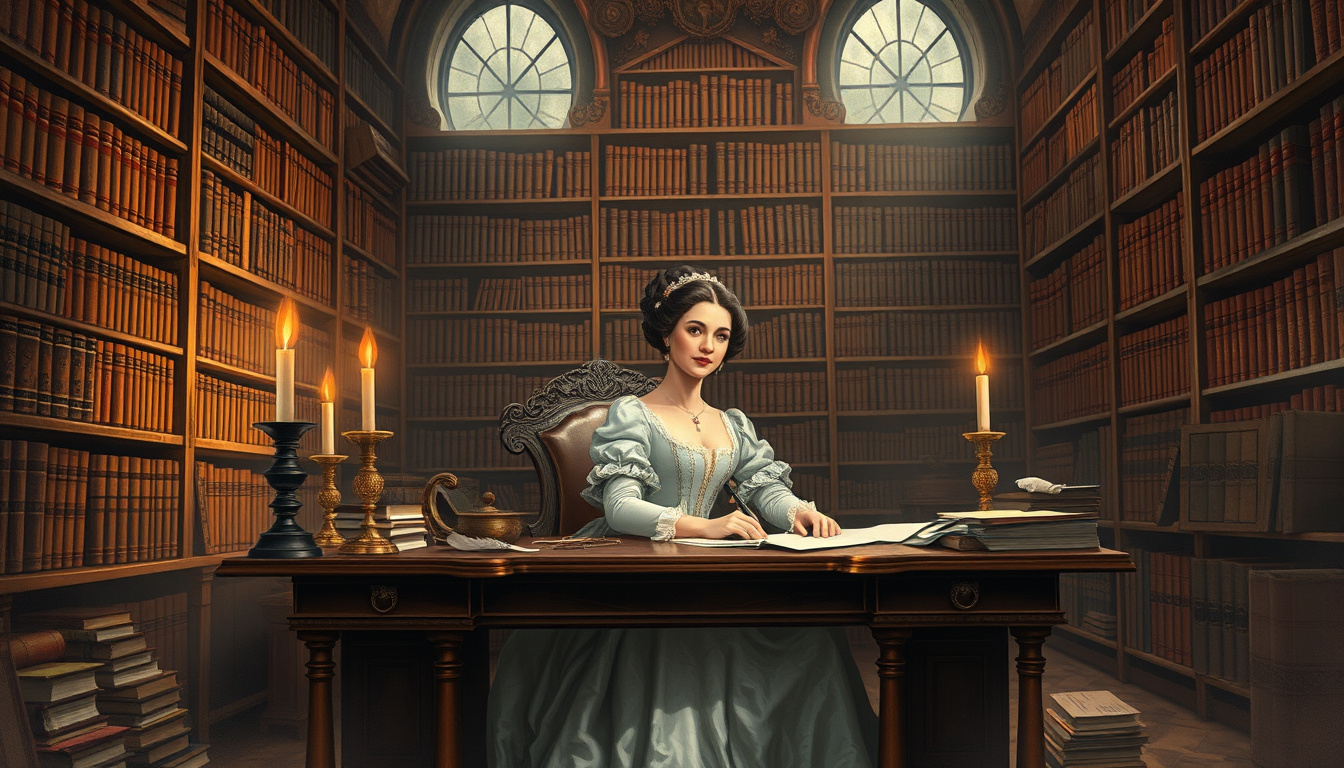
Catherine wrote to Voltaire for roughly fifteen years starting in 1763, and in 1767 issued the Nakaz — an instruction to a national Legislative Commission, heavily drawn from Montesquieu and Beccaria, that condemned torture and argued for legal protections for all citizens, radical language from a Russian autocrat. She funded Diderot outright: when he needed money for his daughter's dowry, she bought his personal library for far more than he asked, let him keep the books for life, and paid him a salary to be her 'librarian.' She also founded the Smolny Institute (1764), Russia's first school for women, brought in a British doctor to inoculate herself and her son against smallpox in 1768, then made it a national campaign, and built the Hermitage from a single purchased collection into one of Europe's great galleries.
The Nakaz's radicalism was real on paper and never became binding law: Catherine convened the Legislative Commission, let it debate for over a year, then quietly dissolved it when war with the Ottomans gave her cover. It built her reputation among Europe's philosophers without ever constraining her own authority.
Pugachev's Fire
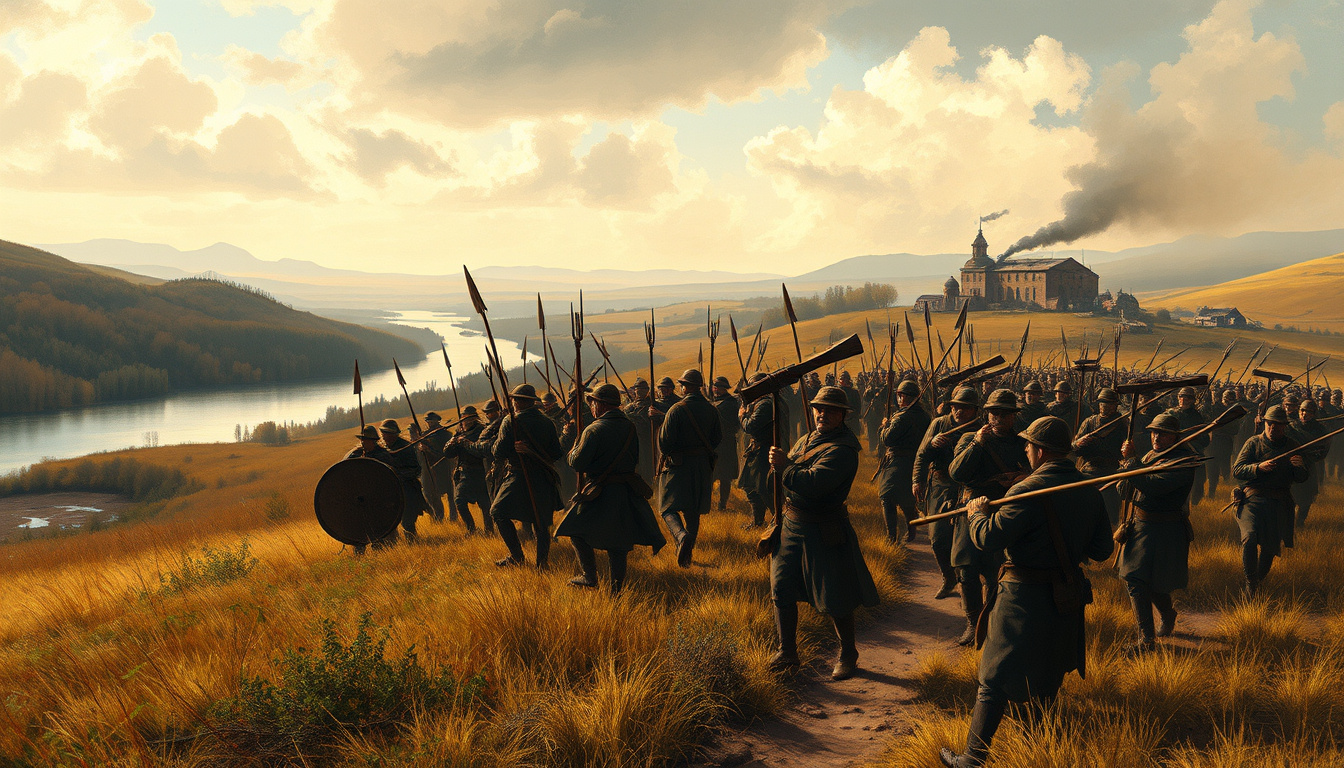
In 1773, a Cossack named Yemelyan Pugachev declared himself Peter III, miraculously survived, and rallied serfs, Cossacks, and factory workers with promises to abolish serfdom and redistribute noble land. His rebellion burned through the Volga and Urals for two years before Catherine's army crushed it; Pugachev was betrayed by his own men, brought to Moscow in a cage, and executed in January 1775. Rather than address the grievances behind it, Catherine tightened control: her 1785 Charter to the Nobility confirmed landowners' near-total power over serfs, and by her reign's end Russia's serf population was larger and more tightly bound to the land than when she took the throne — the sharpest contradiction between her Enlightenment letters and her actual government.
Catherine's throne rested on the nobility's loyalty, and the nobility's loyalty rested on unchecked control over serf labor — so the same empress privately condemning torture in her Nakaz expanded serfdom afterward, because loosening it risked alienating the exact class whose guards regiments had put her in power.
The Favorite Who Stayed
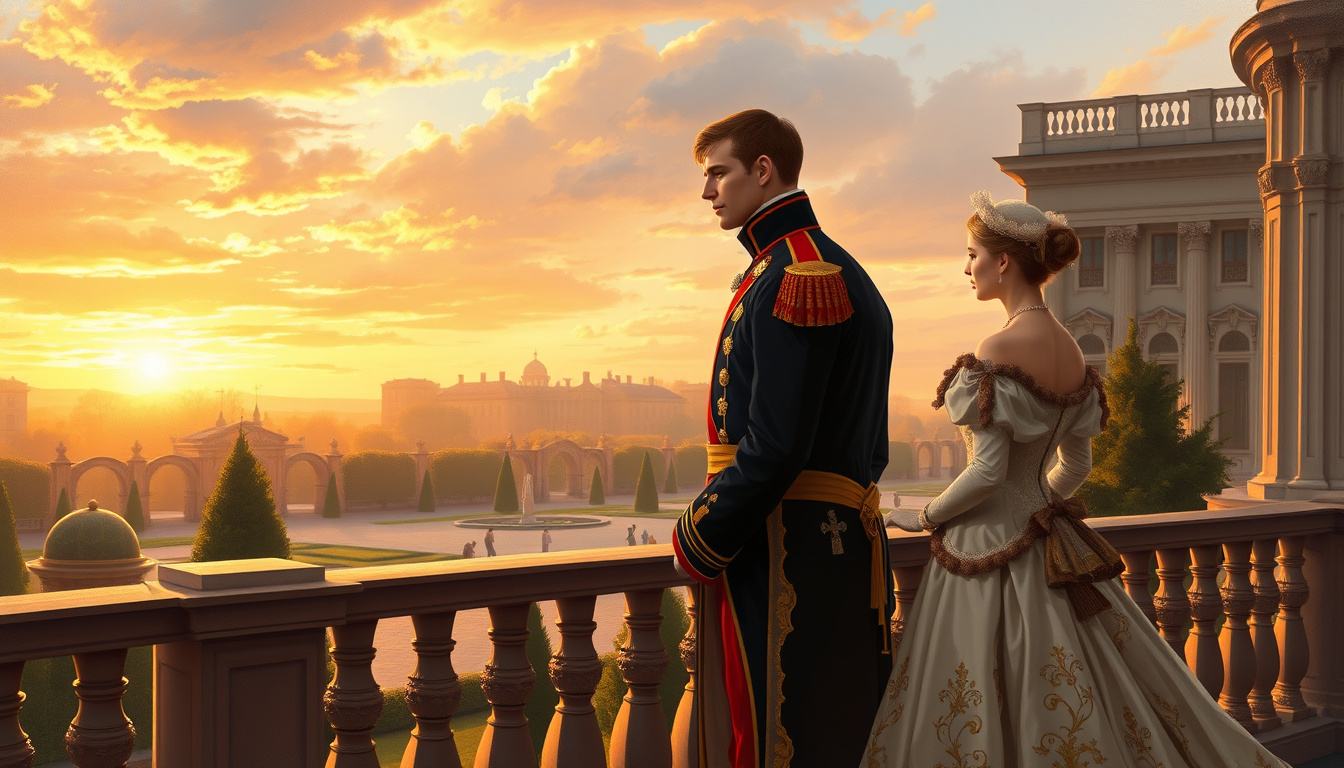
Grigory Potemkin became Catherine's lover in 1774, and historians believe her secret husband soon after — though no surviving document confirms a marriage or the daughter, Elizabeth Temkina, some claim they had together. Their romance cooled within two years, but their partnership didn't: Potemkin governed the newly conquered south, founded cities including Kherson and Yekaterinoslav, and built the Black Sea Fleet, while Catherine took younger favorites — twelve acknowledged partners across her reign in total, the last, Platon Zubov, nearly forty years her junior. Rumors that Potemkin built fake 'villages' of painted facades to fool her on a 1787 tour of Crimea are now considered largely fabricated by his rivals; he genuinely built and decorated real towns, just not finished ones.
Potemkin's real achievement was refusing to be replaced: instead of resenting the younger favorites who followed him into Catherine's court, he personally vetted and approved most of them, staying her top minister and closest advisor for fifteen years after their romance ended — engineering power to outlast passion.
The Last Morning
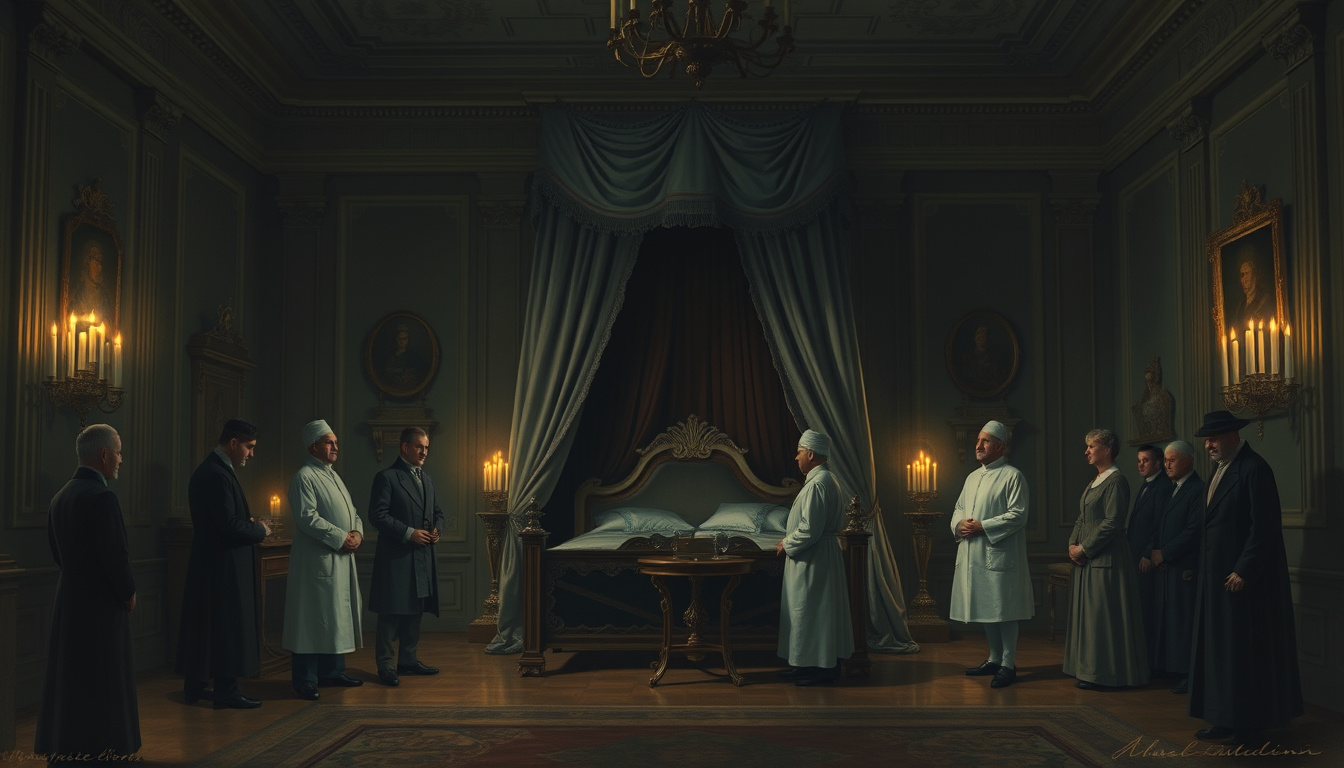
On the morning of November 16, 1796 (November 5, Old Style), Catherine's staff found her collapsed and barely conscious on the floor of a small closet off her bedroom at the Winter Palace. Doctors diagnosed a massive stroke; she never regained consciousness and died the following evening, November 17, at 67, after a 34-year reign — the longest of any female Russian ruler. An autopsy recorded cerebral hemorrhage. Her son Paul, whom she had reportedly considered bypassing in favor of her grandson Alexander, took the throne within hours and, in one of his first acts as tsar, had his father Peter III's remains exhumed and reburied beside Catherine's — placing her alleged victim and his alleged killers' commander in the same imperial tomb.
Paul's reburial of Peter III wasn't sentiment, it was a public verdict: by crowning his dead father's remains with the imperial regalia he never wore in life and interring him beside the wife accused of his murder, Paul indicted his mother's coup in public even as he inherited the empire it had built.
The Horse That Never Was
Within weeks of her death, a story spread across European courts that Catherine had died attempting sex with a horse suspended by pulleys that snapped. It was invented — most likely amplified by rival courts unsettled by a woman who'd seized a throne by coup and then out-conquered nearly every male predecessor, and by decades of gossip about her many lovers. No contemporary document places a horse anywhere near her death; the autopsy and firsthand staff accounts are unambiguous about the stroke. The myth persists because it's a uniquely vivid punishment fantasy for female ambition, while the real record — a self-made empress who nearly doubled her adopted country's territory and corresponded with Voltaire for fifteen years — gets comparatively little airtime.
The rumor spread precisely because Catherine had made herself impossible to ignore: contemporaries already gossiped endlessly about her lovers, so a death-by-lust story fit a narrative already half-written. Two centuries of retelling then turned pure innuendo into 'common knowledge,' with no single verifiable source ever behind it.
Timeline
Quotes
“The usage of torture is contrary to all the dictates of nature and reason; even mankind itself cries out against it, and demands loudly the total abolition of it.”
“Your wit makes others witty.”
“I shall be an autocrat: that's my trade. And the good Lord will forgive me: that's his.”
“To tempt, and to be tempted, are things very nearly allied.”
Myths
Death by Horse
Catherine died attempting to have sex with a horse that was being lowered onto her by a mechanical harness, which snapped and crushed her.
She collapsed from a stroke in a small closet near her bedroom at the Winter Palace and died in bed roughly 36 hours later, on November 17, 1796. Her physicians' autopsy recorded cerebral hemorrhage, and staff and doctors present left consistent, mundane accounts of the collapse.
Potemkin's Fake Villages
Grigory Potemkin built hollow, painted facades of prosperous villages along the Dnieper to deceive Catherine during her 1787 tour of newly conquered Crimea, fooling her into believing the region thrived.
Historians examining original correspondence and eyewitness accounts, including the foreign diplomats present on the tour, found no evidence of portable fake villages. Potemkin did stage genuine, selective embellishments — fresh paint, moved livestock, decorated real towns he had built — but the 'cardboard village' story traces to hostile diplomats spreading rumors to rival courts, later amplified by an unfriendly posthumous biography.
The Insatiable Empress
Catherine kept an enormous harem and burned through hundreds of lovers, a nymphomaniac obsessed with sex.
Historians document twelve acknowledged romantic partners across her roughly 50 adult years — a count comparable to, or fewer than, many male monarchs of the era, and several of them, Potemkin above all, were genuine political partners rather than passing dalliances.
Catherine Ordered the Murder
Catherine directly ordered her husband Peter III's assassination at Ropsha in July 1762.
No document or confirmed testimony proves Catherine issued a kill order. What's established is that her lover's brother, Alexei Orlov, was Peter's guard when he died violently days after the coup, that the official cause ('hemorrhoidal colic') convinced almost no one, and that Catherine never punished anyone for it. Genuine historians remain divided on whether she planned it, tacitly allowed it, or was presented with a fait accompli.
Network
Click a name to jump to their story below.
Grand Duke Peter, whom Catherine married at 16, became tsar in January 1762 and was overthrown by her guards-led coup that July; he died in custody eight days later under circumstances Catherine never fully explained.
Catherine's most consequential partner: their romance lasted about two years but their political alliance lasted roughly seventeen, with Potemkin governing the newly conquered south and building the Black Sea Fleet until his death in 1791.
An officer in the Imperial Guards and Catherine's lover since 1760, Orlov and his brothers organized the regiments that carried out the 1762 coup that made her empress.
Catherine's son and heir, whose paternity she herself cast doubt on in her memoirs; their relationship was cold and distant, and he reversed several of her policies within days of taking the throne.
The philosopher and Catherine exchanged letters for roughly fifteen years starting in 1763; he dubbed her the 'Semiramis of the North' and publicly championed her as an enlightened ruler.
Catherine bought Diderot's personal library to solve his financial troubles, let him keep the books for life, and paid him as her 'librarian'; he later spent roughly five months in Russia in extended conversation with her.
A Polish envoy and Catherine's lover in the 1750s, he was placed on the Polish throne in 1764 with Russian troops backing his election — and later watched Catherine help partition his kingdom out of existence.
A Cossack who impersonated the dead Peter III and led a massive 1773–75 peasant uprising against Catherine's rule before being captured and executed; the revolt permanently hardened her domestic policies.
Character
Self-Taught Strategist
With no formal political education and years of enforced idleness in an unhappy marriage, she read Montesquieu, Voltaire, and Tacitus cover to cover, later crediting the isolation with turning her into a serious thinker rather than an ornamental consort.
Physically Fearless
At 33, she rode roughly 20 miles from Peterhof to St. Petersburg astride a horse in a borrowed Preobrazhensky Guards uniform to lead her coup in person, rather than directing it from safety.
Ruthless Pragmatist
Despite denouncing torture in writing in her 1767 Nakaz, she expanded serfdom after the Pugachev rebellion and confirmed nobles' near-total control over serfs in her 1785 Charter, prioritizing the loyalty of the class that had put her in power over the principles she'd published.
Compulsive Correspondent and Collector
She wrote to Voltaire for roughly fifteen years, funded Diderot's household, and turned a single 1764 purchase of about 225 paintings into the foundation of the Hermitage, now one of the world's largest art collections.
Political Partner-Chooser
Rather than keeping favorites as decoration, she handed several of her twelve romantic partners genuine power — Potemkin ran the south for nearly two decades, and Poniatowski became a king — treating intimacy as a channel for loyal governance.
Careful Image-Manager
She selectively reported Russia's condition in her letters to Voltaire, consistently emphasizing prosperity and stability to cultivate her reputation as Europe's model enlightened ruler even when reality, like the Pugachev revolt, said otherwise.
Tireless Administrator
She restructured the entire empire into 50 new provinces under her 1775 reform and was known for waking before dawn to work through mountains of state correspondence herself rather than delegating it.
Have a question this chapter didn\u2019t answer? Ask the archive \u2014 answered live, checked against the same research as the story above.