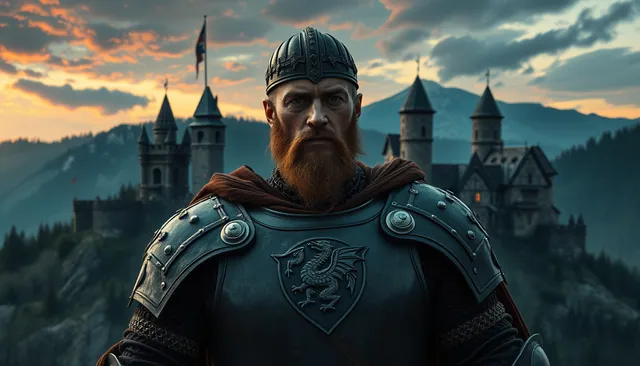
Vlad III
Vlad III fought off the Ottoman Empire by turning a mile-long field of impaled corpses into a warning outside his own capital. Four centuries later, a Victorian novelist would borrow only his name for a vampire he never actually resembled.
Vlad III ruled Wallachia — a buffer state squeezed between the Ottoman Empire and Christian Hungary — across three reigns between 1448 and 1476/77. Raised as an Ottoman political hostage after his father's murder, he returned to rule through calculated terror: mass impalements of rebellious boyars, Saxon merchants, and captured Ottoman troops, staged as deterrence rather than random cruelty. His most famous act, the 1462 "Forest of the Impaled" outside Târgoviște, briefly halted Sultan Mehmed II's invasion. Betrayed by an allied king, imprisoned over a decade on forged letters, and finally killed and beheaded fighting the Ottomans he'd resisted his whole life, Vlad became a Romanian symbol of defiance — and, through Bram Stoker's 1897 novel, a second legend entirely: Dracula, a name borrowed from his father's title and grafted onto a vampire sharing almost nothing else with the real man.
Born Into the Dragon
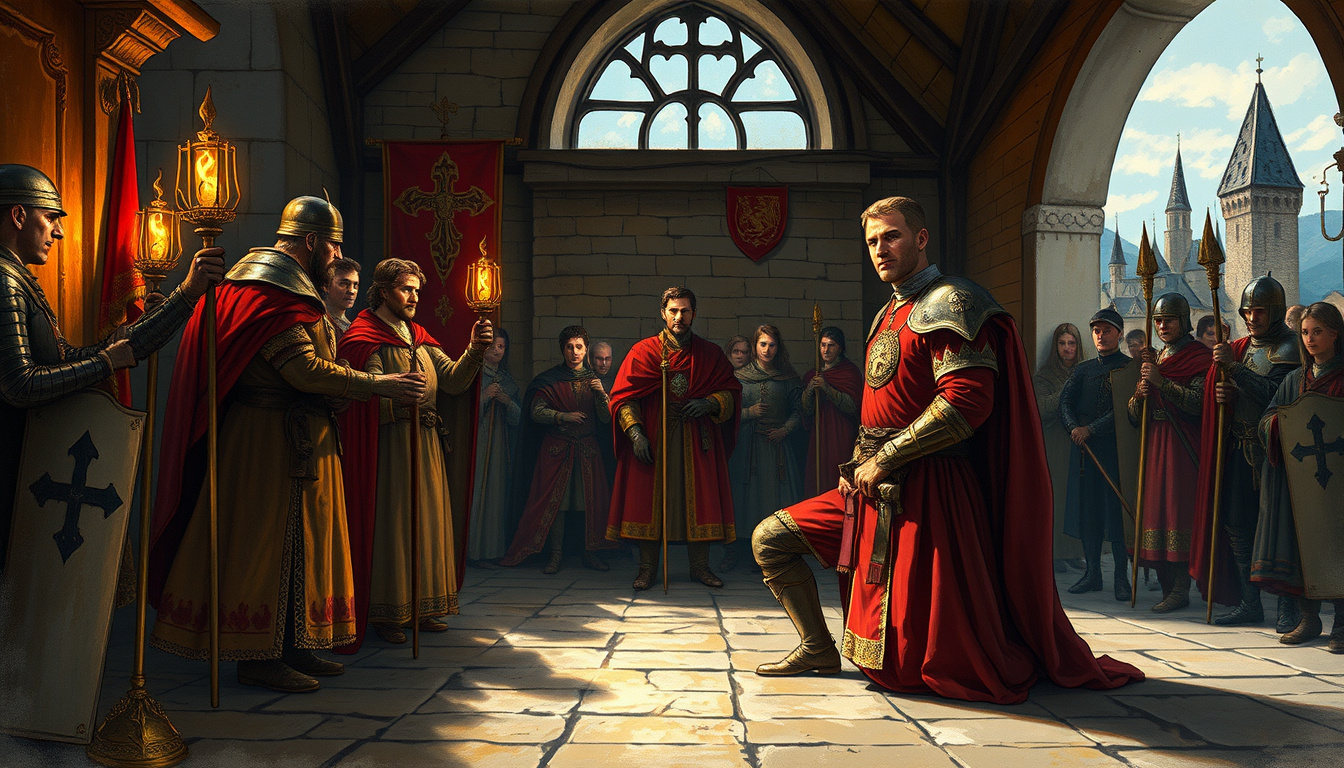
Vlad III was born in Sighișoara, Transylvania, in November or December 1431, the second son of Vlad II, voivode of Wallachia. That same year, his father was inducted into the Order of the Dragon, a chivalric brotherhood founded by Holy Roman Emperor Sigismund to defend Christian Europe against Ottoman expansion. The order's symbol earned Vlad II the nickname "Dracul" ("the Dragon," later also read as "the Devil" in Romanian). His son inherited the diminutive: Dracula, "son of the dragon." Wallachia itself was a precarious buffer state, squeezed between the rising Ottoman Empire to the south and the Kingdom of Hungary to the north, forced into shifting, often humiliating alliances with both just to survive.
Small buffer states like Wallachia survived by hedging: Vlad II swore loyalty to Hungary's anti-Ottoman crusading order while simultaneously paying tribute to the Sultan to keep the peace. That double game — Christian knight in Nuremberg, Ottoman vassal at home — was the political inheritance Vlad III grew up inside, and it shaped his own reign's constant switching of allegiance.
Hostage of the Sultan
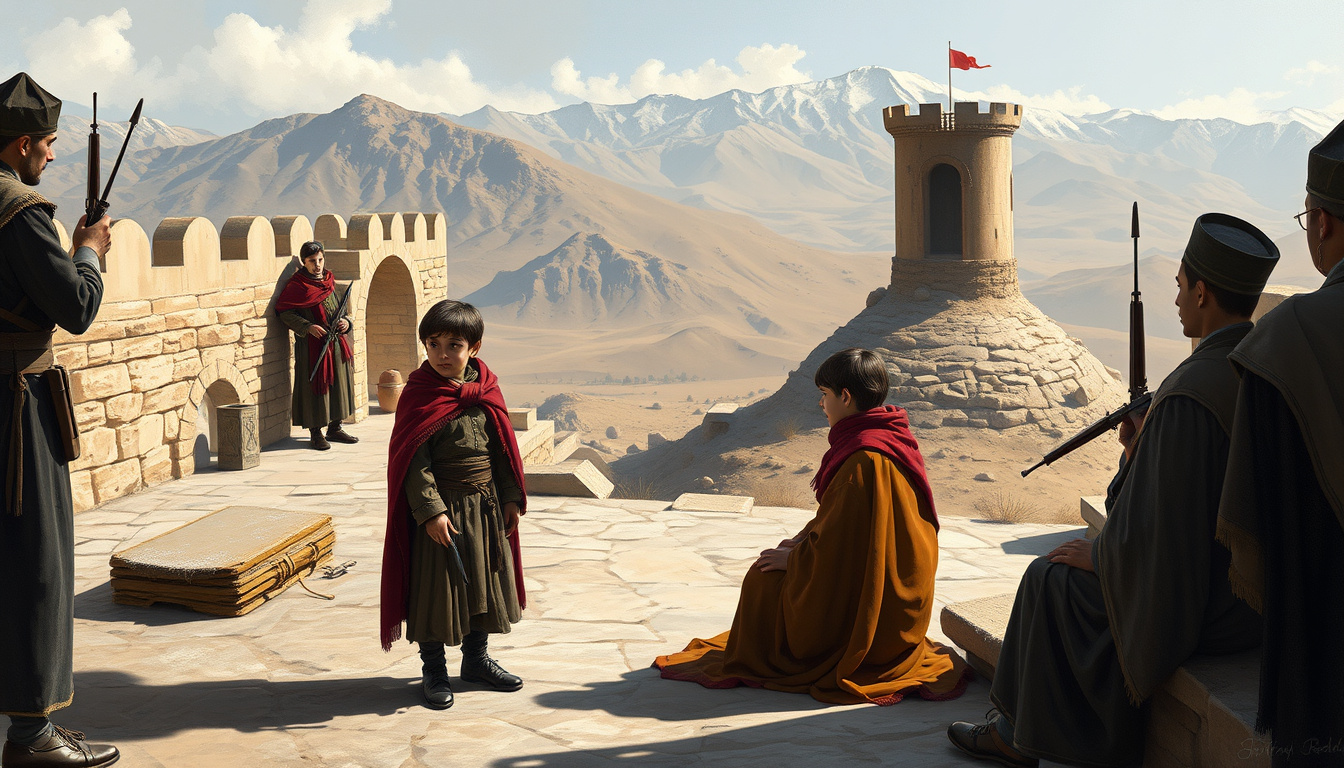
In 1442, to secure Wallachia's shaky truce with the Ottomans, Vlad II handed over his two younger sons — eleven-year-old Vlad and seven-year-old Radu — as hostages, held for years in a fortress above Eğrigöz in Anatolia. The brothers were tutored in Turkish, Islamic theology, statecraft, and horsemanship, but their paths diverged sharply: Radu adapted, growing close to the future sultan Mehmed II, while Vlad reportedly resisted, clinging to his Orthodox Christian identity and absorbing a lasting hatred of his captors alongside intimate knowledge of how they thought and fought. In December 1447, while Vlad was still effectively a hostage-diplomat, boyars allied with the Hungarian regent John Hunyadi killed his father in the marshes near Bălteni; his elder brother Mircea was captured, blinded with hot irons, and buried alive at Târgoviște.
Ottoman hostage-taking wasn't dungeon imprisonment — it was elite tuition with a leash: royal sons were groomed as future client-rulers who'd owe personal loyalty to the Sultan who raised them. It worked on Radu. The same years produced the opposite lesson in Vlad: exactly how Ottoman power operated, knowledge he'd later turn against it.
A Throne Seized, Twice Lost
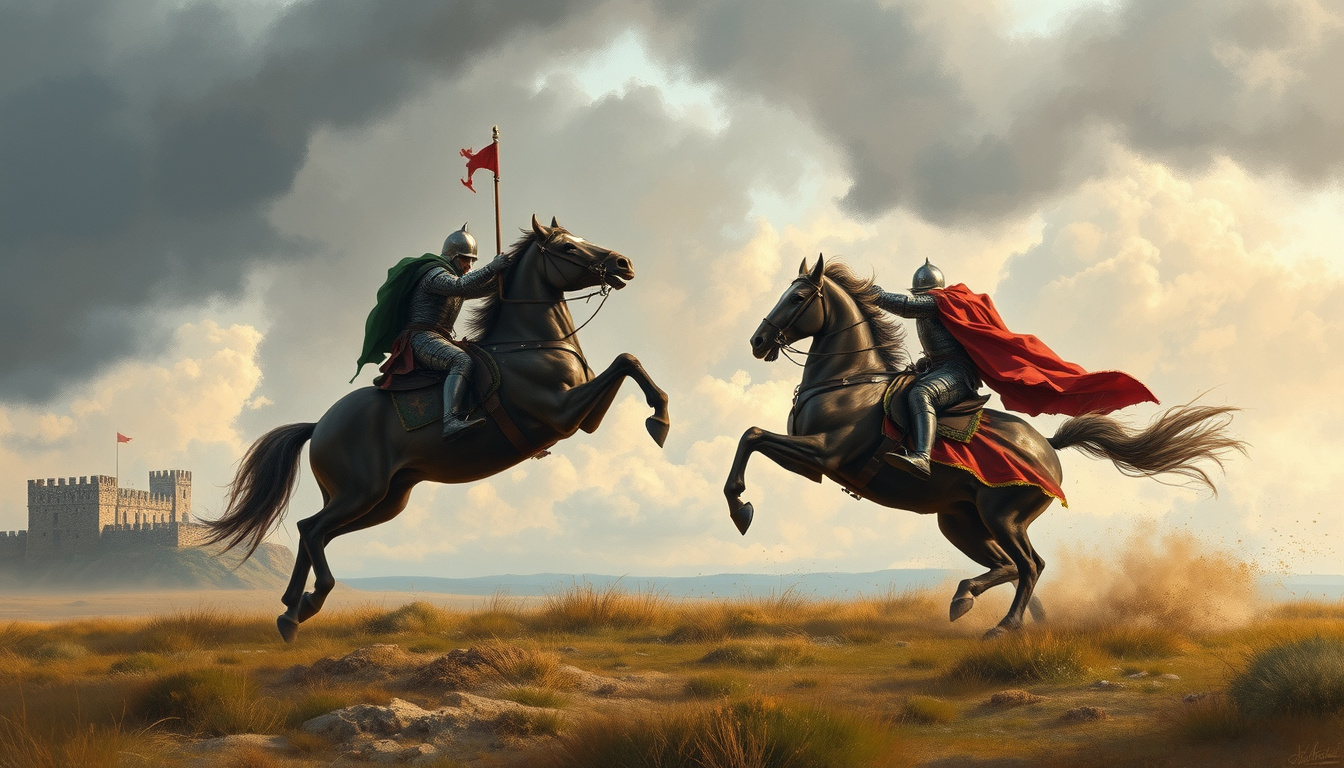
Released by the Ottomans after his father's death, teenage Vlad was installed on the Wallachian throne in 1448 with Turkish cavalry backing — a reign that lasted barely two months before Hunyadi's return forced him to flee. He spent the following years as a political refugee, first in Moldavia under a cousin's protection, then in Transylvania, where he formed an unlikely alliance with Hunyadi himself — the same power broker whose 1447 campaign had led indirectly to his father's murder. In August 1456, backed by Hunyadi, Vlad returned to challenge the Dănești claimant Vladislav II, his family's dynastic rival, killing him in single combat and beginning the six-year reign, 1456 to 1462, that would define him.
Wallachia's throne rotated constantly between two rival branches of the Basarab family, the Drăculești and Dănești, each backed by a different foreign patron — meaning Vlad's "return" wasn't really about popular support at home; it was about which neighboring power currently found him more useful than his rival.
Terror as Statecraft
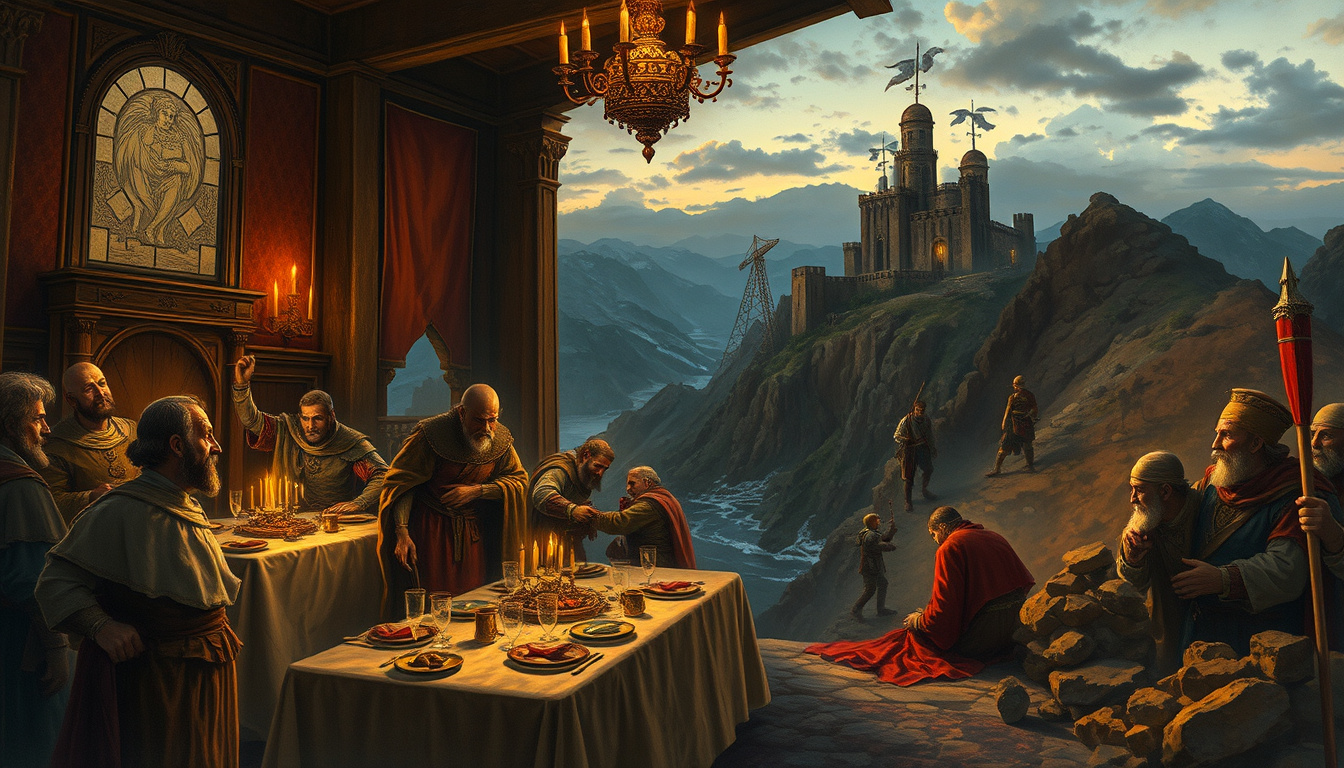
At an Easter feast in 1459, Vlad invited Târgoviște's boyars — the same class of nobles he blamed for his father's and brother's deaths — then had the older ones impaled on the spot. The rest, still in their feast clothes, were marched to the ruins of a fortress above the Argeș River and forced into months of labor hauling stone and firing lime to rebuild it into Poenari Castle, his mountaintop stronghold; many died before the work was done. It was the opening move of a broader pattern: throughout his second reign, Vlad used mass, public impalement — of nobles, criminals, and eventually Saxon merchants from Brașov and Sibiu who defied his new trade restrictions — not as unpredictable rage but as a visible, repeatable system of law enforcement.
Impalement's power wasn't the killing — it was the display: bodies left on stakes along roads and city approaches for weeks, visible to travelers, turned punishment into a standing public broadcast. A ruler with a small army and no real border defenses could still make invasion, theft, or betrayal look suicidal, purely through reputation.
The Night Attack
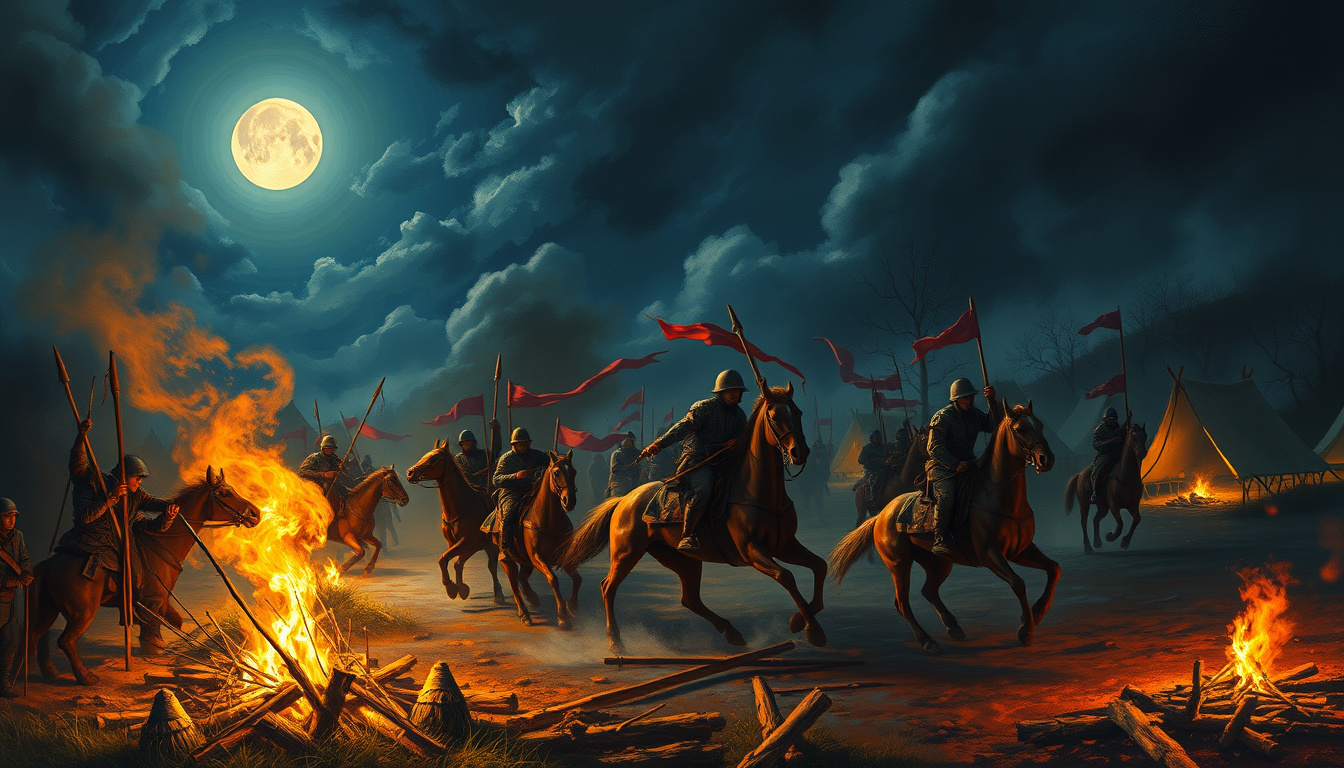
In late 1461, Vlad broke off tribute to Mehmed II and led a winter campaign across the frozen Danube that stretched into early 1462, later writing to Hungary's King Matthias Corvinus that he'd killed 23,884 Ottomans and Bulgarians, "without counting those we burned in their homes." Mehmed responded with a full invasion. Outnumbered, Vlad retreated while burning crops, poisoning wells, and harassing supply lines, then on the night of June 16–17, 1462, led a raid disguised as Ottoman cavalry deep into Mehmed's camp, hunting for the Sultan's own tent. He missed his target in the dark chaos and was driven off — but the next day, Mehmed's army marched into a mile-long field of stakes: thousands of impaled corpses arranged as a wall of the dead outside Târgoviște. The Ottoman advance stalled and turned back.
The Night Attack itself was a battlefield failure — Vlad never found Mehmed's tent. What actually worked was what came after: a Greek chronicler reports the sight so unnerved Mehmed's own camp that the Sultan broke off the siege, reasoning aloud that a ruler capable of that couldn't easily be dislodged from his own country.
The Propaganda War
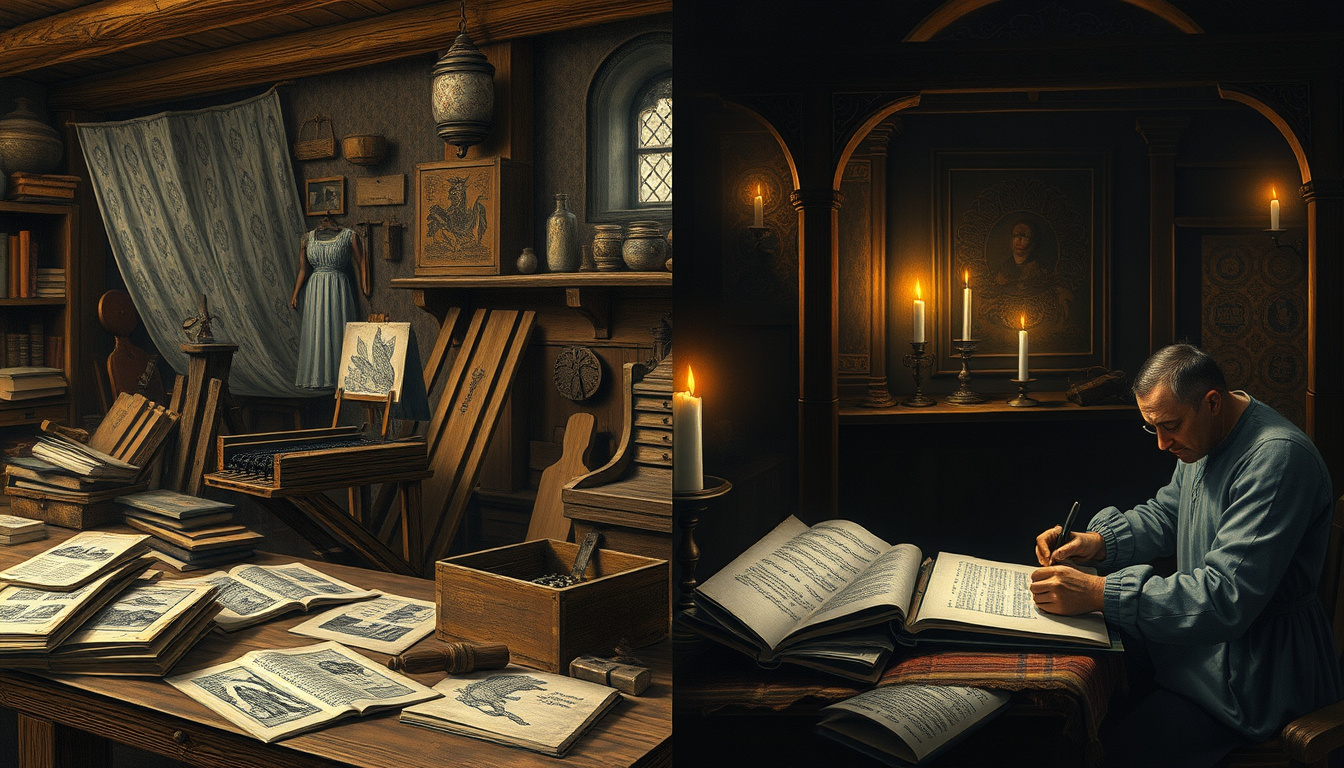
Vlad's brutality wasn't only recorded — it was actively broadcast by enemies with sharply different motives. Saxon merchants he'd impaled for violating his trade laws fed lurid stories to German printers; between 1488 and roughly 1521, illustrated pamphlets circulated across the Holy Roman Empire showing Vlad dining amid forests of impaled victims, with death tolls claimed as high as 100,000. Ottoman chroniclers, writing from the losing side of his campaigns, called him "Kazıklı Bey" — the Impaler Lord — and recorded atrocities of their own, including envoys who refused Wallachian custom and reportedly had their turbans nailed to their skulls. Modern historians treat both traditions as real evidence of extensive, deliberate cruelty, while treating the highest numbers and embellishments like blood-drinking as propaganda layered onto a genuinely brutal core.
The two smear campaigns didn't cancel out — they compounded. German pamphlets built a printing-press-era blockbuster for a Western Christian audience already primed to fear an "Eastern" tyrant; Ottoman chronicles built a parallel version for an Islamic readership. Because the specifics rarely overlap, they read today like independent confirmation, even where each side invented details.
Captive of an Ally
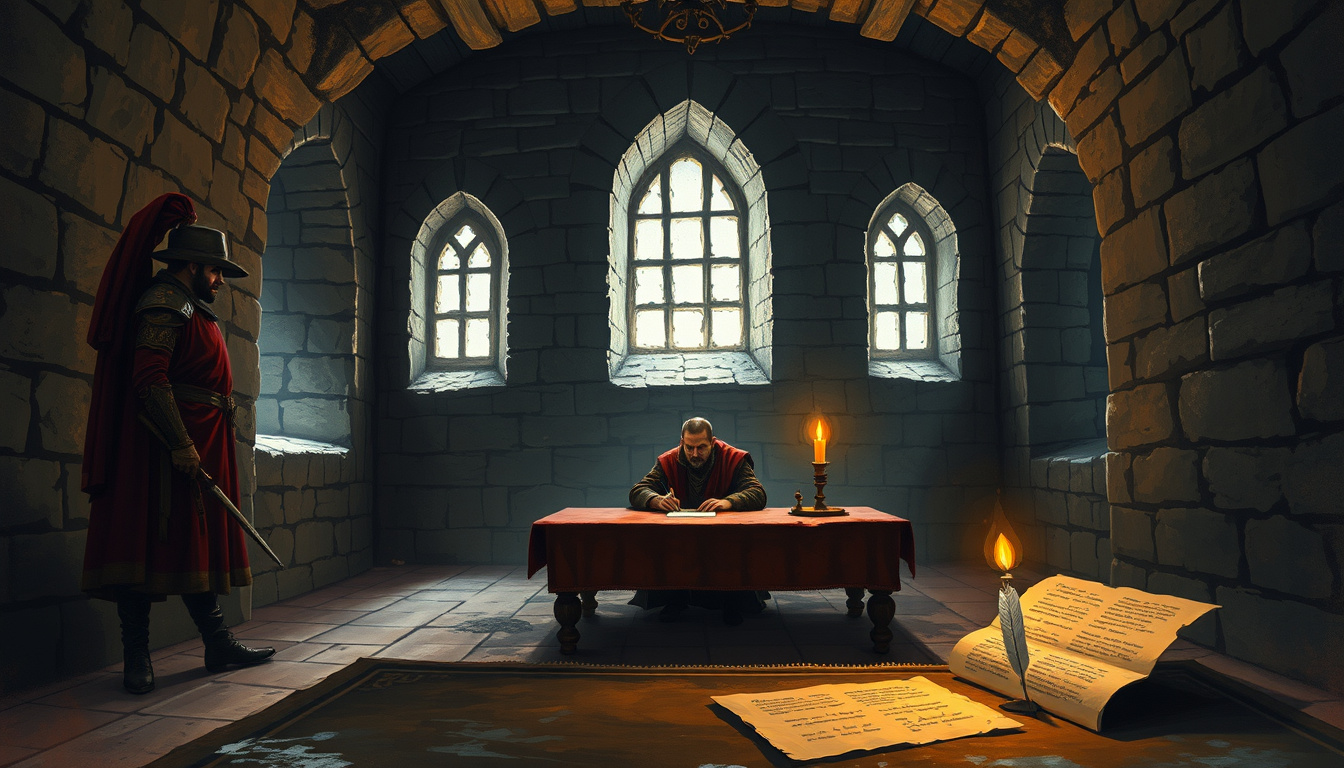
In late 1462, deposed and abandoned as the Ottomans installed his brother Radu as the new prince, Vlad fled to Transylvania seeking Hungarian military help — and King Matthias Corvinus imprisoned him instead. To justify holding a nominal Christian ally, Corvinus produced letters supposedly written by Vlad offering to switch sides to the Ottomans; most historians consider them forgeries, citing clumsy Latin and a tone incompatible with Vlad's known character. He spent roughly twelve years in custody, mostly at Visegrád, reportedly amusing himself by torturing captured birds and mice. Around 1466 he formally converted to Catholicism and married Ilona (Justina) Szilágyi, a cousin of Corvinus — a political move that gradually thawed his captivity into something closer to house arrest, and finally, in 1475, full release.
Corvinus needed Vlad's imprisonment to look legitimate to the Pope and Venice, who were funding an anti-Ottoman crusade Vlad was meant to join — hence the conveniently timed forged letters. Marrying him into the royal family years later solved the opposite problem: quietly rehabilitating a useful anti-Ottoman asset without ever admitting the original charges were invented.
A Head for the Sultan
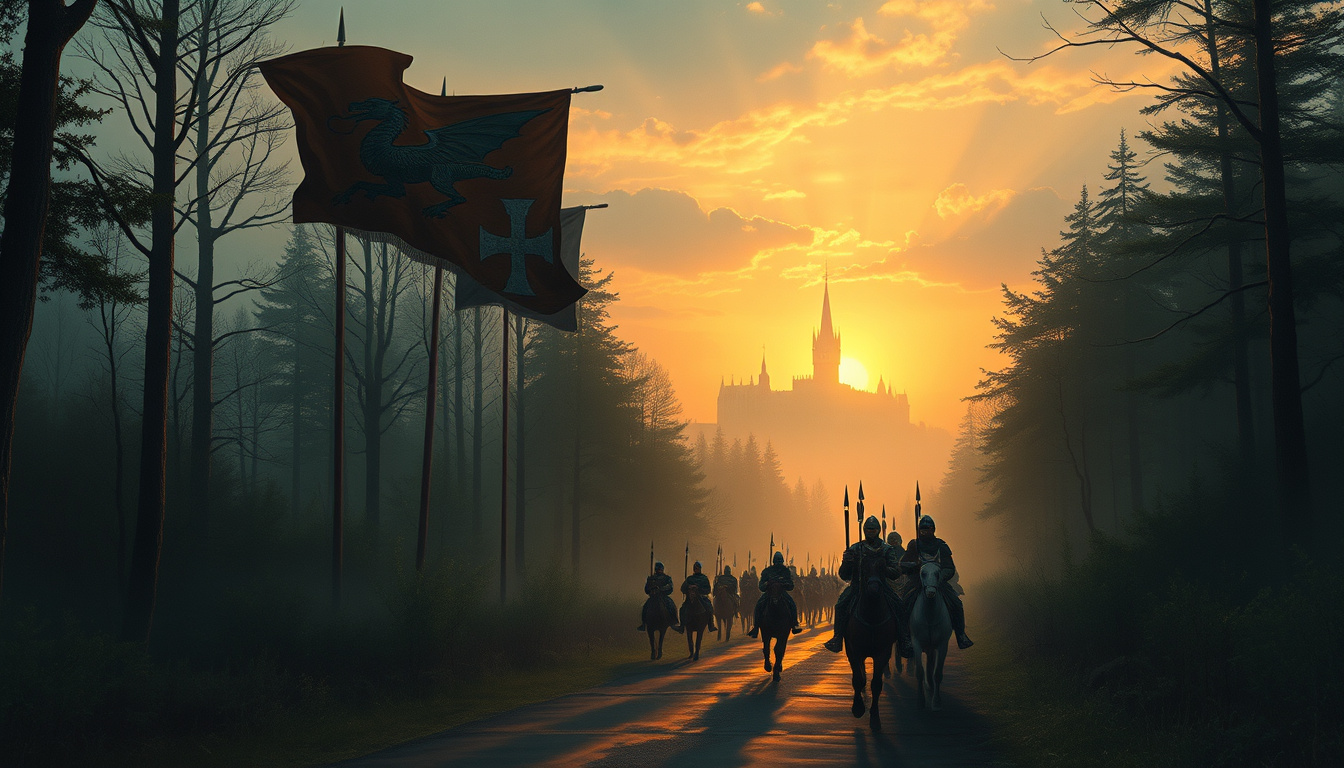
Freed in 1475, Vlad fought alongside Hungarian and Moldavian forces against the Ottomans while his ailing brother Radu died that January, leaving Wallachia's throne open. In November 1476, with troops from Hungary and his cousin Stephen the Great of Moldavia, Vlad marched in and reclaimed it for a third time. It didn't last: by late December 1476 or early January 1477, he was dead — ambushed, most accounts say in battle against Ottoman or pro-Ottoman forces, on the road between Bucharest and Giurgiu. Consistent with Ottoman practice, his head was severed and sent to Constantinople as proof for Mehmed II. His body's fate is unresolved: tradition places it at Snagov Monastery, but a 1933 excavation of the presumed tomb found no matching remains, leaving Comana Monastery — which Vlad himself founded — as historians' best alternate guess.
Sending a defeated enemy's head to the capital as physical proof of death was routine Ottoman practice, not a special humiliation reserved for Vlad — but for a ruler whose entire second reign had been built on public display of dead bodies as a message, ending as a trophy display himself carries a grim, probably not coincidental symmetry.
From Voivode to Vampire
In Romania, Vlad is remembered as a fierce, if brutal, defender of a small state against the Ottoman Empire; Nicolae Ceaușescu's communist government leaned into this in 1976, marking his death's 500th anniversary with statues, stamps, and restored castles as nationalist propaganda. Internationally, his name took on a separate life in 1897, when Irish novelist Bram Stoker — who left no evidence he knew Vlad's actual biography — lifted the word "Dracula" from a single library footnote and built a fictional vampire count around it, inventing everything else. A 2023 chemical analysis of Vlad's surviving letters even found human proteins suggesting he may have suffered hemolacria, a real condition causing blood-tinged tears — a strange footnote linking the historical man, once more, to the myth that swallowed his name.
Stoker's novel and Vlad's actual biography share almost no plot points — no castle siege, no brides, no blood-drinking from the living — because Stoker wasn't adapting Vlad's life; he borrowed a striking foreign name and a vaguely "exotic" setting for a story about English anxieties over foreign contamination. Twentieth-century film then welded the two identities together permanently.
Timeline
Quotes
“I have killed men and women, young and old ... 23,884 Turks and Bulgars, without counting those whom we burned in homes or those whose heads were not cut off by our soldiers.”
“His face and chin were shaven, but for a mustache ... large wide-open green eyes.”
“It was not possible to deprive of his country a man who had such a diabolical understanding of how to govern his realm and its people.”
“Go now; and tonight you shall have your gold back.”
Myths
The Vampire Prince
Vlad literally drank the blood of his victims and had supernatural, vampiric traits.
No contemporary source claims literal blood-drinking. Some chroniclers used moralizing, figurative language later misread as literal, and the vampire association was invented wholesale by Bram Stoker's 1897 novel, centuries after Vlad's death.
Stoker Based Dracula on Vlad's Life
Bram Stoker researched and modeled his fictional Count Dracula closely on the historical Vlad III's biography and personality.
Stoker's surviving research notes show he took essentially only the name "Dracula" from a single footnote in a library book on Wallachia, plus a vague Transylvanian setting. The character's biography, powers, and personality are Stoker's own invention, unconnected to Vlad's documented life.
He Killed 100,000 People
Vlad's total death toll across his reigns ran into the tens of thousands to as many as 100,000 — figures widely repeated in popular accounts.
These high figures trace to hostile German pamphlets and Saxon political propaganda circulated during and shortly after Vlad's lifetime. Modern historians broadly argue the verifiable total is lower — genuinely brutal but not on the scale the highest claims suggest — though scholars still disagree on the exact number.
He Invented Impalement
Vlad originated impalement as a method of execution and torture.
Impalement was an established Ottoman and broader Eurasian punishment long before Vlad. What distinguished him was the scale, the systematic use as state terror and deterrence, and his own promotion of it as a diplomatic message — not the method's invention.
His Body Rests at Snagov Monastery
Vlad is buried in the well-known crypt at Snagov Monastery near Bucharest, a claim repeated in tourist guides.
A 1933 excavation of the traditionally identified tomb found no human remains matching Vlad, only horse bones. His actual burial place remains unconfirmed; Comana Monastery, which Vlad himself founded, is considered by some historians a more plausible alternate site, though it too is unproven.
Network
Click a name to jump to their story below.
Voivode of Wallachia inducted into the Order of the Dragon in 1431, giving Vlad III his name; assassinated by rebelling boyars in December 1447.
Shared Vlad's Ottoman captivity but adapted to it, becoming a favorite of Mehmed II and the Ottoman-backed prince who replaced Vlad on Wallachia's throne in 1462.
Sultan whose 1462 invasion Vlad resisted with the Night Attack and the Forest of the Impaled; later installed Vlad's brother Radu as a client ruler against him.
Hungarian regent whose 1447 campaign led indirectly to Vlad's father's death, yet who later became Vlad's patron and backed his 1456 return to the throne.
King of Hungary who imprisoned Vlad for roughly twelve years on forged treason letters, then made him a relative by marriage and backed his third reign in 1476.
Hungarian noblewoman and cousin of Matthias Corvinus who married Vlad around 1466 after his conversion to Catholicism; bore him two sons.
Fellow refugee-turned-ruler whom Vlad helped install on Moldavia's throne in 1457; later lobbied for Vlad's release from Hungarian captivity and backed his 1476 return.
Rival Dănești-branch claimant to the Wallachian throne, implicated by some accounts in Vlad Dracul's death, whom Vlad killed in single combat in 1456 to retake power.
Character
Ruthlessly Systematic
Impalement wasn't random rage — after the 1459 Easter Massacre he had executed boyars' bodies arranged for maximum public visibility, the same logic behind staging the Forest of the Impaled directly along Mehmed II's invasion route.
Defiantly Independent
In 1461 he stopped paying Ottoman tribute and had the envoys sent to collect it killed, gambling a state a fraction of the empire's size against near-certain invasion.
Politically Adaptable
As a captive with no other path back to power, he converted from Orthodoxy to Catholicism and married into Matthias Corvinus's own family circle around 1466 — reversing the religious identity he'd clung to as a defiant Ottoman hostage two decades earlier.
Ottoman-Trained
Years as a hostage at Eğrigöz left him fluent in Turkish with firsthand knowledge of Ottoman military organization — intelligence he later applied to plan the 1462 winter campaign and Night Attack.
Vengeance-Driven
Historians consistently trace his later purge of the Wallachian boyar class back to 1447, when boyar factions stood by as his father was assassinated and his teenage brother Mircea was blinded and buried alive.
Master of Psychological Warfare
Beyond the stakes themselves, his 1462 letter to Corvinus itemized Ottoman and Bulgarian dead by location and exact count, turning even his correspondence into a broadcast of capability.
Absolutist on Corruption
Wallachian folk tradition credits him with leaving a golden cup permanently at a public fountain, untouched through his entire reign, because the population understood theft meant impalement — a legend reflecting a real reputation even where the specific object is likely embellished.
Have a question this chapter didn\u2019t answer? Ask the archive \u2014 answered live, checked against the same research as the story above.