Ada Lovelace
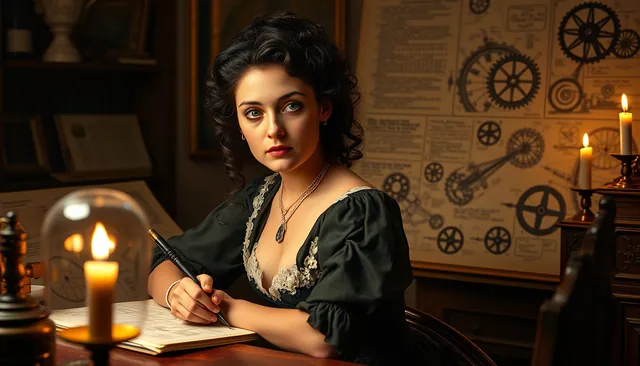
Ada Lovelace was raised on arithmetic to smother her poet father's 'madness' -- and she used it to imagine the modern computer a full century before anyone could build one.
Ada Lovelace was the only legitimate child of the poet Lord Byron, a father she never really knew -- he left England when she was five weeks old and died when she was eight. Her mother raised her on a strict diet of mathematics and logic, terrified she'd inherit Byron's volatile "poetic" temperament instead. It nearly worked exactly as planned: Ada became a serious, self-driven mathematician, tutored by Augustus De Morgan and mentored by Mary Somerville. Then she encountered Charles Babbage's Analytical Engine, a mechanical computer that was never actually built, and her two inheritances collided. Her 1843 notes on the machine included what's regarded as history's first published computer algorithm -- and a startling, genuinely original prediction that such machines might one day compose music, not just crunch numbers. She died of uterine cancer at 36, a century before anyone built what she had imagined.
A Poet's Daughter
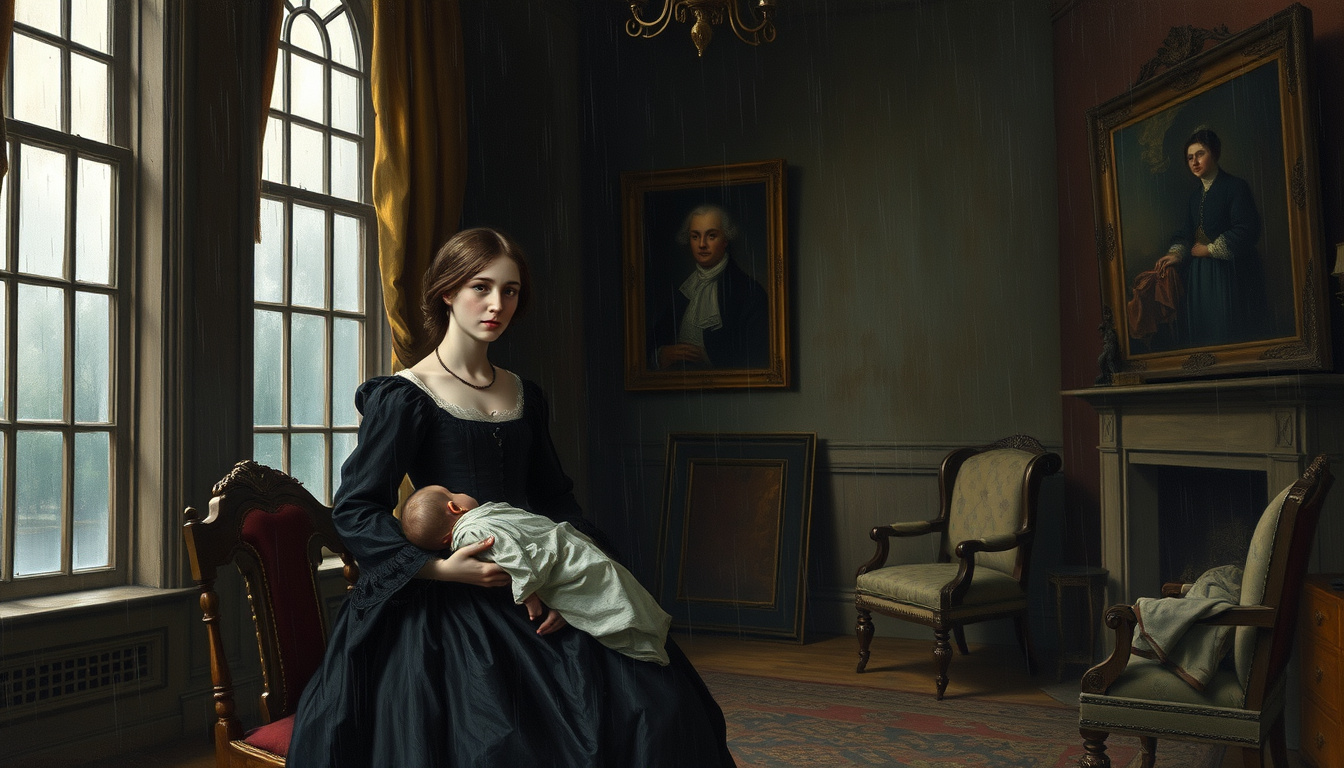
Augusta Ada Byron was born in London on 10 December 1815, the only legitimate child of the poet Lord Byron and the mathematically minded Annabella Milbanke. The marriage collapsed within weeks; by mid-January 1816 Annabella had fled with five-week-old Ada, and a formal separation followed that April amid rumors of Byron's cruelty, debt, and an affair with his own half-sister. Byron left England later that year and never saw his daughter again. He died in Greece in 1824, of a fever contracted while supporting the Greek war of independence, when Ada was eight. Annabella, determined her daughter would never inherit Byron's volatile 'poetic' temperament, began engineering an antidote: a childhood built almost entirely around mathematics.
Annabella's fear wasn't abstract melodrama -- Regency-era doctors and moralists genuinely believed genius and madness ran in the blood, and Byron's affairs, debts, and rumored incest made him the era's prime exhibit. A curriculum of logic and arithmetic was prescribed, quite literally, as a psychological vaccine.
Wings and Numbers
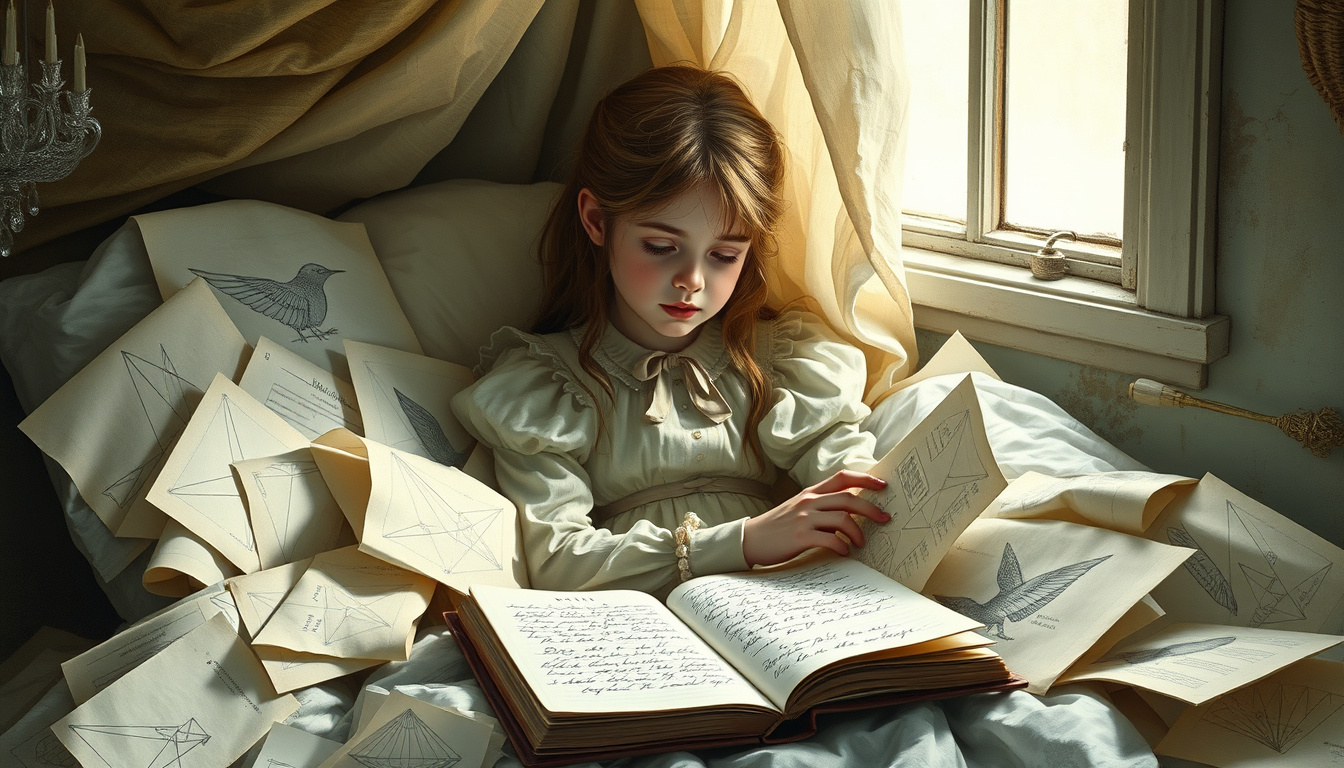
Ada's childhood was lonely and physically brutal. Headaches blurred her vision at eight, and in 1829 measles left her partially paralyzed; she was confined to bed for nearly a year and didn't walk unaided again until 1831, sometimes relying on crutches for years after. Isolated at her mother's country estates with governesses and tutors, she filled the time with obsessive projects: at twelve she designed a steam-powered flying machine, researching bird anatomy and wing materials in a self-made manual she called 'Flyology.' Annabella hired serious minds to teach her -- William Frend, the physician William King, and later the astronomer and science writer Mary Somerville -- building a mathematical education far beyond what most Victorian women, or men, ever received.
The rigor wasn't incidental. Annabella treated arithmetic as moral discipline as much as intellectual training, and Ada's illness-enforced isolation meant math became her primary outlet for the restless imagination she'd inherited from a father she'd never known.
Meeting the Engine
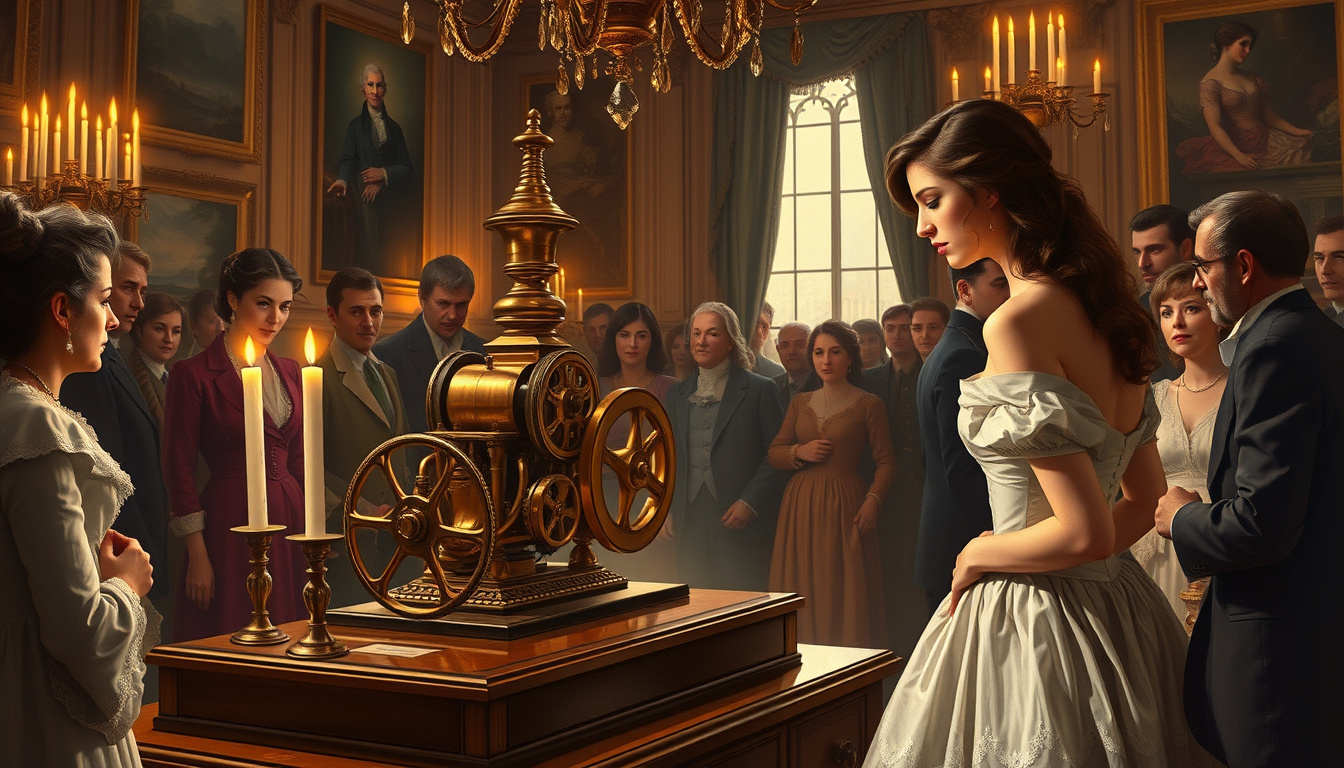
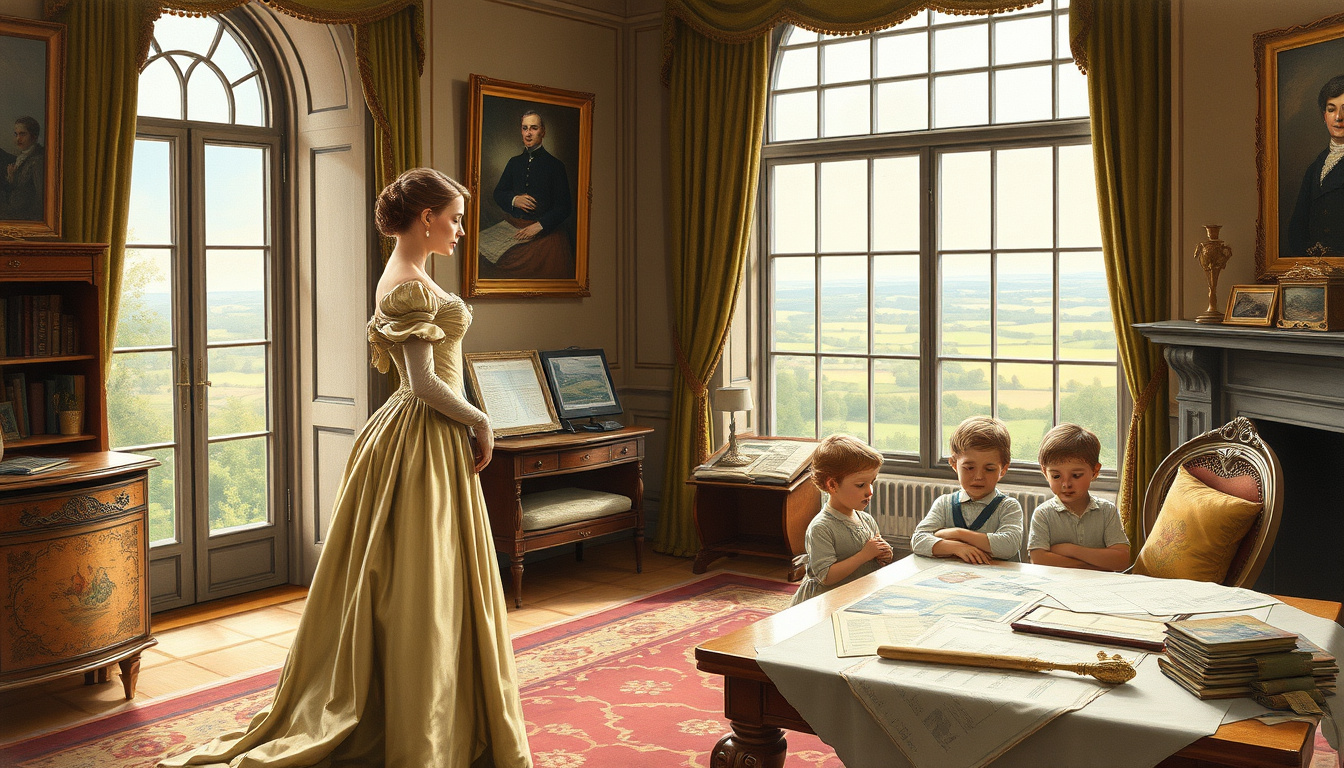
On 5 June 1833, seventeen-year-old Ada attended a London soiree hosted by Charles Babbage, Cambridge's Lucasian Professor and inventor of a mechanical calculator called the Difference Engine. Mary Somerville brought her; Babbage showed off a working portion of the machine, and Ada, freshly presented at court as a society debutante, was transfixed in a way few guests were. The two struck up a correspondence and friendship that lasted the rest of her life -- professional and platonic, despite persistent later rumors otherwise. Through the 1830s Ada kept studying, and in the early 1840s the logician Augustus De Morgan took her through calculus and advanced algebra by mail, pushing her mathematics well past what her earlier tutors could offer.
Babbage held salons partly to drum up elite support, and funding, for his machines, so Ada's fascination was exactly the reaction he wanted from a room full of guests. What set her apart was that she kept asking to understand the mechanism itself, not just admire it as a parlor curiosity.
Becoming the Countess
In July 1835, Ada married William King, a baron eleven years her senior; three years later he was created Earl of Lovelace, making her Countess of Lovelace. They had three children in quick succession -- Byron, Annabella, and Ralph -- born between 1836 and 1839. William was unusually supportive of her intellectual life for the era, and the family split time between Ockham Park in Surrey, the Somerset retreat of Ashley Combe, and later Horsley Towers. Domestic life didn't stop her mathematics; if anything, the financial and social security let her push further, and by the early 1840s she was corresponding with De Morgan on differential calculus while running estate obligations most Victorian countesses would have called a full-time occupation on their own.
Victorian aristocratic marriage usually ended a woman's intellectual ambitions rather than funded them. William's tolerance, paired with his own scientific curiosity, gave Ada something rare: a domestic life that didn't force a choice between motherhood and mathematics.

Nine Months of Notes
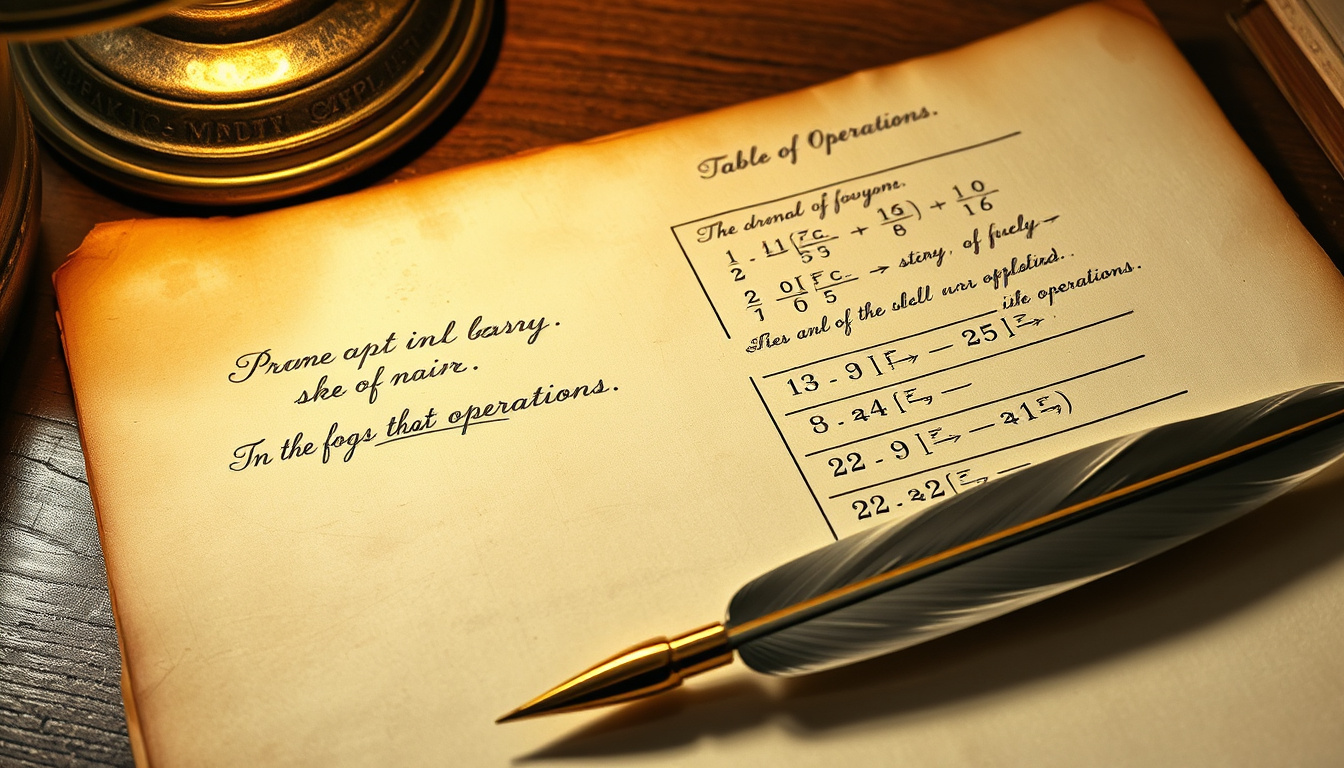
In 1840 Babbage lectured in Turin on his far more ambitious next design: the Analytical Engine, a general-purpose mechanical computer decades ahead of anything built. An Italian engineer, Luigi Menabrea, published a French account of the talk in 1842. Charles Wheatstone suggested Ada translate it into English, and Babbage encouraged her to add her own commentary. She spent roughly nine months on it. The translation itself ran a few thousand words; her appended notes, labeled A through G, ran about three times longer, moving well past summarizing Babbage's ideas into an original argument about what the machine could mean. It was published in September 1843 in Taylor's Scientific Memoirs, credited only to the initials 'A.A.L.'
Publishing under initials wasn't modesty -- a countess putting her full name to a technical mathematics paper was close to socially unthinkable in 1843. The anonymity that protected her reputation is also why, for a long time, readers didn't know a woman had written it at all.
The First Algorithm
The most famous of Ada's seven notes, Note G, laid out a detailed sequence of operations by which the Analytical Engine could compute Bernoulli numbers, values Babbage had outlined but not reduced to a working method. Historians still debate how much of the underlying math was Babbage's versus Ada's own contribution, but the published algorithm, including a caught error in an earlier version, is credited as hers. She went further than the assignment required: she argued the engine could manipulate any symbols, not just numbers, and speculated it might one day compose music if musical relationships could be expressed as data -- a leap nobody else made in 1843. She called this fusion of rigor and imagination 'poetical science.'
Babbage had built working fragments of logic before Ada, but he never wrote a clear, generalizable explanation of what the whole machine actually did or could do. Her real contribution wasn't inventing the math from nothing -- it was translating an engineer's blueprint into something closer to computer science.

The Enchantress's Gamble
By the mid-1840s Ada's life had gathered complications her mathematics couldn't resolve. Rumors circulated about her closeness with several men, including Andrew Crosse's son John, and she dismissed a tutor, William Carpenter, after he tried to turn moral instruction into an affair. Her most damaging project, though, was financial: convinced she could build a mathematical model for betting, she formed a syndicate with male friends around 1851 and wagered heavily on horse races, at one point losing thousands of pounds, reportedly over £3,000 across the scheme, and pawning family jewelry to cover it. The syndicate collapsed in debt, and Ada was eventually forced to confess the whole affair, and the sums involved, to her husband.
The betting scheme wasn't a break from her mathematical identity, it was an extension of it -- she genuinely believed probability could be systematized into an edge, the same instinct that made her sharp at spotting patterns in Babbage's engine. Horse racing simply doesn't obey clean rules the way a calculating machine does.
A Long Dying
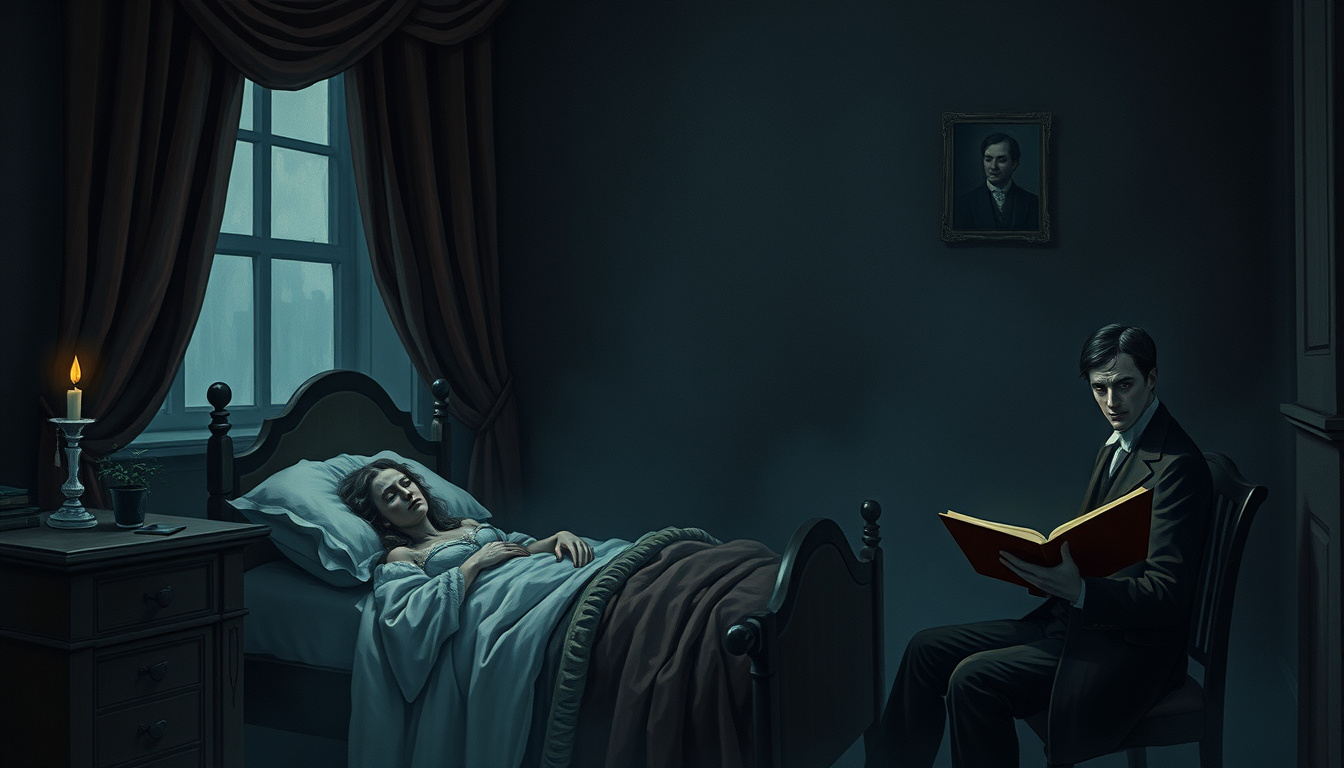
Ada was diagnosed with what her doctors called uterine cancer (almost certainly cervical cancer by modern classification) in 1852, and endured a slow, agonizing decline treated mainly with the already outdated practice of bloodletting. Her mother took control of the sickroom, restricting visitors and, by some accounts, hiding Ada's opiates in hopes the suffering would push her toward religious repentance. Ada made a deathbed confession to her husband William in August 1852 -- its contents were never recorded, but it was severe enough that he largely withdrew from her bedside afterward. One of the few visitors let through was her old friend Charles Dickens, who read her a death scene from his novel Dombey and Son at her request. She died on 27 November 1852, aged 36, and was buried beside the father she never knew, at Hucknall in Nottinghamshire.
Uterine and cervical cancer in 1852 had essentially no real treatment -- bloodletting was already considered old-fashioned even by contemporary medical standards, which shows how little medicine could actually offer her. The mystery confession has fueled speculation for over a century precisely because everyone who knew its contents took it to their own graves.
The Prophet of Computing
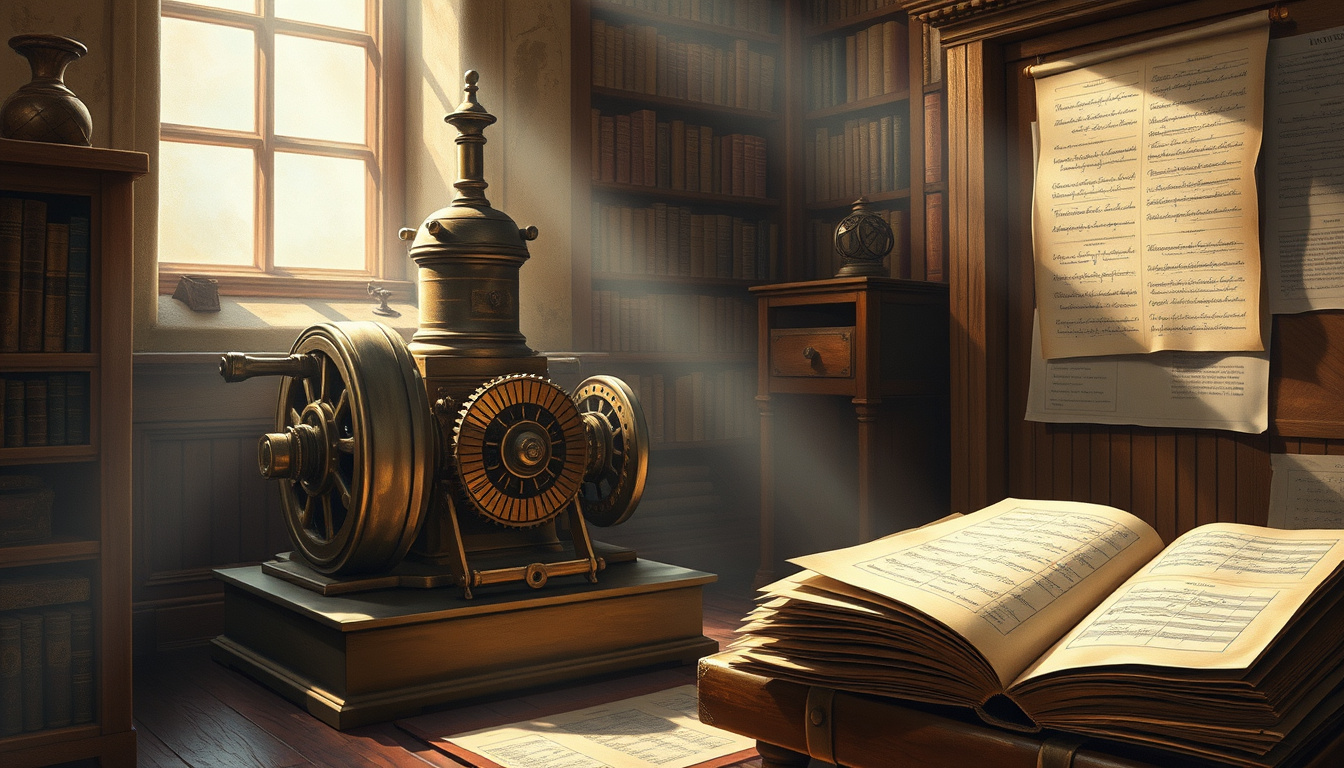
Ada's Notes were largely forgotten until 1953, when they were republished in a symposium on early digital computers, just as the field she'd theorized about was becoming real. Alan Turing had already engaged directly with her ideas in 1950, naming and rebutting 'Lady Lovelace's Objection' -- her argument that machines can't originate anything, only execute what they're told -- in the paper that proposed the Turing Test. In 1980 the US Department of Defense named its new programming language Ada in her honor. Historians still argue over how much credit belongs to her versus Babbage, but the specific claim to fame that endures -- an algorithm plus a genuine vision of general-purpose computing beyond arithmetic -- is documented in her own words, published under her own initials, in 1843.
Her rediscovery in the 1950s through 1980s wasn't purely archival -- the emerging computer science field and the growing women-in-STEM movement both had reasons to want a founding figure, and Ada fit both needs at once. That doesn't make the Notes fake; it does explain why her fame arrived a full century after her death.
Timeline
Quotes
“The Analytical Engine has no pretensions whatever to originate anything. It can do whatever we know how to order it to perform.”
“[The Analytical Engine] might act upon other things besides number... the engine might compose elaborate and scientific pieces of music of any degree of complexity or extent.”
“I do not believe that my father was (or ever could have been) such a Poet as I shall be an Analyst; (& Metaphysician); for with me the two go together indissolubly.”
“You will not concede me philosophical poetry. Invert the order! Will you give me poetical philosophy, poetical science?”
Myths
Ada Wrote the First Computer Program
Ada Lovelace was the first computer programmer, full stop -- writing entirely original code from scratch for Babbage's machine.
Babbage had already sketched unpublished algorithms for the Analytical Engine years earlier. Historians including Allan Bromley and Bruce Collier argue most of the specific programs referenced in her Notes originated with him, and that Ada's clear, documented contribution is Note G itself (plus catching an error in an earlier draft) and the surrounding exposition -- not the underlying engine mechanics.
She Ran Her Program on a Working Computer
People often picture Ada actually running her Bernoulli-number algorithm on a functioning machine.
The Analytical Engine was never built in her lifetime, or for more than a century afterward -- no complete version existed until later reconstructions. Her algorithm was a paper exercise, reasoned through by hand and never executed on real hardware.
Ada and Babbage Were Lovers
Their intense, decades-long intellectual partnership is often assumed, or outright fictionalized, as a romance.
No historical evidence supports a romantic or physical relationship. Their extensive surviving correspondence is professional and intellectually intimate but not romantic, and both maintained their separate marriages throughout.
She Rejected Her Father Entirely
Popular tellings often frame Ada as having no interest in or connection to Byron, raised to erase him from her mind completely.
Ada was deliberately kept from her father's memory as a child -- his portraits reportedly covered, his name rarely spoken. But as an adult she asked pointed questions about him, described her own mind in relation to his ('I shall be an Analyst... where he was a Poet'), and specifically requested burial beside him at Hucknall -- hardly total rejection.
Network
Click a name to jump to their story below.
The Romantic poet who left when Ada was five weeks old and died in Greece when she was eight; she never knew him but her whole upbringing was shaped by her mother's effort to prevent her becoming him.
A mathematician in her own right, nicknamed 'Princess of Parallelograms' by Byron; she engineered Ada's entire mathematical education as a defense against inherited 'poetic madness' and controlled Ada's life through to her deathbed.
Inventor of the Difference and Analytical Engines. Ada translated and annotated the paper that made his unbuilt computer legible to history, and he nicknamed her the 'Enchantress of Number.'
Pioneering science writer and astronomer who introduced teenage Ada to Babbage's Saturday soirees and encouraged her mathematical studies for years afterward.
Logician who tutored Ada by correspondence through advanced calculus and algebra in the early 1840s, giving her the grounding she needed to write the Notes.
Married Ada in 1835; unusually supportive of her intellectual work for the era, though he withdrew from her after a deathbed confession whose contents were never recorded.
Son of the electrical experimenter Andrew Crosse. Ada's relationship with him in her final years was close enough to fuel lasting rumor, and he destroyed most of their correspondence after her death.
Computer scientist who engaged directly with Ada's 1843 argument about machine originality, naming it 'Lady Lovelace's Objection' in his foundational 1950 paper on machine intelligence.
Character
Analytical, Not Just Poetic
She described her own mind as fusing her father's imagination with her mother's rigor, writing that she would be an 'Analyst (& Metaphysician)' the way Byron was a poet -- and treated mathematics itself as a creative act.
Relentlessly Self-Taught
Confined to bed for nearly a year after childhood paralysis, she filled the time studying geometry and algebra by correspondence, and later pushed De Morgan for problems well beyond her formal coursework.
Visionary Beyond the Assignment
Asked only to translate and annotate someone else's paper, she used Note G to argue the Analytical Engine could manipulate music and symbols, not just numbers -- a leap no one else made in 1843.
Compulsively Ambitious
At twelve she designed a steam-powered flying machine and wrote an illustrated manual, 'Flyology,' cataloguing wing materials and bird anatomy; as an adult she tried to build a mathematical model for beating horse races.
Socially Unconventional
She carried on close, rumor-generating friendships with men outside her marriage, including John Crosse, in an era when a countess's reputation depended on avoiding exactly that.
Physically Fragile, Mentally Relentless
Chronic illness -- childhood paralysis, migraines, and finally terminal cancer -- shadowed her whole life, yet she kept working, corresponding with Babbage on mathematics from what became her sickbed.
Financially Reckless
Convinced her analytical skill could be applied to gambling, she built a betting syndicate and lost thousands of pounds on horse races, pawning family jewelry to cover the debt.
Craved Recognition on Her Own Terms
She insisted on publishing substantive, credited contributions rather than being a passive translator, and pushed back hard when Babbage tried to attach an unsigned political preface to her work without her consent.
Have a question this chapter didn\u2019t answer? Ask the archive \u2014 answered live, checked against the same research as the story above.