Harry Houdini
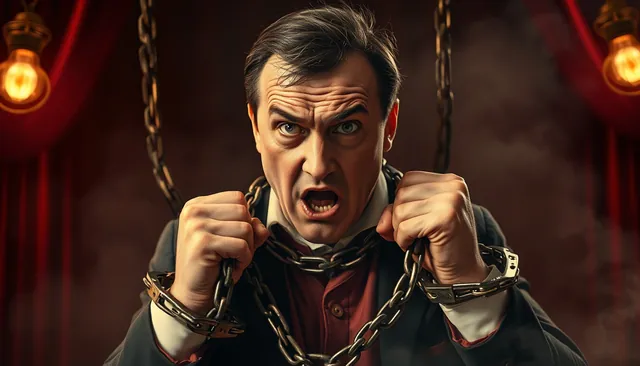
He escaped every lock, chain, and coffin they threw at him, spent his last years exposing the fraudsters who preyed on the grieving, and left his wife a secret code to prove there was life after death — which never came.
Harry Houdini was a Hungarian-American escape artist and magician who turned handcuffs, straitjackets, and locked tanks into the most famous act on earth. In his final years he became spiritualism's fiercest debunker, exposing the mediums who profited from grief — including one endorsed by his own close friend. He died in 1926 at 52, officially from a ruptured appendix, in circumstances still argued over a century later.
Budapest to Appleton
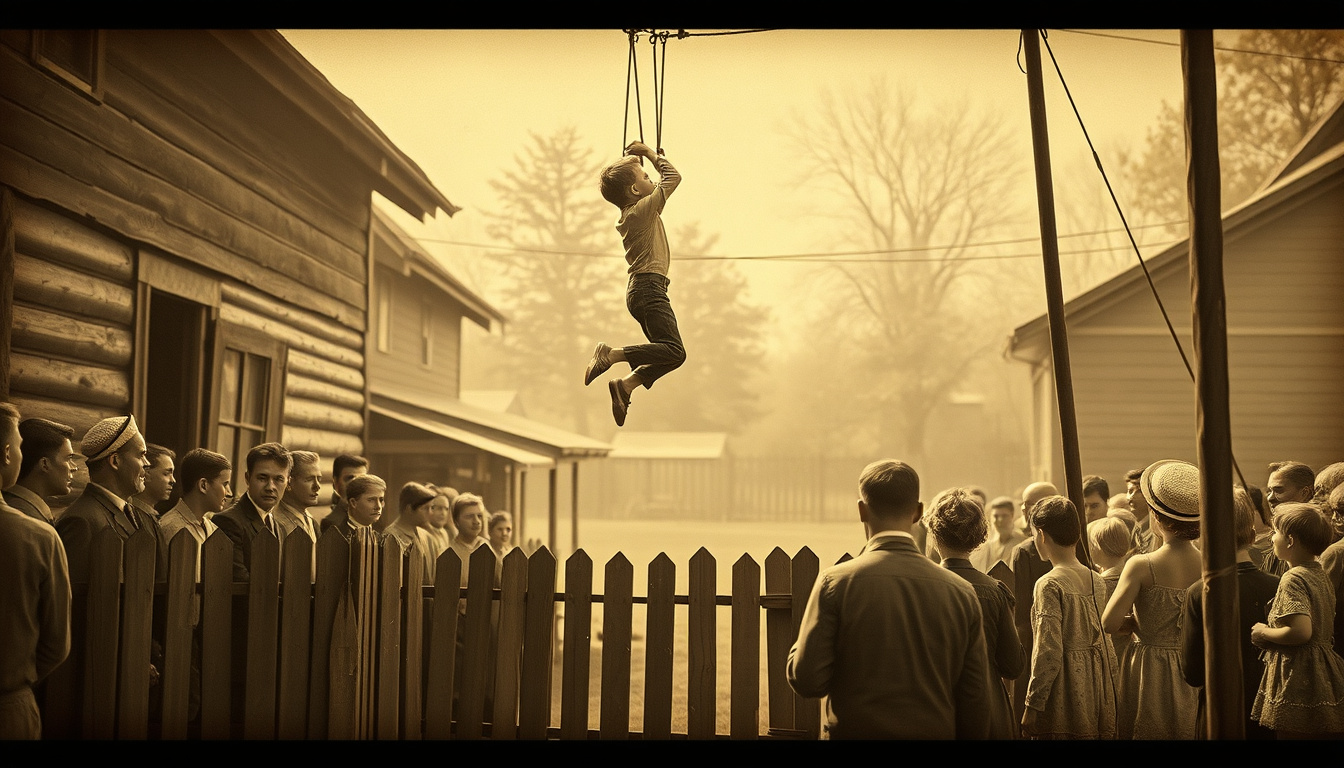
Erik Weisz was born March 24, 1874, in Budapest, the son of a rabbi. In 1878 the family emigrated to Appleton, Wisconsin, where his father led a small congregation that could barely support them. By age nine, Ehrich (as he now spelled it) was already performing, billing himself as 'Ehrich, Prince of the Air' in a neighborhood five-cent circus — trapeze tricks and contortion for pocket change. The family's poverty never really let up; it just moved with them.
A rabbi's income in a small Reform congregation on the American frontier was unstable by design — congregations that size often couldn't guarantee a salary, which is part of why a nine-year-old was already working.
The Grind
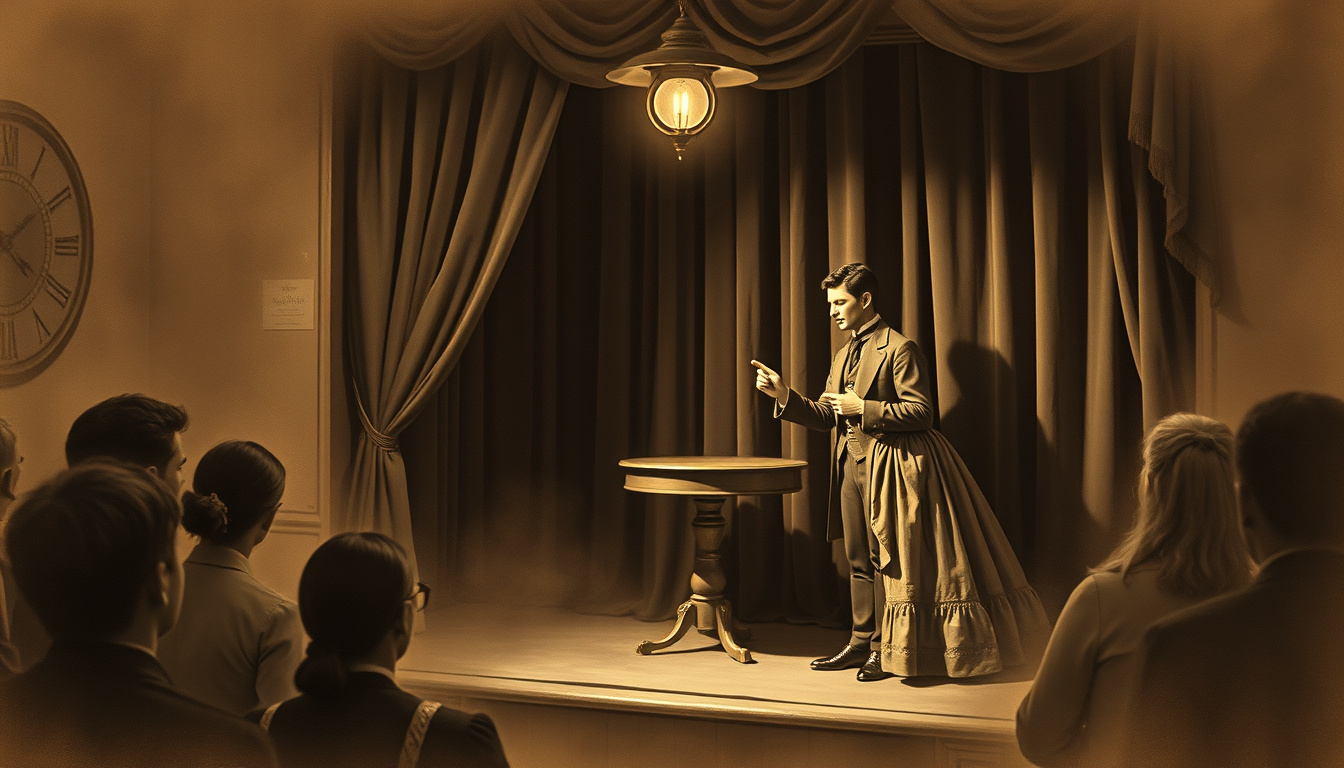
The family moved to New York in 1887, and after his father's death in 1892 left them with almost nothing, Ehrich worked odd jobs while chasing magic on the side. In 1891 he teamed with Jacob Hyman as 'The Brothers Houdini' and took the stage name Harry Houdini. In 1894 he married Wilhelmina 'Bess' Rahner, who replaced Hyman as his stage partner within weeks of their wedding. For most of the 1890s they played dime museums, circuses, and dime-a-dozen vaudeville bills for almost nothing — a decade of grinding obscurity before anyone outside a tent knew his name.
Dime museums sat at the very bottom of American live entertainment — cheap admission, continuous short acts, high turnover of performers who didn't draw. Surviving there for years was less a credential than a survival skill.

The Handcuff King
In 1899, manager Martin Beck booked Houdini on the strength of a single trick: escaping any handcuffs an audience could produce. Beck sent him to Europe, where Houdini escalated the stunt into spectacle — stripped and searched by police, locked in their own jail cells, escaping in minutes while crowds and newspapers watched. By 1900 he was a genuine sensation across the continent, billing himself the 'King of Handcuffs' and, later, of straitjackets, packing crates, and anything else authorities dared lock him into.
Local police escapes were a calculated publicity move, not just a dare: getting a city's own jail and its own reporters to vouch for the stunt manufactured credibility no amount of advertising could buy.

Death-Defying by Design
Houdini's escapes looked improvised and mortally risky, but they weren't. Each one was rehearsed obsessively until it was reliable, then staged to look far more dangerous than it actually was. The Milk Can Escape — debuting January 27, 1908, in St. Louis — was the model: Houdini folded into an oversized milk can, filled with water and padlocked shut, apparently guaranteed to drown him if the escape failed by even a few seconds.
The can's rivets were fakes; the real seal was a concealed set of collapsible hidden latches Houdini could release from inside, engineered so the can looked identically sealed to the audience before and after.

Above the Earth
In 1909, mid-career and restless, Houdini bought a French Voisin biplane for $5,000 and hired a full-time mechanic. On March 18, 1910, at Diggers Rest, Victoria, he piloted what is recognized as Australia's first officially witnessed airplane flight, making three flights that day. It wasn't a stunt for the act — he genuinely chased being first, and briefly considered aviation as a second career before returning fully to magic.
Early biplanes like the Voisin were notoriously unstable and had already killed several pioneering aviators by 1910; Houdini's flights carried real, unrehearsed risk of a kind his stage escapes were specifically engineered to avoid.

The Chinese Water Torture Cell
Houdini's younger brother, Theodore 'Hardeen' Weiss, had built his own escape act, and when an audience once demanded Hardeen escape a straitjacket in full view instead of behind a curtain, Houdini felt outdone and pushed harder to top him. Out of that competitive pressure came his signature illusion: lowered upside down, ankles locked in stocks, into a water-filled glass-and-steel cabinet, sealed and hidden behind a curtain. It debuted publicly at Circus Busch in Berlin on September 21, 1912, and became the act audiences most associate with his name — and, decades later, the source of the most persistent myth about how he died.
The cabinet's true weak point was never the lock the audience saw, but a specially built breakaway panel at the top, released from inside and swung open behind the concealing curtain — the curtain, not the lock, was doing the real work.

Screen and Stage
At the height of his fame Houdini expanded into film, starring in and eventually producing serials and features between 1919 and 1923, including The Grim Game and Terror Island. He also staged one of his largest illusions yet, vanishing a full-grown elephant on the stage of the New York Hippodrome in 1918. His movie career never matched his stage draw, and by the early 1920s he had largely returned to live performance — now folding a new obsession into the show.
Silent-era stunt films couldn't showcase what actually made Houdini's live act work — the audience's certainty that no editing cut was hiding the trick — so his screen career struggled to reproduce the thing people paid to see him do in person.
War on the Spirits
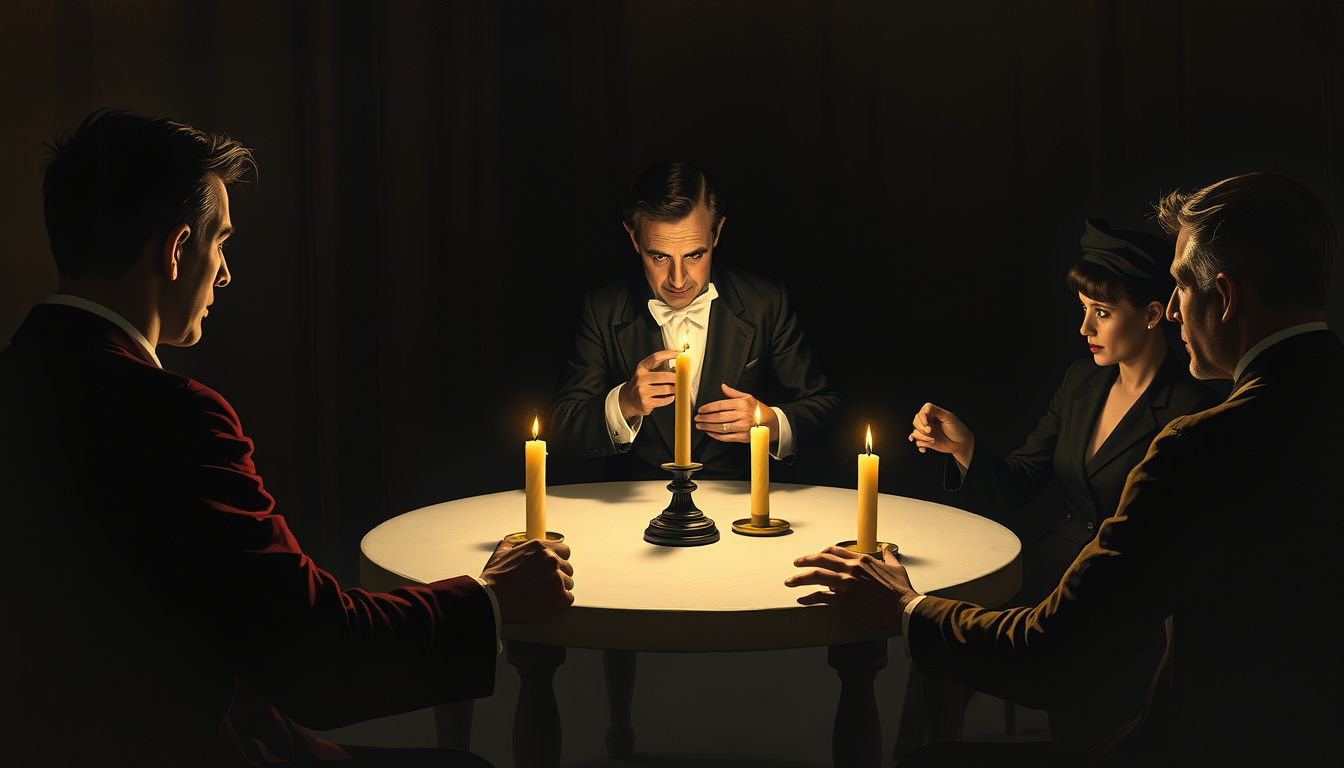
Houdini's mother, Cecilia, died in 1913, and his grief pulled him toward spiritualism in search of contact with her — a search that curdled into crusade once he saw how the movement preyed on people exactly like him. He and Sir Arthur Conan Doyle, creator of Sherlock Holmes and a devout spiritualist, became friends in 1920 over their shared fascination, from opposite sides. The friendship collapsed in 1922 after Doyle's wife, claiming to channel spirits, produced a 'message' from Houdini's mother written in fluent English — a language she never spoke. Houdini said so publicly, and the two men spent their remaining years attacking each other in print. In 1924, serving on a Scientific American investigating committee, Houdini personally exposed the medium 'Margery' (Mina Crandon) as a fraud, tracing her supposed spirit-rung bell to her own concealed foot.
Séances of the era relied on total darkness and controlled physical contact to prevent exactly this kind of detection; Houdini defeated Margery's trick by secretly increasing his own sensitivity to touch, tightly bandaging his leg beneath his trousers before the sitting so he could feel the faintest movement in the dark.

The Punch and the Pact
On October 22, 1926, backstage in Montreal, a McGill student named J. Gordon Whitehead asked if Houdini could really withstand hard blows to the stomach, then struck him several times before Houdini could brace. Houdini kept performing through the pain for days before collapsing; doctors found a ruptured, infected appendix and operated on October 24. He died of peritonitis on October 31, 1926, in Detroit — Halloween, age 52. Before he died, he and Bess had agreed on a secret code, 'Rosabelle, believe,' so he could try to prove an afterlife by contacting her if one existed. She held a séance every year on the anniversary for a decade; the message never came, and in 1936 she let the ritual end.
No confirmed medical link between blunt trauma and appendicitis has ever been established; his appendix was almost certainly already dangerously inflamed before the punch, which means the most famous story about his death describes a coincidence in timing, not a cause.
Timeline
Quotes
“My chief task has been to conquer fear. The public sees only the thrill of the accomplished trick; they have no conception of the tortuous preliminary self-training that was necessary to conquer fear.”
“A magician is only an actor — an actor pretending to be a magician.”
Myths
Houdini drowned inside his Water Torture Cell
The most widely believed version of his death has Houdini drowning during his signature underwater escape.
He never died performing the Water Torture Cell. He died over a week later in a Detroit hospital of peritonitis from a ruptured appendix. The drowning myth spread largely from a fictionalized 1953 Hollywood biopic that dramatized his death that way.
The McGill student's punch killed him
Popular retellings treat the stomach punch from J. Gordon Whitehead as the direct cause of death.
No confirmed medical link between blunt abdominal trauma and appendicitis has ever been established. His appendix was almost certainly already dangerously inflamed beforehand; the punch and the fatal illness are best understood as a coincidence in timing, not cause and effect.
Spiritualists poisoned him for exposing their frauds
A persistent theory holds that mediums Houdini had publicly humiliated arranged to have him poisoned in revenge.
No forensic evidence has ever supported this. A grand-nephew petitioned in 2007 to have Houdini's body exhumed and tested for arsenic, but the family never reached agreement and it was never carried out. Medical consensus remains peritonitis from a ruptured appendix.
Network
Click a name to jump to their story below.
Wife and stage partner from 1894 until his death; held ten years of annual seances afterward trying to receive his coded afterlife message.
Younger brother and fellow escape artist whose own act's competitive pressure helped push Houdini to develop the Water Torture Cell.
His mother, whose death in 1913 sent Houdini searching for contact with the afterlife — a search that curdled into his crusade against fraudulent mediums.
Sherlock Holmes creator and devout spiritualist; a close friendship over their shared fascination collapsed into a bitter public feud in 1922.
Boston medium Houdini personally exposed as a fraud during a 1924 Scientific American investigation, ending her bid for a $2,500 prize.
McGill student whose backstage punch to Houdini's stomach in 1926 is popularly but inaccurately blamed for his death days later.
Character
Relentless self-reinvention
From circus kid to Handcuff King to aviator to film star to fraud-hunter — Houdini kept discarding successful acts to chase the next bigger one.
Instinct for manufactured danger
His escapes were engineered to look far more lethal than they actually were, built on obsessive rehearsal rather than real improvisation under threat.
Competitive to the bone
Rivalry with his own brother's act was a genuine creative engine, pushing him toward ever more dangerous-looking illusions.
Showman's command of publicity
Escaping a city's own jail cells in front of its own reporters was a calculated credibility play, not just a stunt — he understood earned media before the term existed.
Grief redirected into crusade
His mother's death didn't just sadden him — it launched a years-long, highly public campaign against the mediums who exploited people's grief the way his own had been exploited.
Physical courage bordering on recklessness
From untested early biplanes to refusing to brace against an unexpected punch, he consistently underestimated real, unstaged physical risk.
A partnership built to outlast him
The secret code with Bess wasn't showmanship — it was a private, decade-long experiment in whether death could actually be answered.