Genghis Khan
A boy exiled and enslaved by his own people united the Mongol tribes, conquered the largest contiguous land empire in history, and died leaving behind both a reputation for genocide and an administrative machine — postal relays, a legal code, religious tolerance — that made the whole thing actually run.
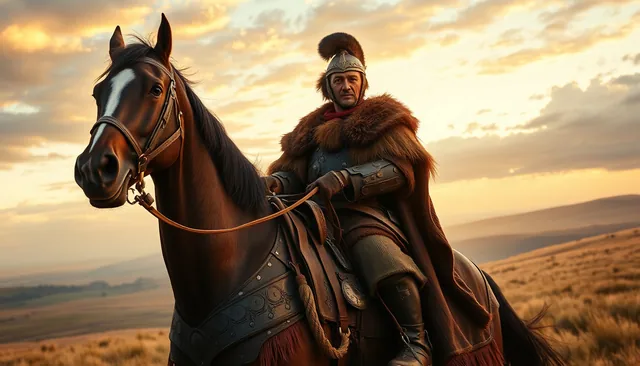
Genghis Khan was the founder and first Great Khan of the Mongol Empire, which at its height stretched from the Pacific to Eastern Europe. Born Temujin to a minor tribal chief who was murdered when he was a child, he survived exile and enslavement to unite the fractured steppe tribes by 1206. His conquests killed on a scale still debated by historians — and also built a trade and administrative network, the Pax Mongolica, that connected East and West more safely than at any point before it.
Delüün Boldog to Exile
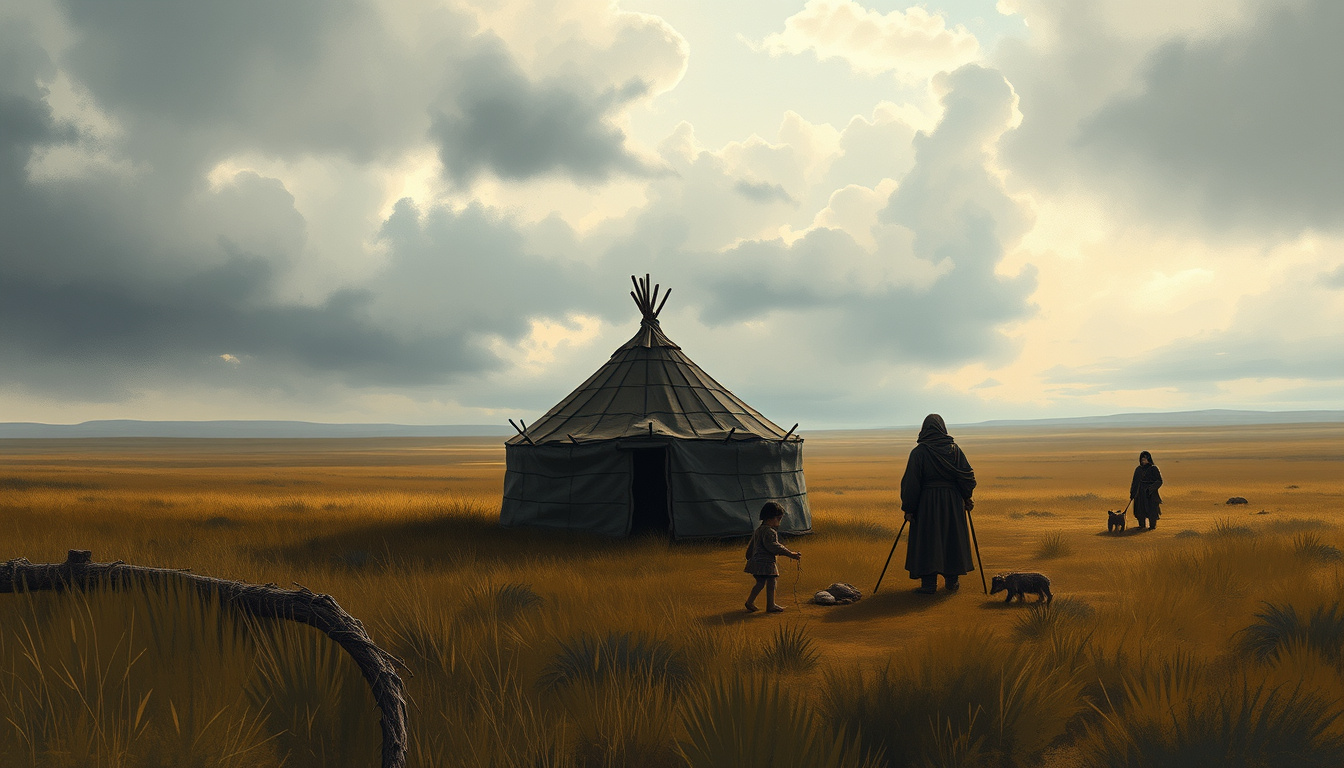
Temujin was born around 1162 near the sacred mountain Burkhan Khaldun, the son of Yesugei, chief of a minor Mongol clan. When Temujin was about nine, rival Tatars poisoned Yesugei. Without their chief, the clan abandoned Temujin's family, leaving his mother Hoelun to raise five children alone on the steppe, foraging for roots and small game. In this period of desperate scarcity, Temujin killed his own older half-brother Behter in a dispute recorded in the Mongols' own oral history — an early, unsparing sign of how far he would go to secure his family's position.
Mongol clan leadership wasn't hereditary in a fixed legal sense — it depended on the chief's ability to hold followers' loyalty. When Yesugei died, his followers were free to leave, and most did, since a fatherless boy commanded no obligation at all.

Captivity and Börte
As a teenager Temujin was captured by the Tayichiud clan, forced into a wooden cangue collar, and held as a slave before escaping with the help of a sympathetic captor. He married Börte, a match arranged in his childhood, in 1178. Shortly after, raiders from the Merkit tribe abducted Börte in retaliation for an old grievance against Temujin's father. Temujin rallied his childhood ally Jamukha and the powerful chief Toghrul to rescue her — a successful raid that built his first real reputation as a leader worth following. Börte's first son, Jochi, was born soon after her return, and his paternity was disputed within the family for the rest of Temujin's life.
Rescuing Börte wasn't just a personal matter — steppe alliances ran on reciprocal obligation, and successfully calling in favors from Jamukha and Toghrul to mount a real military raid demonstrated Temujin could organize and lead men, the exact currency he needed to start attracting followers of his own.
Brother Against Brother
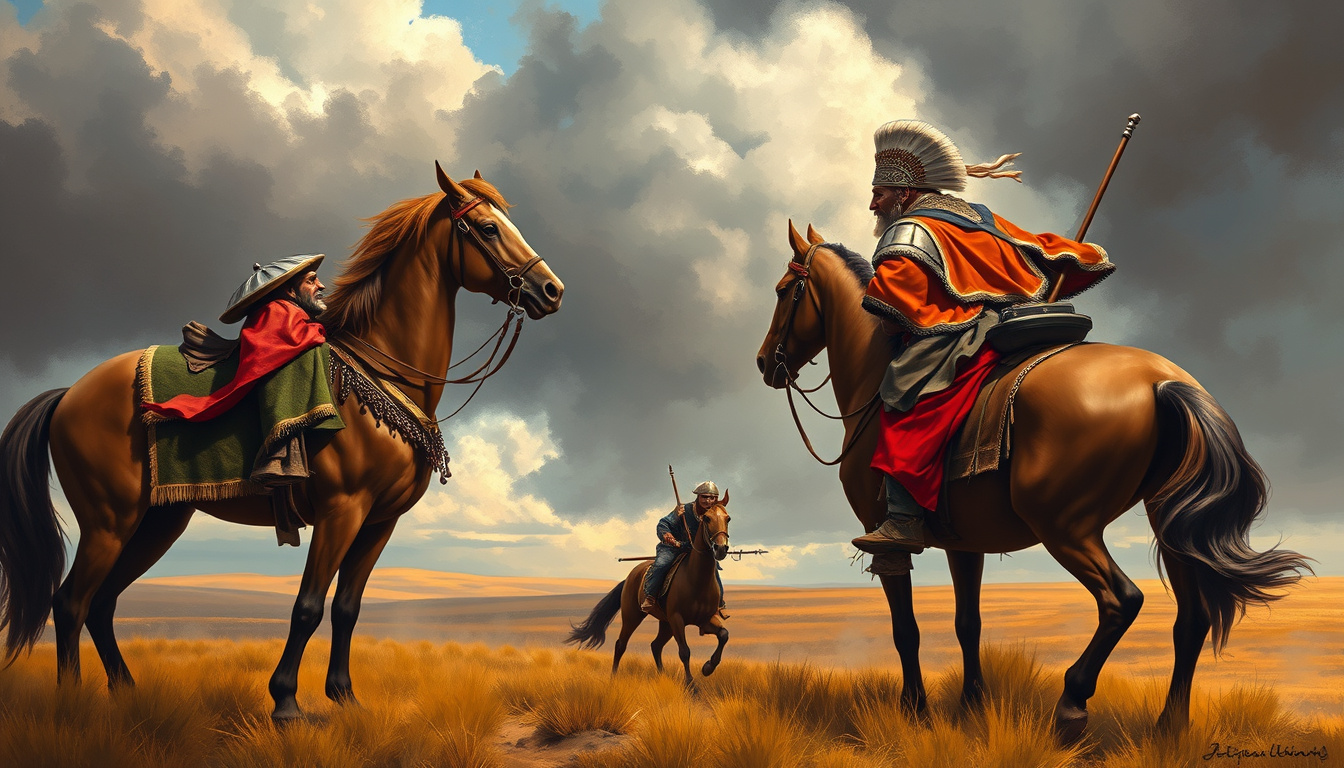
Temujin and Jamukha had sworn the Mongol bond of anda, blood-brotherhood, as boys. For years they were allies, but as Temujin's own following grew, the two split and became the steppe's fiercest rivals, fighting a series of wars for dominance over the fractured tribes. Temujin steadily defeated the Tatars, the Naimans, and Jamukha's own coalition. When Jamukha was finally captured in 1206, he reportedly asked for a bloodless execution — a request Temujin granted, honoring their old bond even in defeat.
A bloodless execution (breaking the back rather than shedding blood) was considered a mark of respect in Mongol custom, reserved for high-status enemies — granting it to Jamukha was a deliberate signal to the rest of the steppe about how Temujin treated worthy rivals, not just a personal gesture.
The Great Kurultai
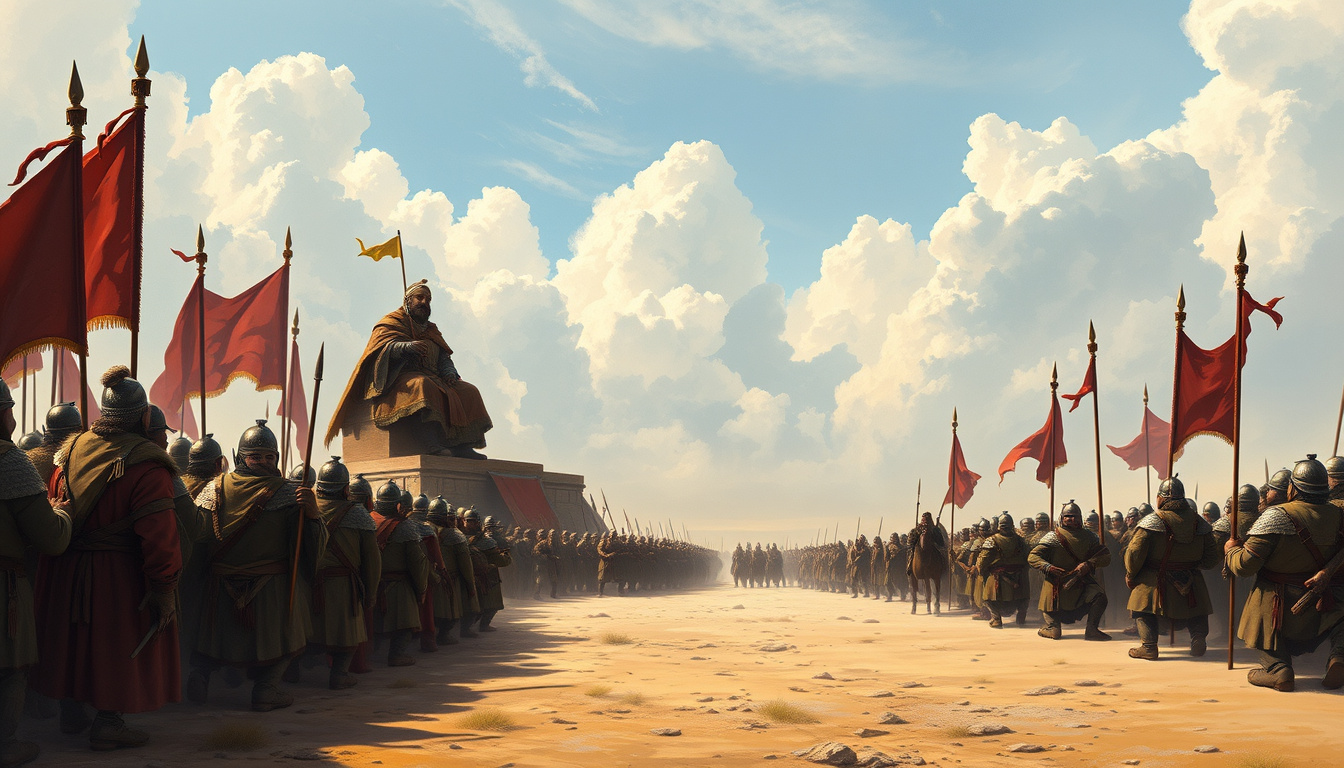
In 1206, a great assembly, or kurultai, of Mongol and steppe leaders proclaimed Temujin ruler of all of them, giving him the title Genghis Khan. He dissolved the old tribal identities entirely, reorganizing every fighting man into a decimal military system of units of ten, a hundred, a thousand, and ten thousand, with promotion based on proven loyalty and skill rather than birth. He also ratified the Yassa, a legal code covering military discipline, taxation, religious tolerance, and protection of trade routes, and adopted a writing system for the Mongolian language, adapted from Uyghur script by a captured scribe named Tatatunga.
Breaking up the old tribal units and mixing men into new decimal-based regiments wasn't just administratively efficient — it deliberately destroyed the old clan loyalties that had made the steppe endemically unstable for centuries, replacing tribal identity with loyalty to the new army structure itself.
Turning South
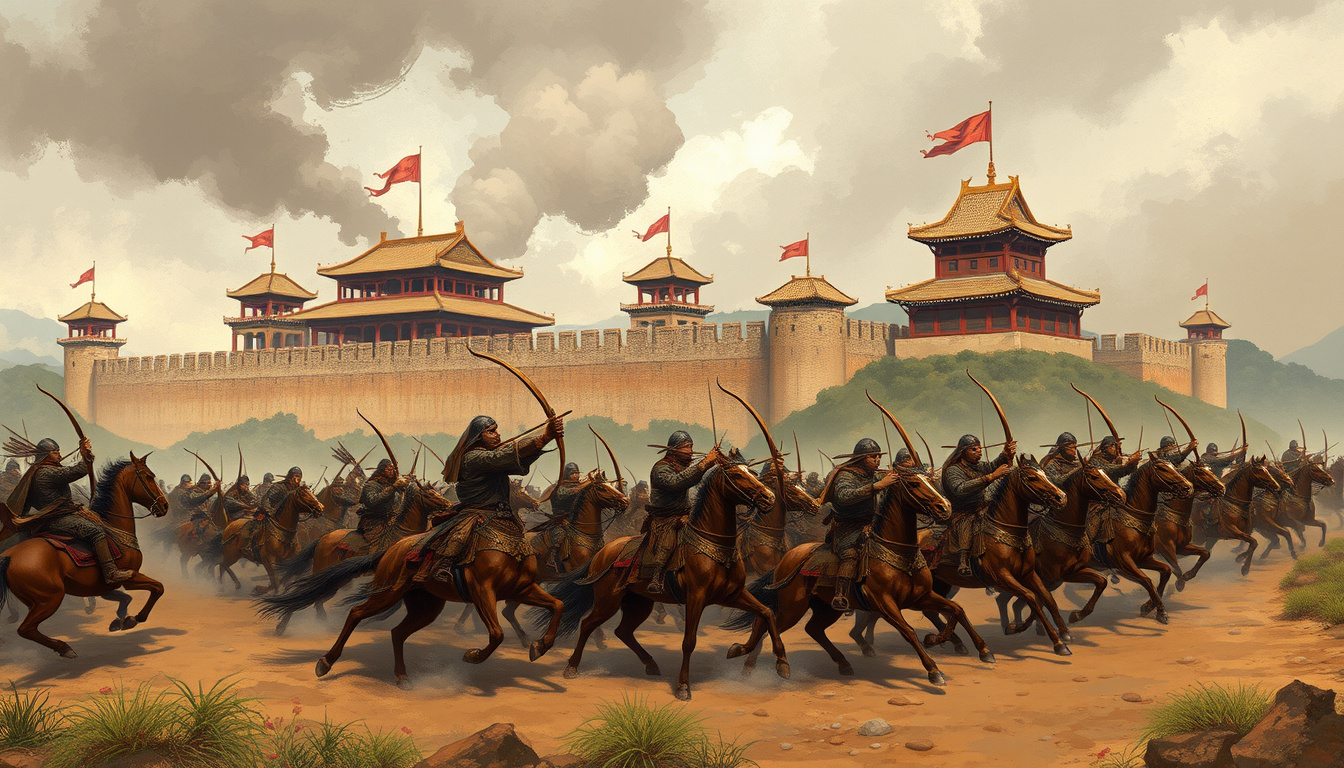
With the steppe unified, Genghis Khan turned his new army against the settled kingdoms to the south. He subjugated the Western Xia kingdom in 1209, then invaded the Jin dynasty of northern China, breaching the fortifications meant to stop exactly this kind of steppe incursion. In 1215, Mongol forces sacked the Jin capital, Zhongdu — the site of modern Beijing.
The Mongols had no siege tradition of their own; captured Chinese engineers were rapidly absorbed into the army to operate and improve trebuchets and other siege equipment, letting a horse-based steppe force crack fortified Chinese cities within a few campaigning seasons.

The Bukhara Reckoning
In 1218, the governor of the Khwarazmian city of Otrar executed an entire caravan of Mongol-sponsored merchants on suspicion of espionage. Genghis Khan sent envoys demanding redress; the Khwarazmian Shah, Muhammad II, had the chief envoy beheaded and sent his head back. Genghis Khan turned the bulk of his army west. Bukhara and Samarkand fell in 1220; by 1221 the Khwarazmian Empire was effectively destroyed. According to the Persian chronicler Juvaini, Genghis Khan addressed Bukhara's assembled nobles from the pulpit of its great mosque, declaring himself the punishment of God sent for their sins.
The devastation of the Khwarazmian campaign was deliberate strategy, not just rage: mass killing and destruction in early-resisting cities was used specifically as psychological warfare, engineered to make the next city surrender without a fight rather than face the same fate.

The Yam and the Peace of the Mongols
Alongside the conquests, Genghis Khan built the administrative machine that let the empire actually function: the Yam, a relay system of postal stations and fresh horses that could move messages and officials across thousands of miles at extraordinary speed for the era. Under Mongol rule, Buddhism, Islam, Christianity, and native Mongol shamanism coexisted under an official policy of religious tolerance, and strict punishment for banditry made the Silk Road safer for merchants than it had been in centuries — a period later historians would call the Pax Mongolica.
Religious tolerance wasn't primarily idealism — a multi-ethnic empire that size couldn't survive politically if it tried to forcibly convert every conquered population, so official tolerance was a practical governance decision that also happened to let trade and travel flow far more freely.
Succession and the Final Campaign
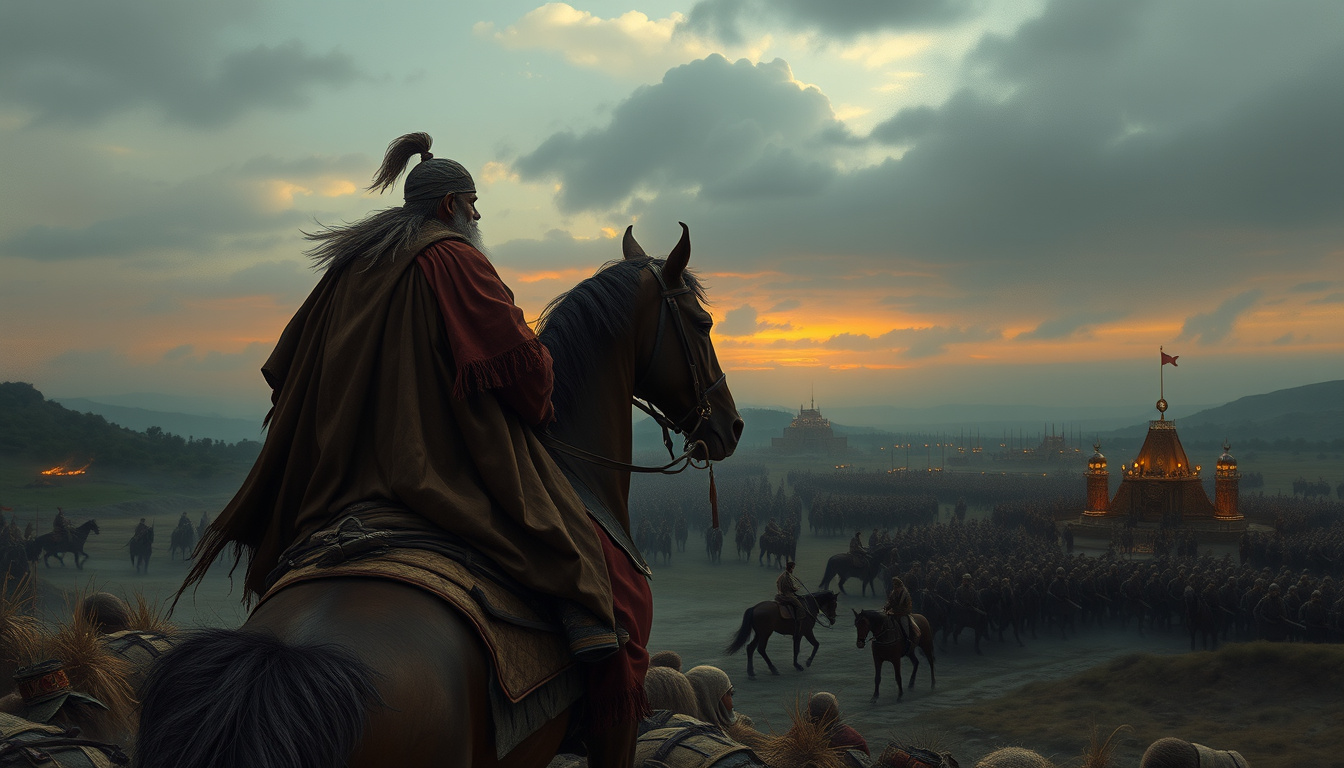
Genghis Khan passed over his eldest son Jochi, whose paternity remained disputed within the family, and named his third son Ögedei as heir. In 1226 he launched a final campaign against a rebelling Western Xia. He died during that campaign in August 1227; the exact cause — illness, a fall from his horse, or a battle wound — was never definitively recorded and remains disputed among historians to this day.
Mongol succession customarily favored capable sons over strict birth order, which is part of why naming Ögedei over the disputed-paternity Jochi didn't itself violate steppe expectations — the deeper instability came later, from rival branches of the family each believing their line deserved more.

The Grave That Was Never Found
Genghis Khan was buried in secret near Burkhan Khaldun, the mountain of his birth, and the exact location has never been found despite centuries of searching, including modern satellite-archaeology attempts. His legacy remains sharply divided: in much of Russia, China, the Middle East, and Eastern Europe he is remembered chiefly for catastrophic loss of life from his campaigns, while historians increasingly also credit the trade network, legal code, and administrative innovations built under Mongol rule. A 2003 genetic study found that a single Y-chromosome lineage, plausibly his own, is carried by roughly 8% of men across a large swath of the former Mongol Empire — popularly summarized, with some imprecision, as one in every two hundred men alive today.
The 2003 genetic study didn't test Genghis Khan's own DNA directly — no verified remains exist — it identified an unusually widespread shared Y-chromosome lineage concentrated exactly across the former Mongol Empire's geography and inferred, on strong circumstantial grounds, that it traces to him or his immediate line.
Timeline
Quotes
“O people, know that you have committed great sins, and that the great ones among you have committed these sins. If you ask me what proof I have for these words, I say it is because I am the punishment of God. If you had not committed great sins, God would not have sent a punishment like me upon you.”
Myths
Most of his famous quotes are things he actually said
Lists of savage, quotable Genghis Khan lines circulate widely online and in popular books, presented as his authentic words.
The overwhelming majority of these are unverified folk attributions or outright modern inventions, many traceable no earlier than 19th- and 20th-century Western retellings. He left no memoirs and dictated to scribes; even the one quote with real chronicle backing (the Bukhara 'punishment of God' speech) survives only through a Persian chronicler writing decades later, in translation, and its exact wording is genuinely debated by historians.
2,000 slaves were slaughtered at his funeral to keep the burial secret
A widely repeated story holds that thousands of slaves who built or attended his tomb were killed by a guard detail, who were then killed themselves by a second detail, to erase all trace of the burial location.
This specific account comes from Marco Polo's writings, composed decades after the fact and secondhand — it does not appear in any source contemporary with the burial itself. The burial location genuinely was, and remains, deliberately concealed, but the elaborate slave-massacre detail is very likely later embellishment rather than documented history.
He was purely a destroyer, with no administrative or economic legacy
The dominant popular image is of an indiscriminately genocidal warlord who left nothing behind but ruins and death tolls.
The devastation was real and historians still debate death-toll estimates that run into the tens of millions across his campaigns. But the same empire also built the Yam postal relay system, a codified legal system (the Yassa), an official policy of religious tolerance, and secure trade conditions across Eurasia — the Pax Mongolica — that most historians now treat as a genuine, separate part of his legacy alongside the destruction.
Network
Click a name to jump to their story below.
His first and chief wife, kidnapped by Merkit raiders and rescued early in his rise; mother of the four sons who became his key heirs and commanders.
Childhood anda (blood-brother) who became his fiercest rival for control of the steppe; requested and received a bloodless execution upon defeat in 1206.
Third son, chosen as heir over the eldest, Jochi; confirmed as Great Khan at a second Kurultai in 1229.
Eldest son, born shortly after Börte's rescue from Merkit captivity; his disputed paternity shadowed his standing and cost him the succession.
One of his most trusted generals, who led a reconnaissance campaign as far as the Caucasus and the Rus' principalities in 1223.
Shah of the Khwarazmian Empire whose beheading of a Mongol envoy, after the Otrar merchant massacre, triggered the campaign that destroyed his empire.
Character
Forged by early catastrophe into ruthless self-reliance
His father's murder, his family's exile, and his own enslavement as a teenager all happened before he had any power at all — he rebuilt from genuine nothing, more than once.
Meritocratic reorganizer
The decimal military system he imposed in 1206 promoted based on proven loyalty and skill, deliberately dissolving the old bloodline-based tribal hierarchies that had fractured the steppe for generations.
An administrator behind the destroyer's reputation
The Yam postal system, the Yassa legal code, and an official policy of religious tolerance are as much his legacy as the campaigns of conquest, even though popular memory rarely credits them equally.
Calculated, deterrence-driven brutality
Mass destruction in cities that resisted early, especially during the Khwarazmian campaign, functioned as a deliberate psychological warning intended to make the next city surrender without a fight.
Loyalty rewarded, betrayal punished, in equal and extreme measure
He granted his defeated blood-brother a respectful, bloodless death, and razed an empire over the murder of a merchant caravan and the beheading of one envoy — the same man capable of both.
Willing to adopt any foreign system that worked better
Captured Chinese siege engineers, a borrowed Uyghur writing script, and absorbed Persian administrators were all integrated wholesale rather than rejected as foreign.
A succession plan that didn't survive him for long
He deliberately named Ögedei to avoid a succession fight, but rival branches of his own family still fractured the empire into competing khanates within a few generations.
Have a question this chapter didn\u2019t answer? Ask the archive \u2014 answered live, checked against the same research as the story above.