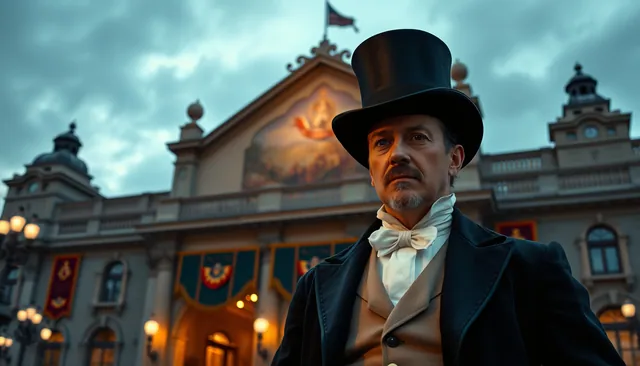
P.T. Barnum
P.T. Barnum built the American entertainment industry on hoaxes, one genuine opera star, and the exploited body of an enslaved woman -- then died reading his own obituary, exactly as planned.
Phineas Taylor Barnum (1810-1891) was the impresario who taught America that attention itself was a product. He opened his career in 1835 by exhibiting Joice Heth, an enslaved woman he falsely marketed as George Washington's 161-year-old nurse -- a fraud built on forged documents and a human being's suffering that historians rightly refuse to sanitize. He went on to fill his American Museum with genuine curiosities and outright fabrications like the "Feejee Mermaid," turned four-year-old Charles Stratton into the international star "General Tom Thumb," gambled a fortune on Jenny Lind's American debut, survived a bankruptcy that cost him his mansion, served in the Connecticut legislature arguing for Black citizenship, and at 60 built the circus that became "The Greatest Show on Earth." He never said his most famous line. He did arrange to read his own obituary before he died.

The Emperor of Ivy Island
Born July 5, 1810, in Bethel, Connecticut, the sixth child of tailor-and-tavernkeeper Philo Barnum, Phineas Taylor Barnum grew up poor but sharp. At his birth, his grandfather "Old Phin" willed him a parcel called "Ivy Island," and for years the whole town, including his own father, told the boy he'd inherited Connecticut's most valuable farm. At twelve, Barnum finally rode out to see his kingdom and found five worthless acres choked with ivy and swamp. He later called it the best joke his grandfather ever played, and credited it with teaching him how far reputation could outrun reality. By his teens he was clerking, peddling cherry rum to soldiers, and running small lottery schemes.
New England Yankee culture prized the elaborate practical joke as its main form of entertainment, so the Ivy Island hoax was unremarkable by local standards. What set Barnum apart was extracting a business philosophy from it: a town's willingness to sustain a decade-long shared fiction proved that belief itself was a resource that could be manufactured and later sold.
The 161-Year-Old Woman
In August 1835, Barnum borrowed money to buy the exhibition rights to Joice Heth, a blind, partially paralyzed enslaved woman he advertised as "the greatest natural and national curiosity in the world" and falsely claimed was 161 years old and George Washington's childhood nurse. He produced a forged 1727 bill of sale to support the claim and toured her across New England, charging admission to hear her sing hymns and recall "dear little George." When crowds thinned, he anonymously suggested to newspapers that she might be a mechanical automaton, drawing skeptics back to judge for themselves. She died in February 1836; Barnum sold tickets to a public autopsy that put her real age nearer 80. Historians treat the episode as unambiguous racialized exploitation.
Barnum had discovered that manufactured controversy outsold manufactured certainty. Rather than settle the age question, he seeded competing rumors -- genuine woman versus automaton -- so believers and skeptics alike paid to look for themselves, and then monetized Heth's body a final time through the paid autopsy after her death.

Museum of Wonders
In 1841, Barnum bought Scudder's American Museum at Broadway and Ann Street, filling five floors with taxidermy, wax figures, a menagerie, a lecture hall, and human "curiosities." In 1842 he introduced two acts that defined his method: the "Feejee Mermaid," a grotesque monkey-and-fish hoax leased from fellow museum owner Moses Kimball and sold to newspapers through a fabricated naturalist's letter; and four-year-old Charles Stratton of Bridgeport, whom Barnum trained and rebranded "General Tom Thumb," a tiny, witty performer who charmed Queen Victoria in 1844. By the 1850s the museum drew millions of visitors a year, mixing real scientific specimens with outright fabrications, the line between them left deliberately blurred so visitors kept paying to find out which was which.
Barnum's real innovation was distribution, not deception. He understood newspapers needed sensational copy as badly as he needed customers, so he handed editors ready-made "controversies" -- fake naturalist letters, planted rumors -- they could run for free, turning the era's press into an unpaid advertising arm for his exhibits.
The Swedish Nightingale
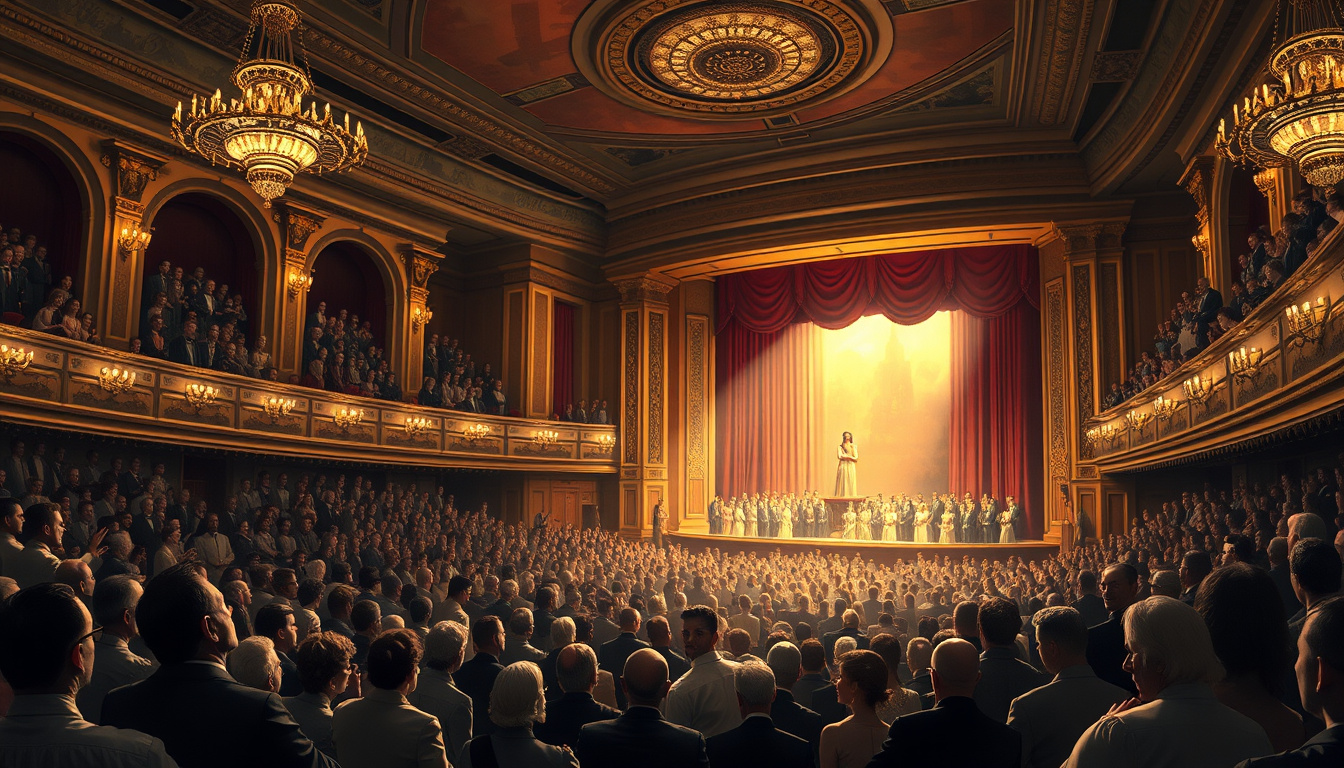
By 1850, Barnum wanted respectability as badly as revenue. He contracted Swedish soprano Jenny Lind, then unknown in America, for an unprecedented $1,000 a night plus expenses, for up to 150 concerts, without ever hearing her sing. He engineered "Lindomania" before she arrived -- ticket auctions, merchandise, a public contest to write her a welcome song -- and reportedly 40,000 people turned out just to watch her ship dock in September 1850. Lind, who donated much of her fee to charity, gave 93 concerts under Barnum's management before amicably ending the contract in 1851 to tour independently. Barnum netted roughly $500,000; Lind earned about $350,000. The tour recast him from purveyor of hoaxes into a producer trusted with serious, unimpeachable talent.
Barnum inverted his own playbook: instead of manufacturing false claims about an unremarkable object, he manufactured true anticipation for a genuinely remarkable performer nobody in America could yet verify. The gamble worked for the same reason his hoaxes had -- scarce information let hype substitute for evidence -- except this time the hype pointed at something real.
Built on Credit
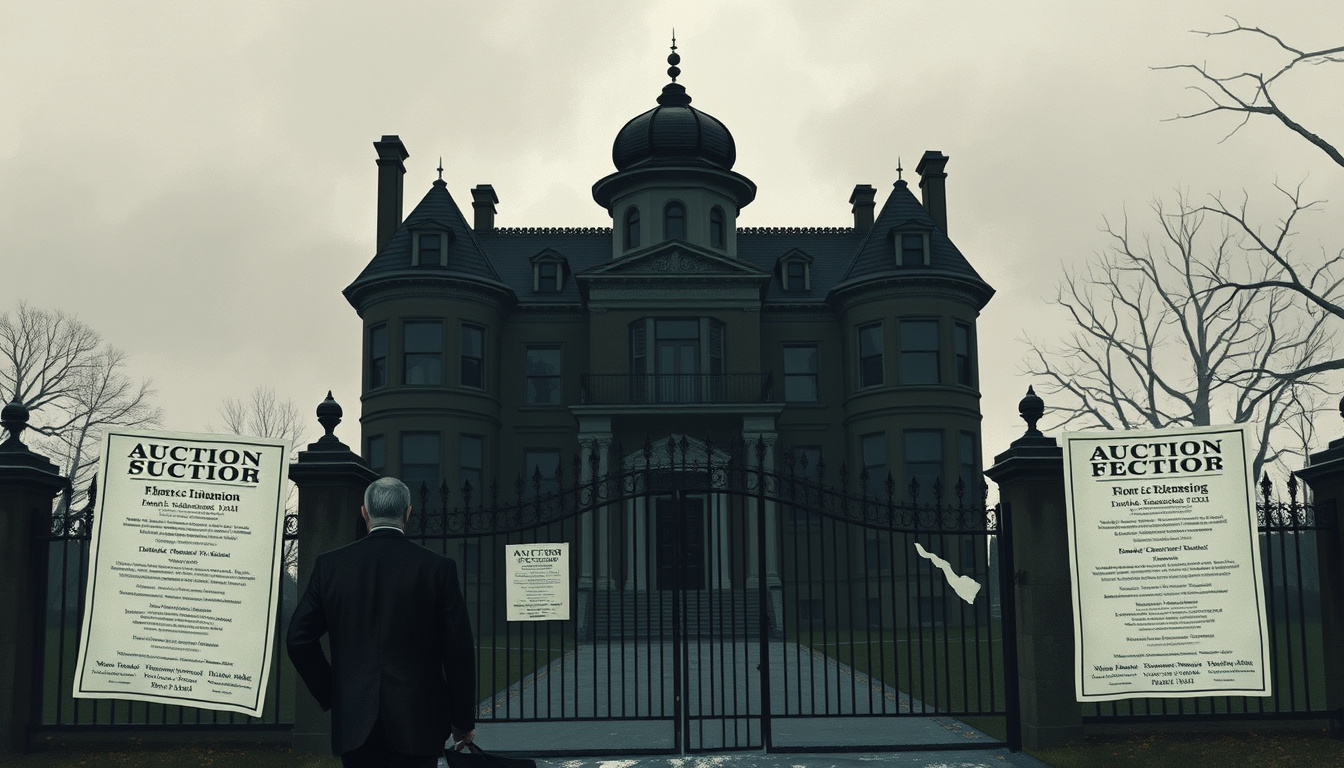
Eager to develop East Bridgeport into an industrial town, Barnum in the mid-1850s co-signed notes guaranteeing roughly $500,000 of debt for the Jerome Clock Company in exchange for the firm relocating there. The company collapsed in 1856, and Barnum, who had no operational control over it, was legally liable for its failure. He lost his mansion, Iranistan, and most of his fortune, filing for what amounted to bankruptcy at 46 and becoming an object of public ridicule after two decades as the country's most famous showman. He rebuilt largely by lecturing, delivering "The Art of Money Getting" -- a talk on thrift and hustle, and on avoiding exactly the kind of guarantee that had ruined him -- across the US and Britain, and eventually repaid his creditors in full.
Barnum's fall wasn't a con collapsing; it was ordinary industrial-age finance -- a personal guarantee on someone else's debt, the same instrument that ruined thousands of respectable investors in the era's boom-bust cycles. His recovery worked because his real asset was never the clock company or even the museum, but his own voice, which he could monetize on a lecture stage with no capital at all.

Statehouse and City Hall
In 1865, Barnum won a seat in the Connecticut legislature as a Republican from Fairfield, where he spoke in favor of ratifying the Thirteenth Amendment, arguing that a human soul "may tenant the body of a Chinaman, a Turk, an Arab, or a Hottentot" and remain "an immortal spirit." In 1875 he was elected mayor of Bridgeport, where he improved the city's water and gas service, cracked down on illegal liquor sales and prostitution, and helped found Bridgeport Hospital in 1878, serving as its first president. He also championed the temperance movement. The record sits uneasily beside his early career: the same man who had profited from Joice Heth's exploitation spent his last decades in elected office arguing, in period language that reads as both progressive and paternalistic, for Black Americans' constitutional citizenship.
Barnum's politics tracked his business instincts more than any fixed ideology. He read Reconstruction-era Connecticut as an audience that rewarded moral-reform rhetoric the way antebellum crowds had rewarded hoaxes, and pursued civic respectability in the statehouse with the same showman's attentiveness to what would play.

The Greatest Show on Earth
In 1871, at age 60, Barnum lent his name, capital, and promotional machinery to a traveling circus built by William Cameron Coup and Dan Castello, opening in Brooklyn that April. By 1872 he was billing it "The Greatest Show on Earth." In 1881 he merged with rival showman James Bailey to form Barnum & Bailey, formally adopting that joint name by 1888. In 1882 Barnum paid the London Zoo £2,000 for its star attraction, an elephant named Jumbo, over public protests that reached Queen Victoria; Jumbo became the circus's biggest draw until a freight train killed him in Ontario in 1885. His stuffed hide toured for years afterward and later became Tufts University's mascot, after Barnum's 1883 donation of a natural history museum to the school.
The circus succeeded where earlier ventures had plateaued because Barnum, by then in his sixties, applied museum-scale promotional machinery -- advance men, press kits, staged public disputes -- to a format that could travel to the audience by rail, multiplying his reach far beyond what any single New York building could hold.
Reading His Own Obituary
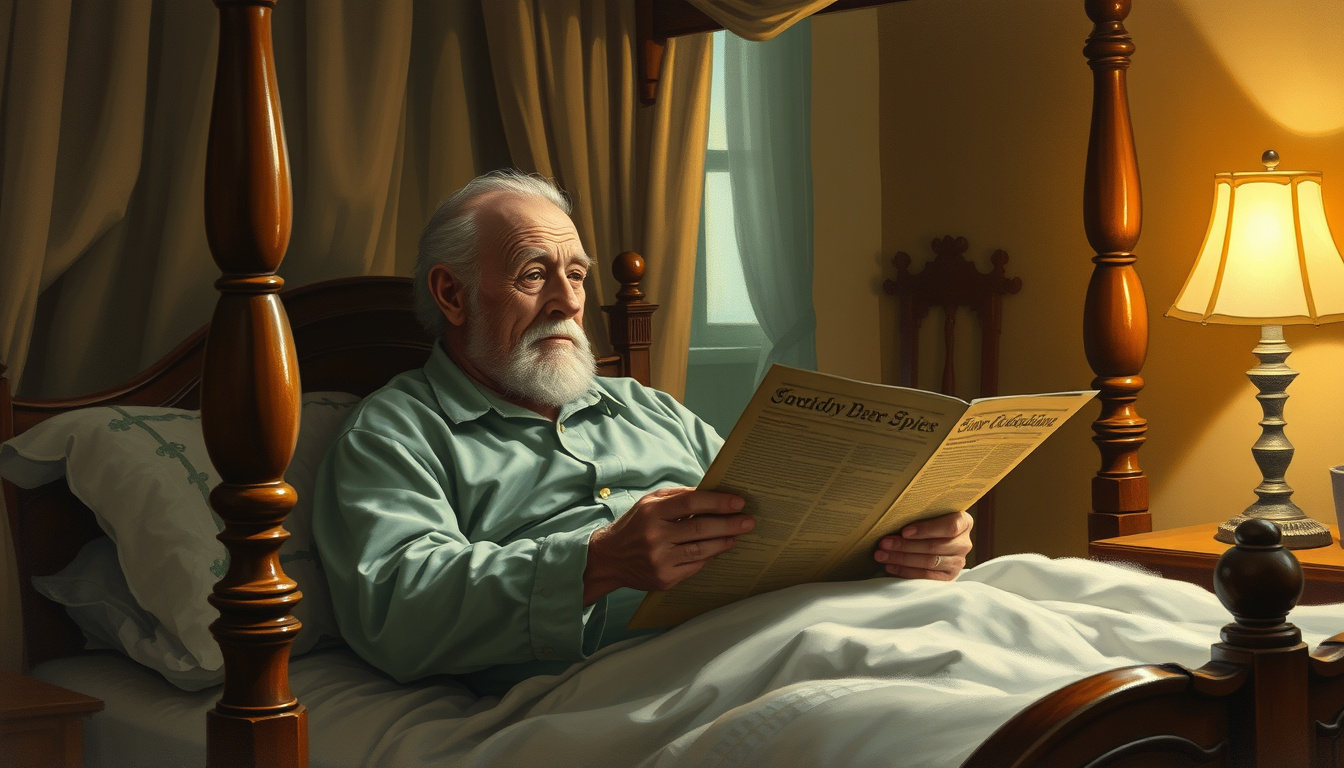
Barnum's first wife, Charity Hallett, whom he had married in 1829, died in 1873 after 44 years of marriage; the following year he married Nancy Fish, forty years his junior. He suffered a stroke in November 1890, and as his health declined in early 1891, he persuaded the New York Evening Sun to publish his obituary in advance so he could read it himself; the paper ran roughly four columns under the headline "Barnum, Great and Only," which he reportedly enjoyed enormously. He died at his Bridgeport home, Marina, on April 7, 1891, at age 80. Accounts of his last words differ: one tradition has him asking about the previous night's box-office receipts at Madison Square Garden; another has him telling Nancy his last thoughts were of her.
The advance obituary wasn't vanity alone -- it was Barnum running his oldest trick on himself, testing whether the "product" of his own life story would land the way he had spent sixty years engineering reactions to other people's exhibits, one final audience test he got to witness firsthand.
Prince of Humbugs
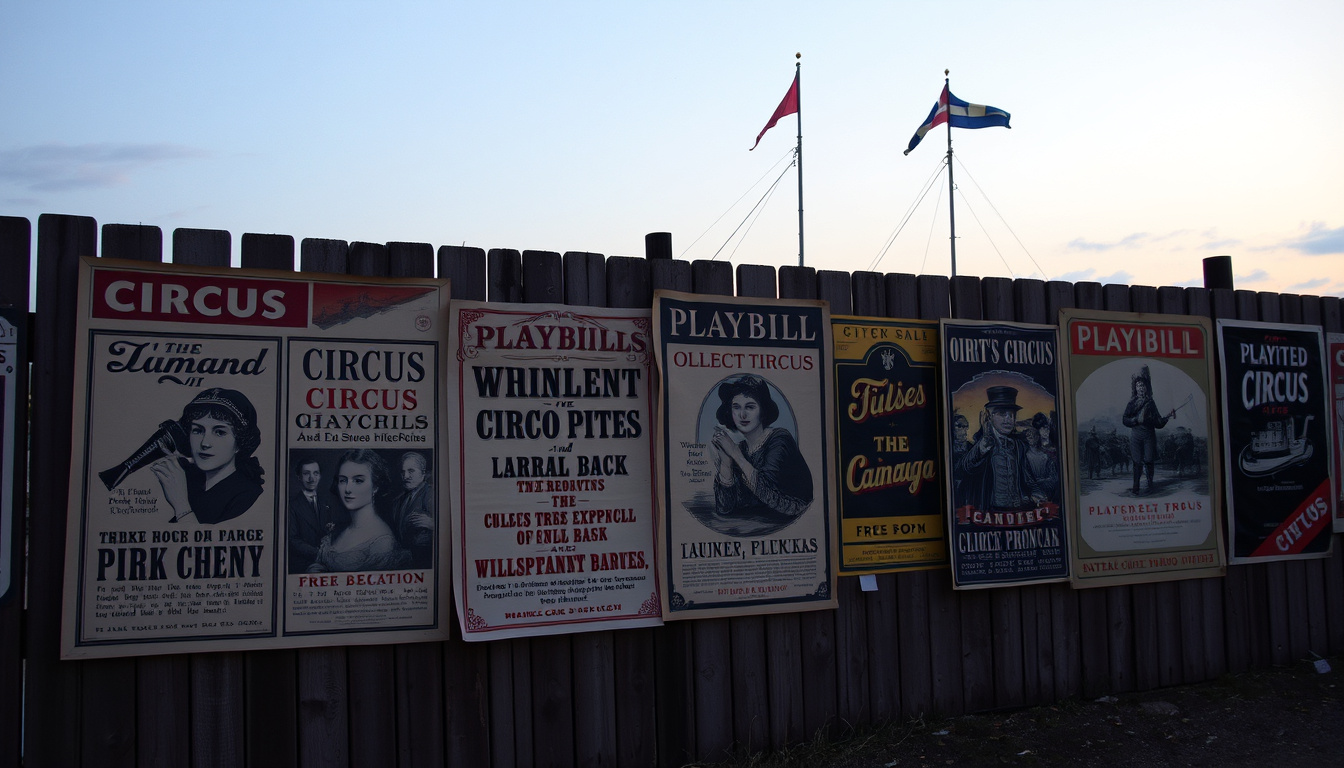
Barnum's circus outlived him by well over a century: Barnum & Bailey merged with Ringling Bros. in 1919, and the combined show ran until it closed in 2017, with an animal-free revival returning in 2023. His most famous line, "there's a sucker born every minute," has no verified source from his lifetime; biographer Arthur H. Saxon found no contemporary record of it and concluded Barnum was "not the type to disparage his patrons." Popular culture, especially the 2017 film "The Greatest Showman," often reshapes him into a warm champion of outsiders, minimizing or omitting Joice Heth entirely. Modern historians hold both threads at once: Barnum invented durable tools of American mass promotion, and, at real human cost, built his first fortune on the exploitation of an enslaved woman and, later, on the display of people with disabilities as paid curiosities.
The myth of the good-natured "humbug" survives because it flatters everyone it touches -- audiences who want their gullibility framed as good sport, and a marketing industry descended from Barnum that prefers a founder who tricked people harmlessly to one whose first hit required owning a human being.
Timeline
Quotes
“There's a sucker born every minute.”
“The noblest art is that of making others happy.”
“A human soul, that God has created, and Christ died for, is not to be trifled with. It may tenant the body of a Chinaman, a Turk, an Arab, or a Hottentot -- it is still an immortal spirit.”
“Without promotion, something terrible happens... nothing.”
Myths
"A Sucker Born Every Minute"
Barnum's most famous line, endlessly quoted to sum up his cynical view of his own audience.
No contemporary source has ever surfaced. Biographer Arthur H. Saxon searched exhaustively and found no record of Barnum using the phrase or using "sucker" in a derogatory sense in his lifetime; some researchers trace variant phrasings to con man Joseph "Paper Collar Joe" Bessimer or to the banker involved in the 1869 Cardiff Giant dispute.
The Loveable Outsider-Champion
Popular culture, especially the 2017 film "The Greatest Showman," portrays Barnum as a warm-hearted patron who gave marginalized people dignity and belonging.
His career began with the exploitation of an enslaved woman, Joice Heth, whose age he faked with a forged document and whose body he displayed even after death; historians describe his human "curiosity" exhibits broadly as commodifying disabled and non-white performers for profit, not empowering them.
The Feejee Mermaid Burned in 1865
The original Feejee Mermaid is commonly said to have been destroyed when Barnum's American Museum burned down in 1865.
The mermaid is generally believed to have been on loan to Moses Kimball's Boston Museum at the time and was instead likely lost in a separate Boston museum fire in the early 1880s; its exact fate remains debated among historians.
His Last Words Were About the Box Office
Barnum's famous final words were a request to know the previous night's circus receipts at Madison Square Garden.
Accounts of his deathbed differ: some report the receipts question, while others record him telling his wife Nancy that his last thoughts were of her before he lapsed into speaking only in monosyllables. No single version is definitively documented as his actual last utterance.
Network
Click a name to jump to their story below.
An enslaved woman Barnum falsely advertised as George Washington's 161-year-old nurse using a forged bill of sale; his first commercial success and the darkest exploitation of his career, extending to a paid public autopsy after her death.
Barnum discovered the four-year-old in Bridgeport in 1842 and transformed him into the world's most famous little person, touring him internationally and securing a private audience with Queen Victoria in 1844.
Rival circus owner who merged operations with Barnum in 1881 to form Barnum & Bailey; continued running the show as its own manager for decades after Barnum's 1891 death.
Swedish soprano Barnum brought to America in 1850 for an unprecedented $1,000-a-night tour, sight unseen; the gamble made both of them rich and rebranded Barnum as a producer of serious talent.
Married Barnum in 1829; they remained married 44 years, raising four children, until her death in 1873.
Proprietor of the Boston Museum and Barnum's close friend and frequent collaborator, who leased him the "Feejee Mermaid" and regularly traded exhibits and promotional ideas with him.
Married Barnum in 1874, forty years his junior, months after his first wife's death; she outlived him by 36 years, remaining in their Connecticut home.
Personal friend from the early 1870s onward; Barnum sent him inscribed copies of his books, and some Twain scholars see traces of Barnum's showman persona in his fiction.
Character
Relentless Self-Promoter
He fed newspapers fabricated "controversies" -- like an anonymous letter debating whether Joice Heth was a mechanical automaton -- because free press coverage sold more tickets than any ad he could buy.
Comfortable With Deception
He forged an 1727 bill of sale to support Joice Heth's fake age and openly sold a plaster Cardiff Giant as the "real" fake, cheerfully calling himself the "Prince of Humbugs."
Financially Reckless, Then Disciplined
A single bad guarantee on the Jerome Clock Company's debts cost him his mansion in 1856; he rebuilt by lecturing on frugality nationwide and repaid every creditor in full.
Genuine Showmanship Instinct
He gambled $1,000 a night, sight unseen, on an opera singer no American had heard, and turned Jenny Lind's 1850 arrival into one of the best-attended dock scenes in New York history.
Late-Career Reformer
As a Connecticut legislator in 1865 he argued for ratifying the Thirteenth Amendment in explicitly anti-racist terms, and as Bridgeport's mayor he helped found a public hospital.
Publicity Above Ego
In his final illness he asked a newspaper to publish his obituary early so he could read it himself, and was reportedly delighted by four columns about his own life.
Builder at Scale
At 60, rather than retire, he backed a traveling circus that grew into "The Greatest Show on Earth," merging with rival James Bailey in 1881 to dominate American entertainment for decades.
Complicated Relationship to Exploitation
He built his first fortune exploiting an enslaved woman and later displayed people with disabilities as paid curiosities, even as some performers, like Charles Stratton, became genuinely wealthy and famous under his management.
Have a question this chapter didn\u2019t answer? Ask the archive \u2014 answered live, checked against the same research as the story above.