Chapter 01 October 1915
The ice decides
Oliver · AI-generated narration
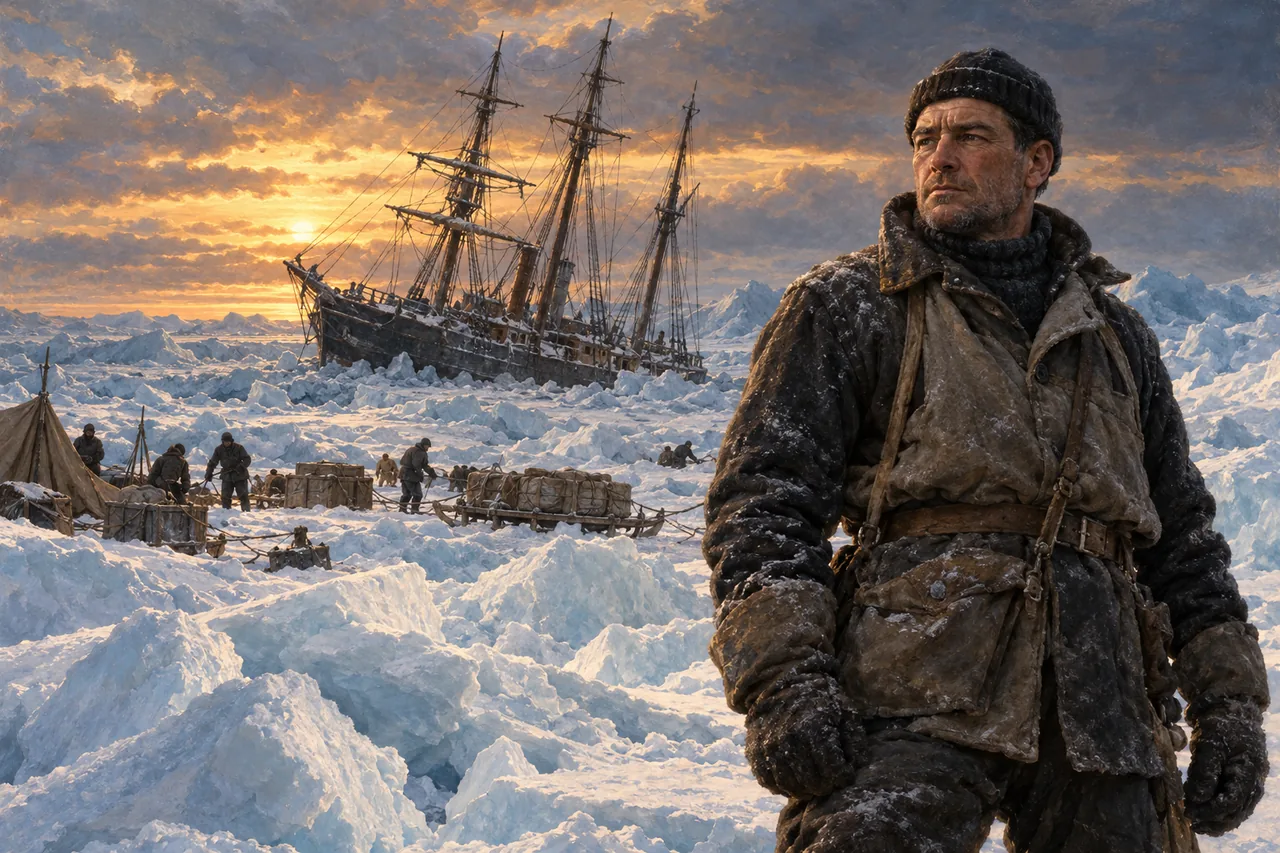
On October 27, 1915, Ernest Shackleton ordered the men of Endurance to abandon ship. Pressure from the Weddell Sea ice had broken the vessel beyond repair. Twenty-eight men set up five tents on an ice floe nearby. The surface that had imprisoned their ship had become the ground on which they would have to live. [2]
They had come to cross Antarctica, from the Weddell Sea to the Ross Sea by way of the South Pole. A separate party was to lay supply depots from the opposite coast. Endurance had never delivered its shore party to the continent. The crossing could not begin; the immediate problem was keeping the men alive. [2, 5]
The struggle to save the ship had already consumed days of work. After damage on October 24, the men worked the pumps while the carpenter and his assistants built a barrier against the flooding. More pressure opened the damaged hull. By the afternoon of the twenty-seventh, water was pouring in and the decks were breaking upwards. [1]
Their first camp was a beginning, not an escape. Provisions and equipment had to be moved, sorted and protected. The lifeboats would be essential, but dragging boats and stores across the broken ice proved painfully slow. After the first attempted march, they settled into a new camp and waited for the drifting pack to offer another possibility. [2]
Abandoning Endurance was not the same event as watching it sink. The wreck remained accessible for further salvage after the men left it. On November 21, nearly a month after the abandonment, the ship finally went down. Their shelter, supplies and boats now carried the practical work once done by a seagoing vessel. [1]
That work would require more than one leader’s resolve. Captain Frank Worsley would navigate the later boat journey; carpenter Harry McNish would strengthen the James Caird for it. Tom Crean would sail with them and cross South Georgia. Meanwhile, Frank Wild would lead the men left waiting on Elephant Island. Survival depended on skills distributed across the party. [3, 4, 5]
Those places still lay ahead of the men standing beside their broken ship. They would reach Elephant Island in April 1916. Shackleton and five companions would sail for help, and the twenty-two who remained would finally be rescued on August 30. All twenty-eight members of the Endurance party survived the ordeal. [3]
That distinction matters: three men in the expedition’s separate Ross Sea shore party died. Its history belongs beside the better-known rescue. Here, on the ice in October 1915, the transcontinental ambition had become a different responsibility. To understand how Shackleton reached this point, the story must first return to the boy who chose a life at sea. [5]
A note on the telling
October 27, 1915 is the abandonment date; Endurance sank on November 21. These dates are checked against Shackleton’s South and the Scott Polar Research Institute’s expedition history; some museum summaries conflate them. All twenty-eight refers to the Endurance party, not the whole Imperial Trans-Antarctic Expedition: three Ross Sea shore-party members died. The narrative credits shared skills and distinguishes the 1916 rescue from events in 1915. No dialogue, weather or private thoughts are reconstructed. The illustration is interpretive, not archival.
Read the manuscript sources